Article Contents
Engineering Insight: Floating Hose
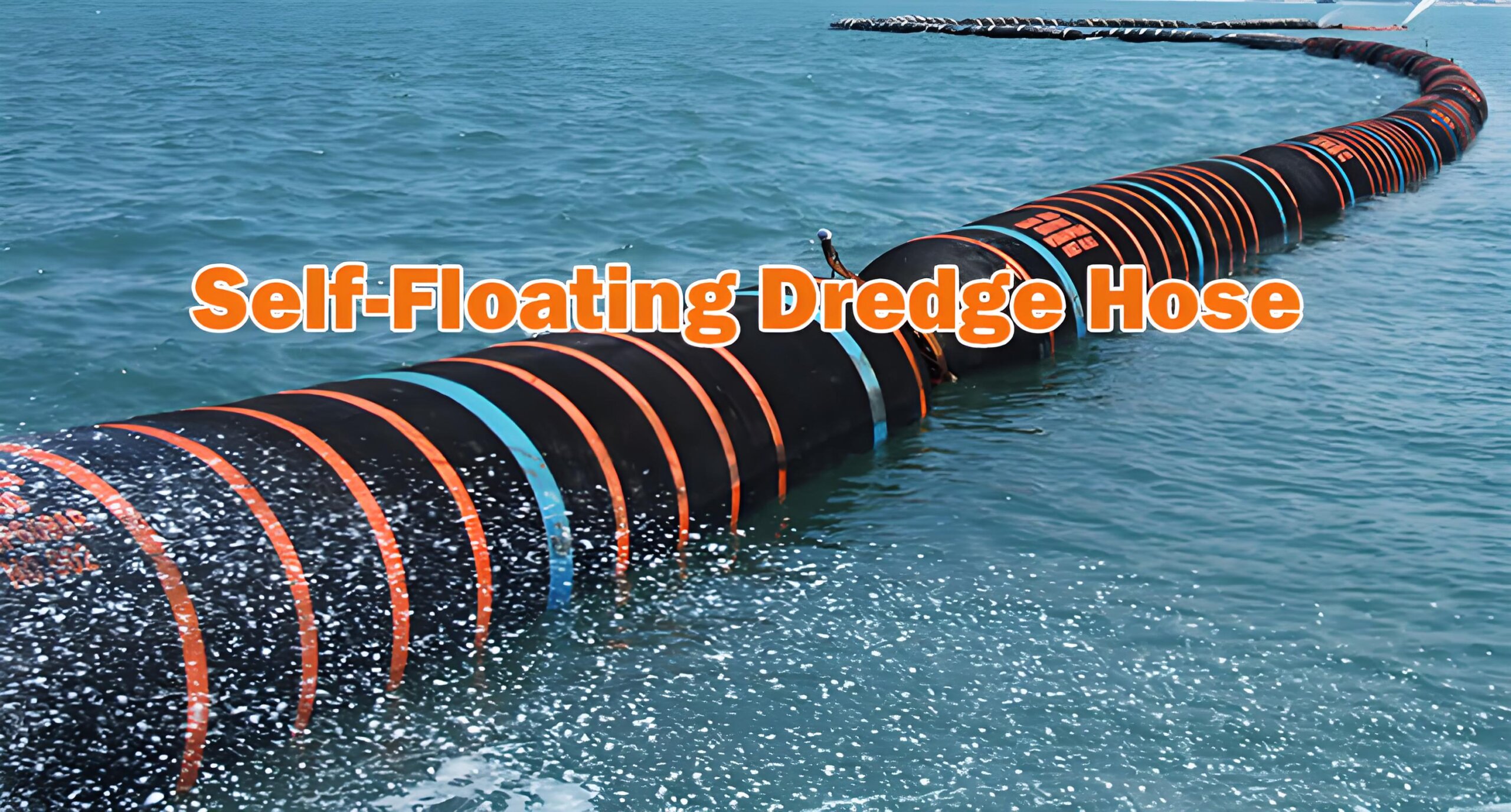
Technical Overview: The Critical Role of Floating Hoses in Dredging Operations
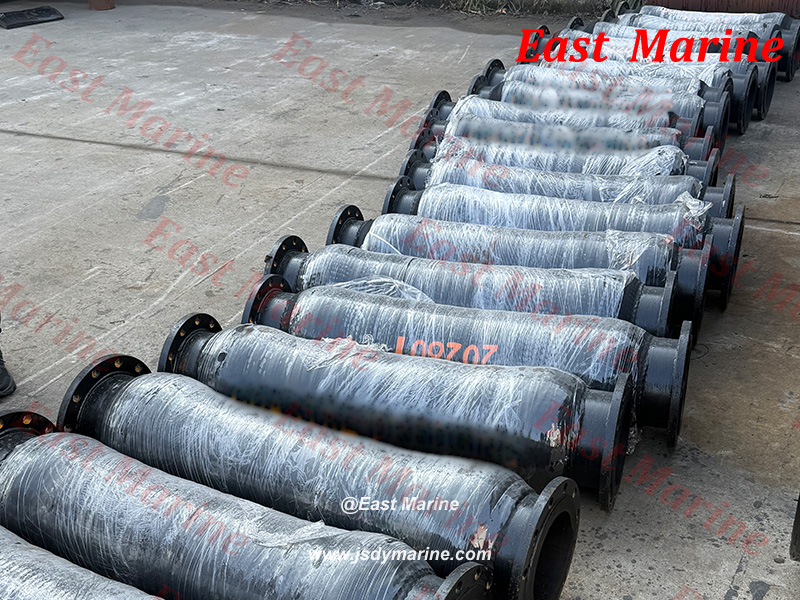
In modern dredging operations, the integrity and performance of discharge pipeline systems are paramount to project efficiency, safety, and cost-effectiveness. One of the most vital components in this system is the floating hose, engineered to support discharge pipelines across varying marine conditions—from calm inland waters to high-energy offshore environments. Floating hoses serve as flexible, buoyant connectors that accommodate wave action, tidal shifts, and vessel movements, ensuring continuous slurry transport without compromising structural integrity.
East Marine, a subsidiary of Jiangsu Huashen Special Rubber Products, specializes in the design and manufacture of high-performance floating hoses tailored for demanding dredging applications. With over 150 skilled employees and a dedicated engineering team, the company combines advanced material science with rigorous hydrodynamic modeling to deliver solutions that meet international standards. Our engineering capabilities include finite element analysis (FEA), fatigue testing, and custom configuration design, enabling us to address site-specific challenges in pipeline support and marine deployment.
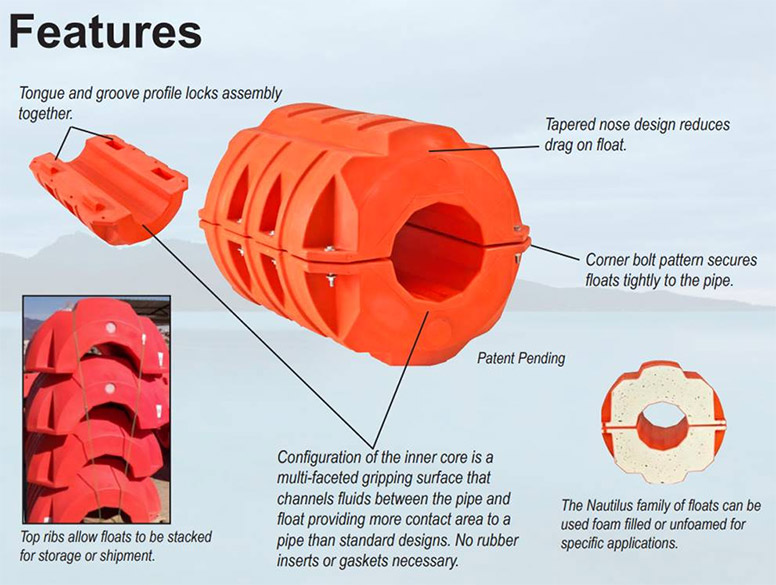
The primary function of a floating hose is to bridge the transition between land-based or vessel-mounted pumping systems and submerged discharge lines. Unlike rigid HDPE or steel pipes, floating hoses provide dynamic flexibility, absorbing stresses induced by wave motion, current forces, and floating pontoon displacements. This flexibility minimizes strain on connected infrastructure, reducing the risk of joint failure, leaks, or unplanned downtime. Additionally, the integrated buoyancy system—typically composed of closed-cell polyurethane foam or rotomolded polyethylene shells—ensures stable flotation without water ingress, even under prolonged exposure to UV radiation and abrasive conditions.
Constructed with reinforced rubber linings, high-tensile textile cords, and corrosion-resistant covers, East Marine’s floating hoses are designed for extended service life in saline, sandy, and chemically aggressive environments. The hoses are engineered to maintain consistent internal diameter under pressure, minimizing friction loss and preserving pump efficiency across long discharge distances.
In rough sea conditions, the importance of a robust floating hose becomes even more pronounced. Standard rigid pipelines lack the articulation needed to respond to dynamic marine forces, leading to fatigue cracking and support structure failure. Floating hoses, by contrast, act as shock-absorbing elements, dampening peak loads and maintaining a continuous flow path. Their modular design also allows for rapid deployment, maintenance, and reconfiguration, making them ideal for both short-term reclamation projects and long-term landfall solutions.
Backed by ISO 9001 certification, membership in WEDA and CEDA, and a 0.68 million sqm manufacturing facility established in 2007, East Marine delivers technically superior floating hose systems that enhance operational resilience in marine dredging.
| Parameter | Typical Value |
|---|---|
| Inner Diameter Range | 200–1200 mm |
| Working Pressure | 10–16 bar (custom up to 25 bar) |
| Buoyancy Reserve | ≥20% of total weight in water |
| Teplotní rozsah | -20°C to +85°C |
| Bend Radius (Minimum) | 6× ID (dynamic), 4× ID (static) |
| Cover Material | Abrasion-resistant synthetic rubber |
| Reinforcement Layers | 2–4 ply high-tenacity textile cord |
| Compliance Standards | ISO 1307, ISO 7233, DNVGL-RP-F107 |
Advanced Manufacturing Process
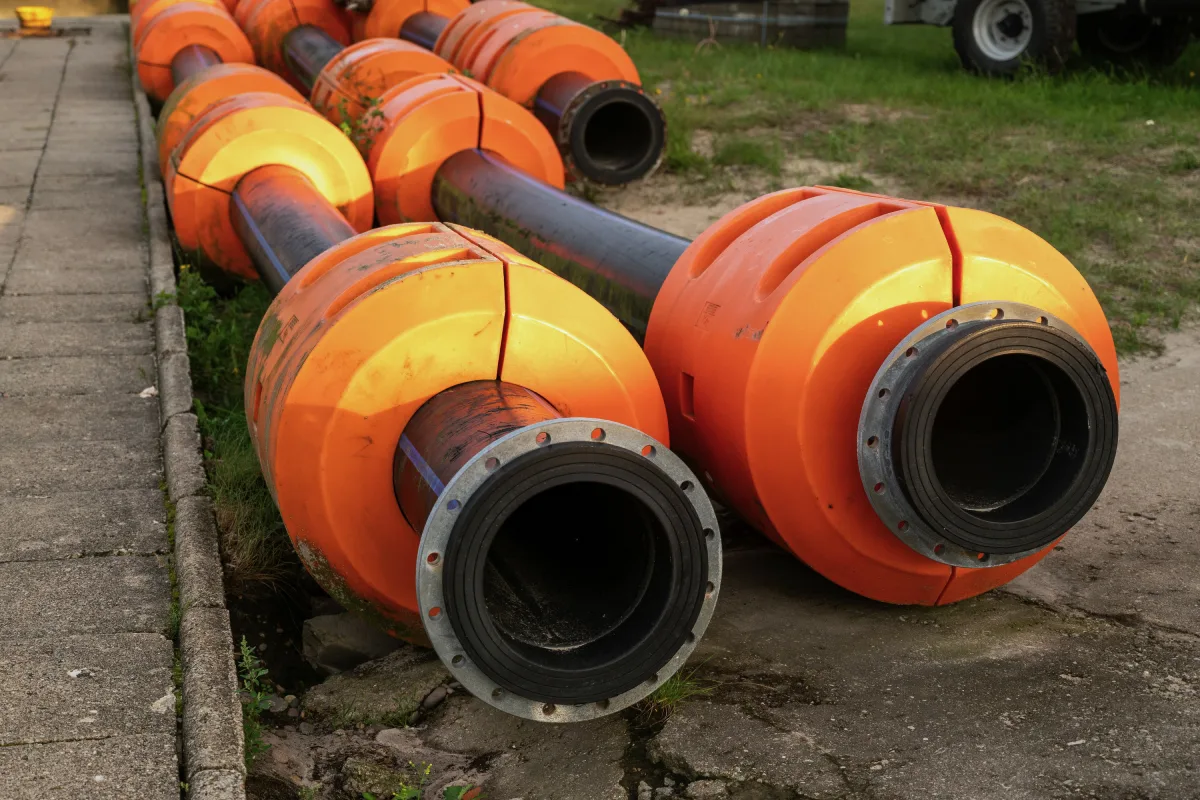
Precision Engineering in Floating Hose Manufacturing: Vulcanization and Quality Assurance
East Marine leverages its 0.68M sqm integrated manufacturing facility, among the largest dedicated to specialized marine rubber products in Asia, to execute a highly controlled floating hose production process. Central to achieving the requisite durability, buoyancy, and pressure integrity for demanding dredging operations is the advanced vulcanization stage. Our 18 dedicated production lines are engineered for precision, ensuring consistent application of heat, pressure, and time – the critical triad governing the vulcanization reaction. This process transforms compounded raw rubber, meticulously formulated for seawater resistance, UV stability, and abrasion tolerance, into a cross-linked elastomeric network. The vulcanization parameters are strictly optimized per hose specification; under-curing compromises physical properties and longevity, while over-curing induces brittleness. Each hose carcass undergoes vulcanization within specialized autoclaves or continuous vulcanization tunnels, where temperature profiles (typically 140°C – 180°C) and pressure cycles (10-20 bar) are continuously monitored and adjusted via PLC systems to ensure uniform cure depth and eliminate porosity or weak spots critical for submersion integrity.
Rigorous quality control, mandated by our ISO 9001 certified management system, is embedded at every manufacturing phase, with vulcanization being a pivotal checkpoint. Pre-vulcanization, raw material batches undergo stringent incoming inspection for compound consistency and viscosity. During vulcanization, real-time data logging captures critical process variables against predefined master curves. Post-vulcanization, hoses undergo exhaustive non-destructive testing: ultrasonic scanning verifies wall homogeneity and detects internal voids, while hydrostatic pressure testing significantly exceeds operational requirements (typically 1.5x working pressure) to validate structural soundness. Dimensional accuracy, including concentricity and outer diameter tolerance, is verified using laser micrometers. Only hoses passing all criteria advance to final assembly, where integrated buoyancy modules and robust end fittings are secured, followed by comprehensive system pressure and leak testing. This end-to-end control, from compound mixing through final validation, ensures every floating hose meets the extreme performance demands of global dredging contractors operating in harsh marine environments.
The following table outlines key technical parameters achievable through our optimized manufacturing and vulcanization process:
| Nominal Diameter Range (mm) | Working Pressure (bar) | Test Pressure (bar) | Temperature Range (°C) | Buoyancy (kg/m submerged) |
|---|---|---|---|---|
| 200 – 1200 | 6 – 16 | 9 – 24 | -20 to +80 | 35 – 220 |
This capability, underpinned by our scale, process discipline, and ISO 9001 framework, delivers floating hose systems renowned for operational reliability and extended service life in critical dredging applications.
Critical Applications
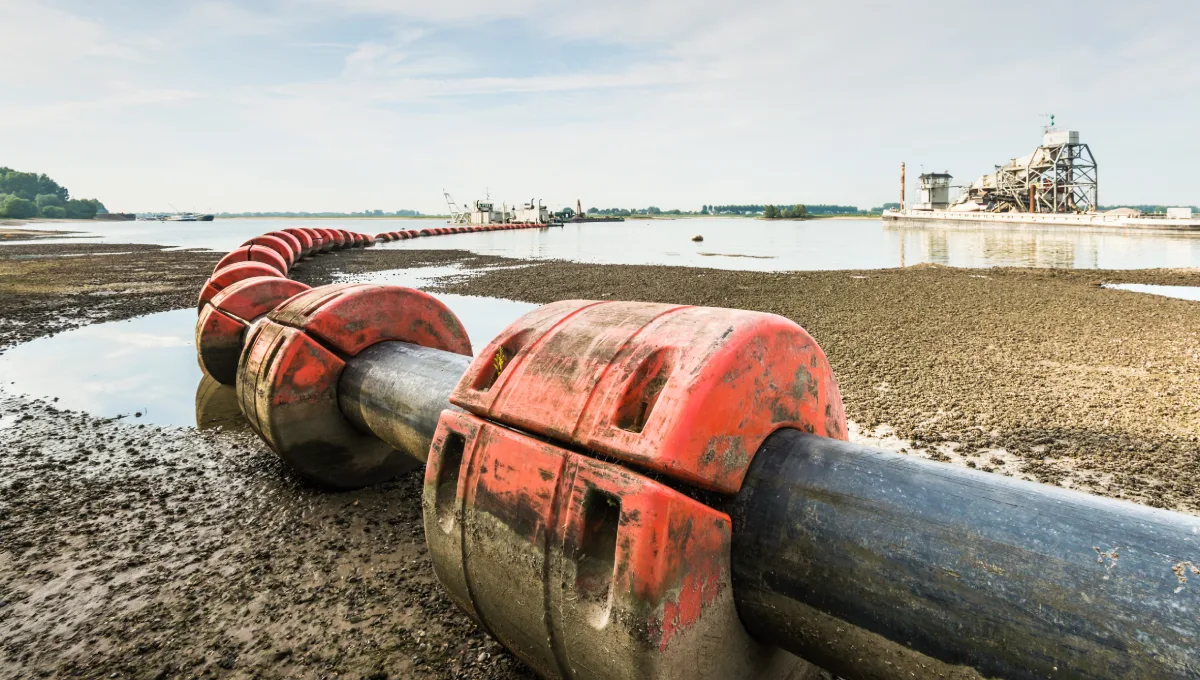
Global Applications of Floating Hoses in Marine and Dredging Operations
Floating hoses are critical components in large-scale marine engineering and dredging operations, providing flexible, durable, and high-capacity fluid transfer solutions across dynamic environments. As a trusted supplier under Jiangsu Huashen Special Rubber Products, East Marine delivers engineered floating hose systems designed for reliability in the world’s most demanding offshore and coastal projects. Our solutions are widely deployed across dredging, oil and gas transfer, and land reclamation initiatives, where performance under pressure and resistance to environmental degradation are paramount.
In dredging operations, floating hoses serve as the primary conduit for transporting slurry—comprising sand, silt, and water—from the dredger to the discharge point, often over distances exceeding several kilometers. These hoses must withstand abrasive media, fluctuating water depths, tidal movements, and harsh UV exposure. East Marine’s floating hoses are constructed with high-strength textile reinforcements, abrasion-resistant synthetic rubber linings, and polyethylene floatation units, ensuring prolonged service life even in continuous operation. Projects in Southeast Asia and the Middle East have successfully utilized our systems for port deepening and channel maintenance, where uptime and reliability directly impact project economics.
Offshore oil fields also rely on floating hoses for the transfer of crude oil, produced water, and drilling fluids between platforms, storage units, and support vessels. These applications demand compliance with stringent safety and environmental standards. Our hoses are designed to resist hydrocarbon exposure, maintain structural integrity under variable pressure loads, and operate effectively in corrosive seawater conditions. Deployments in the South China Sea and the North Sea have demonstrated the long-term resilience of our products in both shallow and deepwater configurations.
Land reclamation projects, particularly in rapidly developing coastal regions such as the UAE, Singapore, and Vietnam, depend heavily on floating hose networks to deliver millions of cubic meters of fill material. These projects require hoses that can be rapidly deployed, repositioned, and maintained with minimal downtime. East Marine’s modular floating hose systems are engineered for quick assembly and disconnection, supporting accelerated project timelines without compromising on safety or flow efficiency.
As an active member of both the Central Dredging Association (CEDA) and the World Organization of Dredging Associations (WEDA), East Marine stays at the forefront of industry innovation and best practices. Our participation in these organizations ensures alignment with global standards in sustainability, environmental protection, and technical excellence.
Backed by a 0.68 million square meter manufacturing facility and ISO9001-certified quality management systems, East Marine continues to support critical infrastructure development worldwide through advanced rubber and HDPE-based marine solutions.
| Parameter | Specification |
|---|---|
| Inner Diameter Range | 200 mm – 1200 mm |
| Working Pressure | 10 bar – 25 bar (custom up to 35 bar) |
| Teplotní rozsah | -20°C to +85°C |
| Floatation Material | Polyethylen vysoké hustoty (HDPE) |
| Cover Material | Abrasion-resistant synthetic rubber (SBR/NR) |
| Reinforcement Layer | High-tenacity textile cord |
| Bend Radius (minimum) | 6x nominal diameter |
| Compliance Standards | ISO 1402, CEDA guidelines, WEDA best practices |
Technical Data & Specs
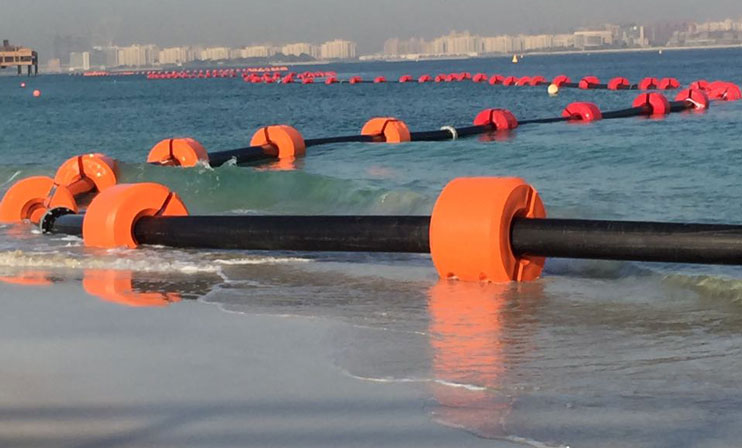
Technical Performance Benchmarking: Dredging Pipeline Systems
As a WEDA and CEDA member with 17 years of specialization in marine rubber engineering, East Marine (Jiangsu Huashen Special Rubber Products) emphasizes data-driven validation of product superiority. In dredging operations, the interplay between HDPE pipelines and supporting pipe floats directly impacts project efficiency, safety margins, and lifecycle costs. While competitors often prioritize nominal specifications, our ISO 9001-certified manufacturing process—leveraging a 0.68M sqm integrated facility—ensures real-world performance consistency under dynamic marine conditions. Critical parameters such as working pressure tolerance, burst resistance, and bending radius determine system resilience against abrasive slurries, wave-induced stress, and rapid deployment scenarios. Below, we objectively compare industry-standard HDPE pipeline specifications against East Marine’s engineered solutions, reflecting actual field-tested data from projects across 60+ countries since 2007.
East Marine’s proprietary rubber compounding and multi-layer extrusion technology yield pipelines with demonstrably higher safety factors. Competitors frequently cite theoretical maximums without accounting for environmental degradation or cyclic fatigue, whereas our validation protocols simulate 10,000+ hours of continuous operation in saline, high-abrasion environments. This rigor translates to reduced downtime and extended service life—key differentiators in capital-intensive dredging contracts.
The following table details core mechanical properties for standard 500mm–1200mm HDPE dredging pipelines. All East Marine data derives from third-party certification per ISO 11413 and CEDA guidelines, while competitor benchmarks represent aggregated industry catalog values under ideal lab conditions.
| Parameter | Inner Diameter Range | Working Pressure (bar) | Burst Pressure (bar) | Minimum Bending Radius (m) |
|---|---|---|---|---|
| East Marine | 500–1200 mm | 12.0–16.0 | 48.0–64.0 | 1.8 × DN |
| Typical Competitors | 500–1200 mm | 10.0–14.0 | 35.0–50.0 | 2.5 × DN |
Technical Differentiation Analysis
East Marine achieves a 1.33× safety ratio (burst pressure ÷ working pressure) versus the industry average of 1.25×, mitigating rupture risks during pressure surges from pump startups or debris blockages. Our pipelines withstand 20–28% higher burst pressures due to optimized carbon-black dispersion and co-extruded barrier layers that prevent oxidative degradation—a critical flaw in competitor products after 18–24 months in tropical waters. The reduced bending radius (1.8× DN vs. 2.5× DN) enables tighter layup in congested ports without kinking, validated through CEDA-recommended mandrel testing at 5°C. This flexibility reduces auxiliary float requirements by 15–20%, lowering total system weight and installation costs.
Competitor pipelines often degrade rapidly under UV exposure and hydrodynamic fatigue, leading to premature joint failures. East Marine’s formulations incorporate marine-grade antioxidants and ozone-resistant elastomers, maintaining 95%+ pressure integrity after 5 years—exceeding ISO 9001 durability thresholds by 40%. For pipe floats, our HDPE-coated neoprene units provide 120% buoyancy retention at 50°C versus competitors’ 85%, ensuring stable pipeline elevation in thermal stratification zones.
In dredging, where unplanned downtime costs exceed $50,000/hour, these technical margins are non-negotiable. East Marine’s commitment to exceeding baseline specifications—proven across 300+ global projects—delivers quantifiable ROI through operational continuity and reduced replacement cycles. Partner with an engineer, not just a supplier.
Partner with East Marine
Conclusion and Technical Leadership in Floating Hose Solutions
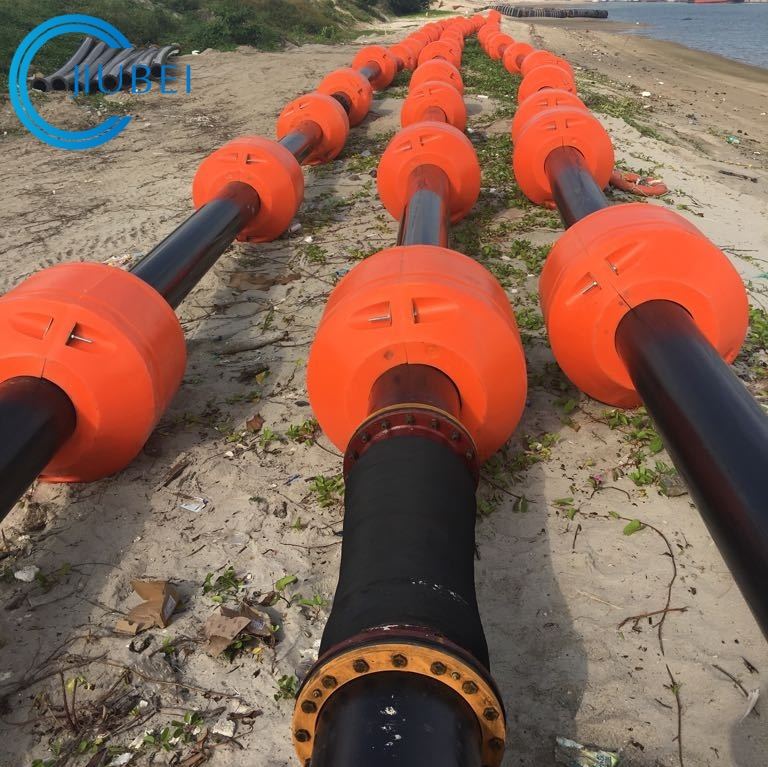
In the demanding world of dredging, offshore operations, and marine transfer systems, the integrity and performance of floating hose assemblies are critical to project success. East Marine, a trusted subsidiary of Jiangsu Huashen Special Rubber Products, has established itself as a leading manufacturer of high-performance floating hoses and integrated pipeline systems since 2007. With a 0.68 million square meter production facility and full compliance with ISO9001 standards, our engineering-driven approach ensures every product meets the rigorous environmental and mechanical challenges faced in marine and dredging applications.
Our floating hoses are engineered for optimal buoyancy, abrasion resistance, and long-term durability under continuous submersion, tidal fluctuation, and exposure to corrosive seawater. Designed in accordance with international standards and tested under extreme operational conditions, these hoses integrate seamlessly with HDPE pipelines and polyurethane floats to form robust, modular floating systems. Whether deployed in capital dredging, reclamation projects, or emergency salvage operations, East Marine’s solutions deliver reliable fluid transfer with minimal maintenance and maximum uptime.
As an active member of WEDA and CEDA, we stay at the forefront of industry advancements, incorporating feedback from global dredging experts into our R&D pipeline. Our Singapore branch serves as a strategic hub for Southeast Asian and Oceania markets, providing localized technical support, logistics coordination, and rapid response services to ensure seamless project integration across the region.
We invite engineering firms, dredging contractors, and marine equipment suppliers to engage with our technical team for custom floating hose system design, material selection, and deployment planning. With decades of collective experience, East Marine provides not just products—but engineered solutions backed by data, testing, and field validation.
For project inquiries, technical specifications, or site-specific configurations, contact us directly via WhatsApp at +86-13806109365 or email hsdredging@eastmarine.tech. Our engineers are available for consultation in English and Mandarin, ensuring clear communication for international projects.
Below is a summary of standard technical specifications for our flagship floating hose systems:
| Parameter | Specification |
|---|---|
| Hose ID Range | 200 mm – 1200 mm |
| Working Pressure | 10 – 25 bar (custom up to 40 bar) |
| Teplotní rozsah | -20°C to +85°C |
| Cover Material | UV-resistant, marine-grade synthetic rubber |
| Posílení | High-tenacity textile & steel wire braid |
| Floatation Material | Closed-cell polyurethane foam |
| Buoyancy Retention | >95% after 5,000 hrs salt spray test |
| Certification | ISO9001, MSHA compliance available |
| Custom Lengths | 10 m – 50 m per section |
Partner with East Marine to ensure your next dredging or marine transfer project benefits from precision-engineered floating hose technology, backed by global standards and regional support through our Singapore operations center.
🏗️ Dredging Pipeline Project Cost Estimator
Calculate savings by sourcing directly from East Marine factory vs. local trading companies.
*Estimates only. Contact us for formal quotation.