Beschreibung
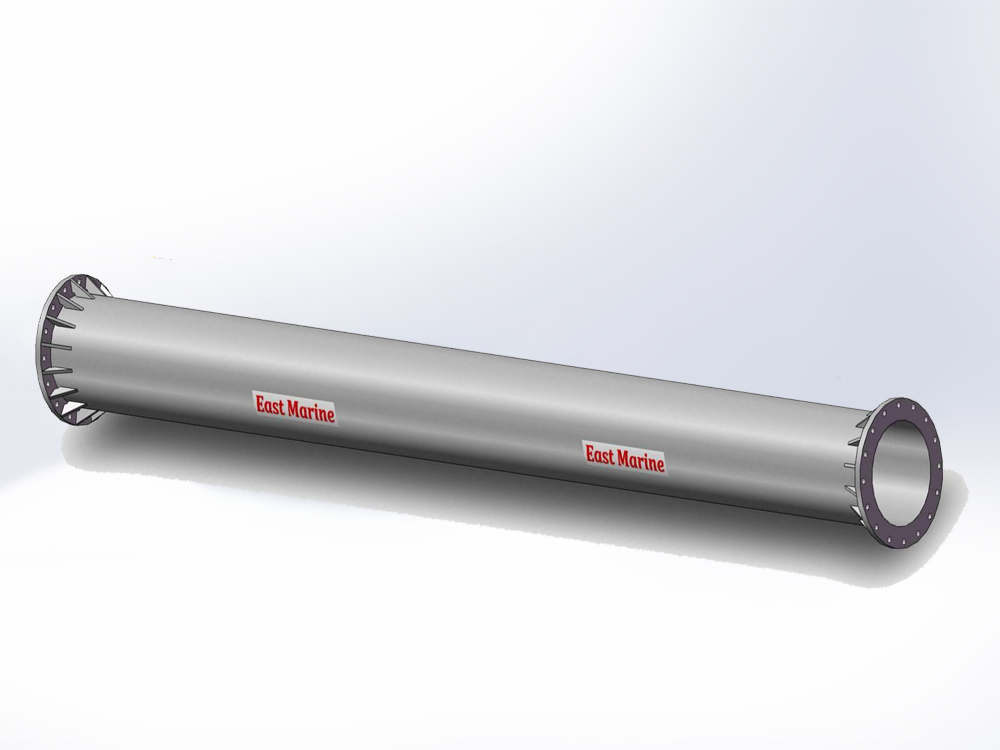
Dredging Steel Pipe
Dredging steel pipes are essential components in dredging systems, designed to transport slurry mixtures of sand, water, and sediment efficiently and safely.
Widely used in port construction, channel dredging, land reclamation, and offshore projects, they provide the strength and durability required for demanding environments.
They connect dredgers, pump stations, and discharge areas, enabling seabed or riverbed materials to be conveyed steadily and efficiently to designated locations.
Specifications:
| Descriptions | Einzelheiten |
| Produktname | Dredging Steel Pipe |
| Origin | China |
| Inner Diameter(ID) | 100-1100mm |
| Length | 500-11800mm |
| Working Pressure(WP) | 0.5-4.2Mpa |
| Burst Pressure(BP) | 1.5-12.6Mpa |
| Flange Type | Steel Flange |
| Anmeldung |
Offshore Dredging Pipeline or other Dredging Project |
Key Benefits and Features:
- Steel pipe offers excellent pressure resistance and anti-abrasion performance, making it particularly suitable for heavy-duty, high-wear dredging conditions.
- With high structural rigidity and minimal deformation, steel pipes maintain good pipeline stability and provide reliable support for the entire conveying system.
- By increasing wall thickness or adopting internal wear-resistant linings, the service life can be further extended, effectively reducing overall maintenance and replacement costs.
- Dredging steel pipes can be flexibly connected to various pipeline systems through standard flanges, allowing easy configuration and combination for different operating conditions.
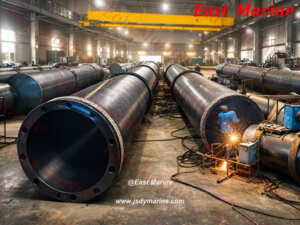
Dredging Steel Pipe Types
Land Steel Pipes:
Designed for onshore slurry transportation. Cost-effective and easy to install along discharge lines.
Floating Steel Pipes:
Used in water environments with PE floats to provide buoyancy. Suitable for offshore and nearshore dredging operations.
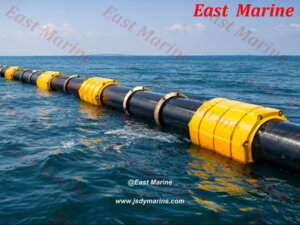
Submerged Steel Pipes:
Installed underwater, often with added weight to ensure stability. Connect floating pipelines to onshore systems.
Dredging steel pipe Inspection:
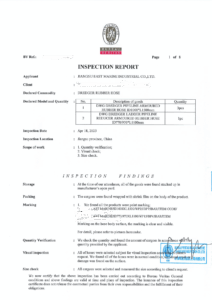
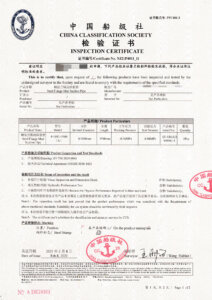
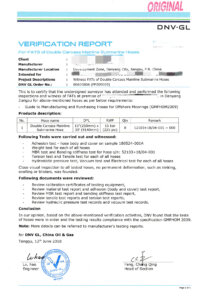
To ensure each dredging steel pipe meets the required performance and safety standards, a series of strict inspections and tests are carried out throughout the production process:
-
Raw Material Test: Each batch of raw materials, including natural rubber, tensile textile, and rubber additives, is carefully inspected before entering the warehouse to ensure quality consistency and durability.
-
Hose Dimension Check: The hose’s inner and outer diameters, wall thickness, and flange alignment are measured to confirm they meet design specifications.
-
Weight Check: Each hose is weighed to verify it falls within the acceptable tolerance range, ensuring uniform product quality.
-
Working Pressure Test (if specified): The hose is subjected to pressure testing to confirm its ability to safely withstand the specified working pressure without leakage or deformation.
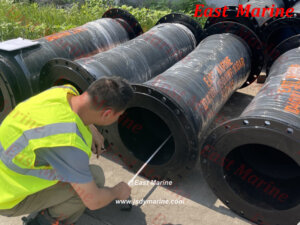
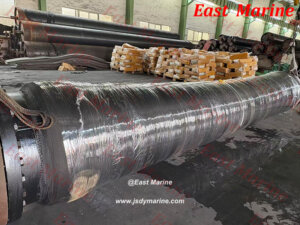
For additional assurance, we can invite third-party inspection agencies to conduct inspections according to customer requirements.
Dredging steel pipe Packaging Information:
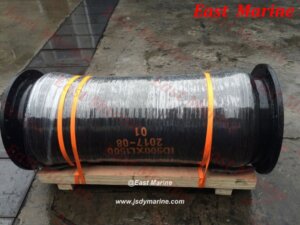
To ensure the safety of transporting steel pipes and maximize loading efficiency, we adopt different packaging methods according to the order quantity:
-
Bulk cargo: Delivered in loose packing to the port and then consolidated into containers.
-
Small-volume cargo: Secured on wooden pallets before being loaded into containers to ensure stability and safety during transportation.
_1000x750-300x225.jpg)
Trusted Dredging Steel Pipe Manufacturer
With a proven track record in offshore and subsea projects, our PE Floats are trusted by professionals worldwide for their reliability, performance, and customization capabilities. We provide engineered buoyancy solutions tailored to specific project requirements, ensuring safe and efficient pipeline installation in all marine environments.