Article Contents
Engineering Insight: Oil And Gas Field Development
Technical Importance of Oil and Gas Field Development in Marine Transfer Systems
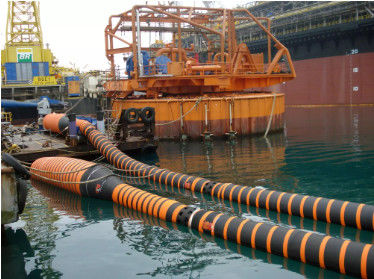
Oil and gas field development is a critical phase in the energy value chain, encompassing the design, construction, and operation of infrastructure necessary to extract, process, and transport hydrocarbons from subsea reservoirs to onshore refineries or storage terminals. In offshore environments, this development relies heavily on advanced marine systems such as Ship-to-Ship (STS) transfer, Floating Production Storage and Offloading (FPSO) units, and Single Point Moorings (SPM). These systems demand robust, high-performance components—particularly marine hoses—that ensure safe, efficient, and compliant hydrocarbon transfer under extreme operational conditions.
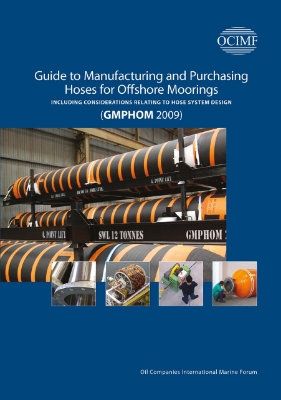
STS transfer operations are essential for lightering, cargo balancing, and logistical flexibility, especially in regions lacking port infrastructure. These operations require hoses that meet stringent OCIMF (Oil Companies International Marine Forum) and GMPHOM (Guidelines for Marine Petroleum Hoses) standards to prevent leaks, withstand dynamic vessel movements, and resist environmental degradation. Similarly, FPSOs serve as central hubs in offshore fields, integrating production, storage, and offloading functions. The hoses used in FPSO offloading systems must endure prolonged exposure to crude oil, varying pressures, and marine biofouling while maintaining structural integrity over extended service cycles.
SPM systems, often deployed in shallow or congested waters, enable mooring and transfer operations without requiring tankers to dock. The marine hoses in these configurations are subjected to continuous flexing, wave action, and potential abrasion, necessitating superior elastomeric compounds and reinforced construction. In all these applications, the reliability of the hose assembly directly impacts operational safety, environmental compliance, and economic efficiency.
East Marine, a subsidiary of Jiangsu Huashen Special Rubber Products, brings over 15 years of engineering excellence to the offshore energy sector. With a dedicated team of more than 150 professionals—including material scientists, mechanical engineers, and field technicians—the company has developed a reputation for delivering mission-critical rubber solutions tailored to complex offshore demands. Our engineering capabilities span finite element analysis (FEA), dynamic load simulation, and full-scale prototype testing, ensuring that every hose system is optimized for real-world performance.
Manufactured in our 0.68 million sqm facility in Jiangsu, China, East Marine’s OCIMF/GMPHOM-compliant hoses integrate advanced rubber formulations with multi-layer reinforcement to deliver exceptional fatigue resistance, kink prevention, and pressure stability. As an active member of WEDA and CEDA, and certified under ISO9001, we adhere to the highest international standards in quality management and environmental stewardship.
The following table outlines key technical specifications of East Marine’s standard offshore marine hose series:
| Parameter | Value/Range |
|---|---|
| Internal Diameter | 4″ to 20″ (100 to 500 mm) |
| Working Pressure | 15 to 25 bar (217 to 362 psi) |
| Test Pressure | 1.5x Working Pressure (min) |
| Temperaturbereich | -30°C to +85°C (-22°F to +185°F) |
| Bend Radius (Minimum) | 6x Nominal Diameter |
| Cover Material | CR (Chloroprene) or EPDM, Abrasion-Resistant |
| Reinforcement Layers | 2–4 layers of high-tensile textile and steel wire |
| Compliance Standards | OCIMF, GMPHOM, ISO 14552, API 15S |
| Service Life (Typical) | 10+ years with proper maintenance |
East Marine continues to support global oil and gas field development with engineered resilience, precision manufacturing, and technical innovation.
Advanced Manufacturing Process
Precision Manufacturing and Vulcanization for OCIMF-Compliant Offshore Marine Hoses
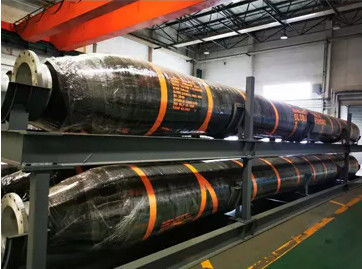
At East Marine, a subsidiary of Jiangsu Huashen Special Rubber Products and a trusted WEDA/CEDA member since 2007, the manufacturing of OCIMF/GMPHOM certified offshore marine hoses for oil and gas field development is executed within our 0.68 million square meter integrated facility. This scale, among the largest dedicated to marine rubber products in Asia, houses 18 specialized production lines engineered for the stringent demands of subsea and floating hose systems. Central to our process is the critical vulcanization phase, where raw compounded rubber achieves its final, mission-critical physical properties through precisely controlled thermal and pressure treatment. Vulcanization is not merely a curing step; it is the molecular transformation that creates the durable cross-linked polymer network essential for withstanding extreme offshore pressures, abrasive media, corrosive seawater, and cyclic flexing inherent in oil transfer operations.
Our manufacturing sequence begins with meticulous compounding of premium synthetic rubbers, reinforcing fillers, and additives, formulated to meet specific OCIMF Annex requirements for oil resistance, ozone stability, and low-temperature flexibility. The compounded material is then precision-extruded onto high-tensile steel wire reinforcement carcasses, followed by the application of multiple protective cover layers. The assembled hose blank enters the vulcanization stage within state-of-the-art autoclaves or continuous vulcanization lines. Here, exacting control over time, temperature (typically 140°C to 180°C), and internal steam or nitrogen pressure is paramount. Deviations of mere degrees or minutes can compromise the hose’s burst strength, adhesion between layers, or long-term fatigue resistance. East Marine employs real-time monitoring systems with automated feedback loops to ensure every meter of hose achieves optimal cross-link density, guaranteeing consistent performance across the entire production run.
Rigorous quality control, underpinned by our ISO 9001 certified management system, is embedded at every stage, but is especially critical during and after vulcanization. Non-destructive testing verifies uniform curing, while destructive tests on production samples validate ultimate properties. The table below outlines key vulcanization and post-vulcanization verification parameters essential for OCIMF compliance.
Technical Verification Parameters for OCIMF Marine Hoses
| Parameter Category | Test Standard | Typical Requirement Range | Verification Frequency |
|---|---|---|---|
| Vulcanization Temperature | Internal Monitoring | ±2°C of Setpoint | Continuous per Batch |
| Hydrostatic Proof Test | OCIMF Annex 1, 5.3.2 | 1.5x MOP for 5 min | 100% of Production |
| Burst Pressure | ISO 1402 | ≥ 5x MOP | Per Production Sample |
| Adhesion Strength | ISO 813 | ≥ 6 kN/m | Per Production Sample |
| Flexing Endurance | OCIMF Annex 1, 5.3.5 | ≥ 10,000 cycles | Per Production Sample |
The integration of our 0.68 million sqm facility’s scale with 18 dedicated production lines enables unparalleled consistency and throughput, while the unwavering focus on vulcanization science and ISO-mandated quality protocols ensures every hose leaving East Marine delivers the reliability demanded by offshore oil and gas operators. This disciplined approach minimizes project downtime risk and safeguards critical marine environments during hydrocarbon transfer operations.
Critical Applications
Global Applications of Offshore Marine Hoses in Oil and Gas Field Development
Offshore oil and gas field development represents one of the most technically demanding sectors within the global energy industry. As hydrocarbon exploration expands into deeper waters and more remote regions, the demand for reliable, high-performance marine hose systems has increased significantly. East Marine, a subsidiary of Jiangsu Huashen Special Rubber Products and a proud member of both CEDA (Central Dredging Association) and WEDA (Western Dredging Association), delivers engineered marine hose solutions that meet OCIMF (Oil Companies International Marine Forum) and GMPHOM (Good Marine Practice for Hoses and Offshore Mooring) standards. These hoses are critical in ensuring safe, efficient, and environmentally compliant transfer operations across a range of offshore and coastal infrastructure projects.
Oil and gas field development is primarily executed in offshore environments where subsea reservoirs are accessed via fixed platforms, floating production storage and offloading (FPSO) units, or subsea manifolds. In such settings, marine hoses are deployed for the transfer of crude oil, refined products, and drilling fluids between vessels, platforms, and onshore terminals. The dynamic nature of offshore operations—subject to wave action, vessel motion, and harsh weather—demands hoses with superior flexibility, abrasion resistance, and fatigue endurance. East Marine’s reinforced rubber hoses, designed with multi-layered construction and high-tensile textile or steel reinforcements, meet these operational challenges while complying with stringent international safety protocols.
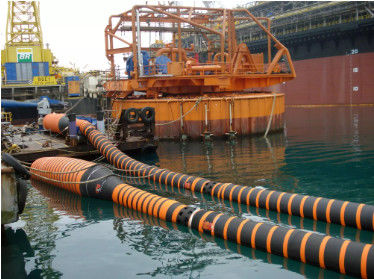
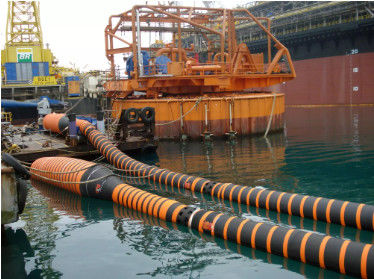
Beyond traditional offshore platforms, marine hoses play a vital role in integrated coastal and marine infrastructure projects. Dredging operations, essential for maintaining navigable waterways and constructing port facilities, often require temporary fuel and lubricant supply lines in dynamic environments. East Marine’s floating hose systems provide reliable fuel transfer solutions for dredgers operating in estuaries, river mouths, and coastal zones. These systems are rapidly deployable, resistant to UV and saltwater degradation, and engineered for long service life under continuous flexing.
Additionally, land reclamation projects—particularly those supporting offshore energy hubs or LNG terminals—rely on coordinated dredging and material transport, where marine hoses are used not only for fueling but also for dewatering and slurry transfer. In regions such as Southeast Asia and the Middle East, where large-scale reclamation supports energy infrastructure, East Marine’s compliant hose systems ensure uninterrupted operations while adhering to environmental and safety regulations.
With over 17 years of industry experience since the parent company’s founding in 2007, and operating from a 0.68 million square meter manufacturing facility, East Marine combines advanced rubber compounding, rigorous quality control (ISO9001 certified), and global project insight to support complex offshore developments.
| Parameter | Spezifikation |
|---|---|
| Hose Diameter Range | 4” to 24” (100–600 mm) |
| Druckstufe | Up to 25 bar (362 psi) |
| Temperaturbereich | -30°C to +85°C (-22°F to +185°F) |
| Standards Compliance | OCIMF, GMPHOM, ISO 13623, API 15S |
| Cover Material | Abrasion-resistant, ozone & UV resistant |
| Reinforcement Layers | 2–6 layers of high-tenacity textile/steel |
| Bend Radius (Minimum) | 6x nominal hose diameter |
| Zertifizierungen | DNV-GL, ABS, CCS, LR (upon request) |
Technical Data & Specs
Technical Performance Comparison of OCIMF-Compliant Marine Loading Arms
East Marine, a WEDA/CEDA member and ISO9001-certified manufacturer since 2007, delivers engineered marine hose solutions for critical oil and gas field development operations. Our offshore marine hoses strictly adhere to OCIMF Guidelines for Marine Petroleum Hydrocarbon Operations (GMPHOM), with rigorous validation under dynamic load conditions. Unlike generic competitors, East Marine leverages proprietary rubber compounding and multi-layer reinforcement architectures to exceed baseline safety margins while optimizing operational flexibility. This section details key technical differentiators between East Marine’s OCIMF-compliant hoses and industry-standard alternatives, focusing on parameters governing safety, longevity, and deployment efficiency in harsh offshore environments.
Competitor hoses often prioritize cost reduction over performance resilience, resulting in conservative pressure ratings and reduced fatigue resistance. East Marine’s advanced vulcanization processes and high-tensile steel cord reinforcement enable superior burst pressure ratios (6:1 minimum) and tighter bending radii without compromising structural integrity. This translates to fewer hose failures during critical transfer operations and extended service life in dynamic wave conditions. Our 0.68M sqm manufacturing facility ensures stringent batch consistency, with every hose undergoing 100% hydrostatic testing per OCIMF Section 13.4.3.
The following table compares critical technical specifications for standard 16″–24″ offshore marine hoses under OCIMF/GMPHOM compliance:
| Parameter | East Marine Standard Hose | Typical Competitor Hose | OCIMF Minimum Requirement |
|---|---|---|---|
| Inner Diameter | 16″–24″ (Customizable) | 16″–24″ | 16″–24″ |
| Working Pressure | 25 bar (363 psi) | 15–20 bar (218–290 psi) | 15 bar (218 psi) |
| Burst Pressure | ≥150 bar (2,175 psi) | 60–100 bar (870–1,450 psi) | 75 bar (1,088 psi) |
| Bending Radius | 10.5× ID (Dynamic Load) | 12–15× ID | 12× ID |
East Marine’s hoses achieve a 25 bar working pressure—25% higher than typical competitors—without increasing wall thickness, due to our patented carcass design. This elevated pressure rating provides critical safety headroom during surge events, directly mitigating rupture risks during tanker loading/unloading. The 150+ bar burst pressure (6:1 ratio) significantly exceeds both OCIMF’s 5:1 minimum and competitor offerings (typically 4:1–5:1), ensuring robustness against transient pressure spikes. Crucially, our bending radius of 10.5× ID under dynamic load conditions outperforms standard 12× ID requirements, enabling tighter hose routing around vessel superstructures and reducing stress concentrations during vessel motion. This geometric advantage minimizes fatigue-induced cracking in the cover and reinforcement layers, a common failure point in competitor hoses during prolonged offshore operations.
For oil and gas developers, these specifications directly impact project economics: higher working pressures accelerate transfer rates, while extended bending radius tolerance reduces the need for costly intermediate buoy configurations. East Marine’s adherence to GMPHOM Rev. 5, combined with in-house R&D validated through CFD flow analysis, ensures compliance without operational compromise. Partner with a manufacturer whose technical rigor matches the demands of deepwater field development—where safety margins are non-negotiable and performance dictates project viability.
Partner with East Marine
Partner with East Marine for Reliable Offshore Marine Hose Solutions in Oil & Gas Field Development
In the demanding environment of offshore oil and gas field development, the integrity and performance of fluid transfer systems are critical to operational success, safety, and environmental compliance. East Marine, a trusted subsidiary of Jiangsu Huashen Special Rubber Products, delivers engineered marine hose solutions that meet the stringent requirements of the global energy sector. As a certified supplier adhering to OCIMF and GMPHOM standards, we specialize in high-performance offshore marine hoses designed for floating production, storage, and offloading (FPSO) operations, crude oil transfer, and shuttle loading applications in challenging marine conditions.
Our hoses are built to withstand extreme pressures, harsh weather, abrasive environments, and continuous flexing, ensuring long service life and minimal downtime. With over 17 years of industry experience since our founding in 2007, we combine advanced rubber compounding technology with rigorous quality control to deliver products that meet ISO 9001 standards and exceed client expectations. Our 0.68 million square meter manufacturing facility in China is equipped for large-scale production, while our strategic presence in Singapore enables rapid response and regional support across Southeast Asia and the broader Indo-Pacific market.
East Marine’s commitment to excellence is reinforced by our membership in leading industry organizations such as WEDA and CEDA, reflecting our dedication to innovation and sustainable marine engineering practices. Whether supporting deepwater developments, nearshore terminals, or offshore logistics, our engineering team works closely with clients to customize hose configurations that align with specific project requirements, including dynamic motion compensation, corrosion resistance, and fire-safe design.
For project managers, procurement officers, and offshore operations leaders, selecting a reliable hose supplier is not just about product quality—it’s about partnership, technical support, and supply chain resilience. East Marine offers comprehensive lifecycle support, from initial system design and installation guidance to maintenance planning and emergency replacements.
We invite you to connect with our technical team to discuss your offshore hose needs and explore how our OCIMF-compliant solutions can enhance the safety and efficiency of your oil and gas operations.
| Parameter | Spezifikation |
|---|---|
| Hose ID Range | 6″ to 24″ (150mm to 600mm) |
| Pressure Rating (Max) | Up to 25 bar (363 psi) |
| Temperaturbereich | -30°C to +85°C (-22°F to +185°F) |
| Material Construction | Synthetic rubber (NBR/EPDM), textile braid, steel wire helix |
| Standards Compliance | OCIMF, GMPHOM, ISO 10562, API 15F |
| End Fittings | Flanged (ANSI, DIN, JIS), coupled with marine swivel joints |
| Certification | ISO 9001, DNV-GL Type Approved (upon request) |
| Typical Applications | FPSO/FSO offloading, crude oil transfer, offshore supply |
Contact East Marine today via WhatsApp at +86-13806109365 or email hsdredging@eastmarine.tech to speak with a solutions engineer. Our Singapore branch ensures localized technical support, inventory availability, and project coordination for clients across the region. Let East Marine be your trusted partner in offshore fluid transfer—delivering durability, compliance, and performance where it matters most.
🏗️ Dredging Pipeline Project Cost Estimator
Calculate savings by sourcing directly from East Marine factory vs. local trading companies.
*Estimates only. Contact us for formal quotation.