Article Contents
Engineering Insight: Floating Hoses
Technical Imperatives of Floating Hoses in Marine Dredging Operations
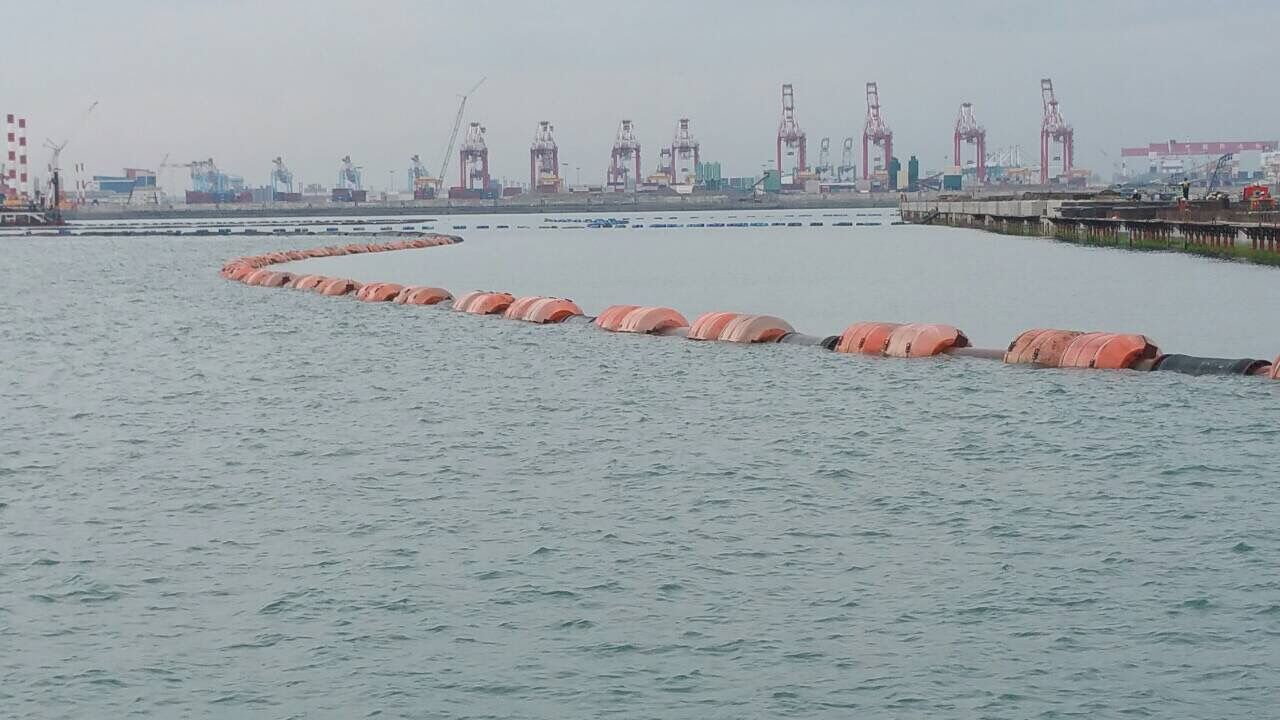
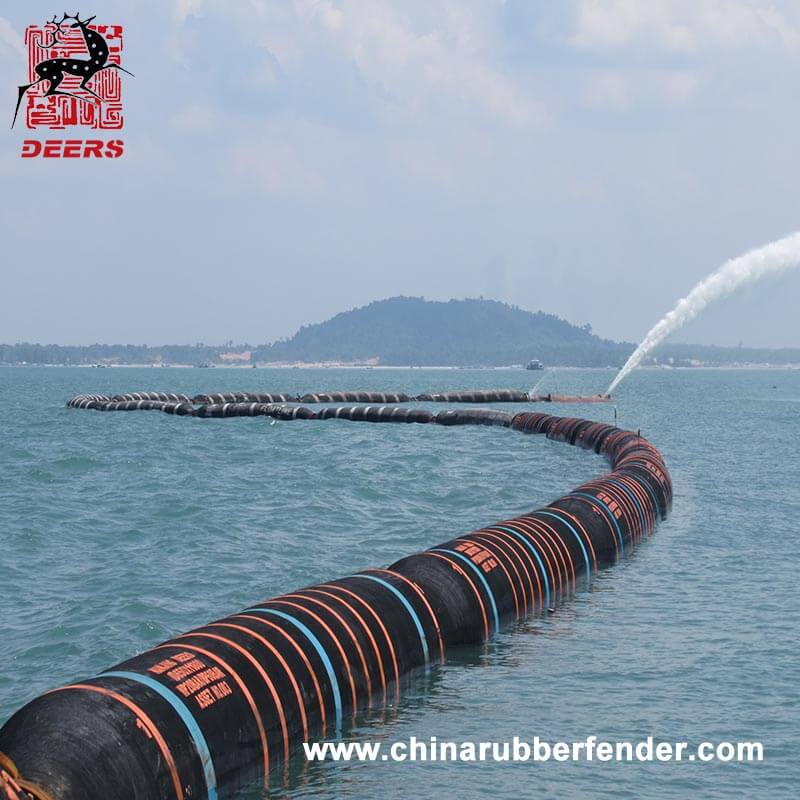
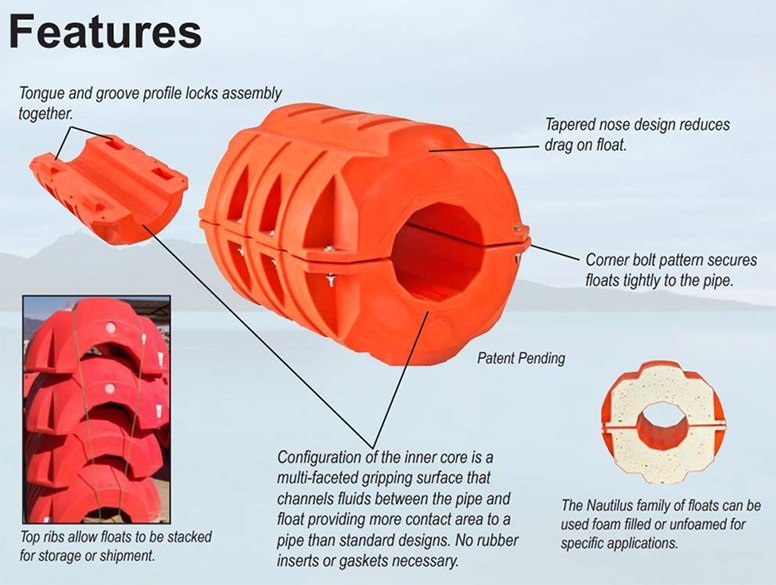
Floating hoses represent a critical engineering solution for maintaining operational continuity in offshore and nearshore dredging projects. These specialized buoyant pipeline sections are not merely passive flotation devices; they are dynamically engineered systems designed to actively support flexible discharge pipelines under significant hydrodynamic stress. Their primary technical function is to counteract the combined weight of the pipeline, slurry media, and marine growth while simultaneously accommodating complex wave-induced motions. In calm seas, precise buoyancy calibration prevents pipeline sagging and excessive tension on shore connections. In rough seas, the articulated design of high-quality floating hoses becomes indispensable, allowing controlled movement to absorb wave energy without transferring destructive cyclic loads to the submerged pipeline or vessel manifold. Failure to implement properly engineered floating hose systems risks catastrophic pipeline fatigue, joint separation, or vessel disconnection—events that trigger costly project delays and safety hazards. The hydrodynamic stability provided by these components directly influences slurry flow efficiency, minimizing pressure fluctuations that can cause settling or blockages in the discharge line.
East Marine leverages its 150+ technical staff, including 35+ degreed engineers specializing in fluid dynamics and elastomer science, to address these demanding marine challenges. Our engineering team applies advanced finite element analysis (FEA) to model hose behavior under extreme wave spectra and operational loads, ensuring each system is optimized for the specific project environment. As active WEDA and CEDA members since 2007, we maintain rigorous adherence to ISO 9001 quality protocols across our 0.68 million sqm manufacturing facility, translating theoretical design into field-proven reliability. This deep technical capability ensures our floating hoses deliver consistent performance where generic solutions often fail—particularly in maintaining pipeline alignment during vessel drift or tidal shifts, thereby protecting the entire discharge system’s integrity.
The following table details core technical specifications for East Marine’s standard floating hose series, engineered for global dredging applications:
| Parameter | Standard Range | High-Performance Option | Test Standard |
|---|---|---|---|
| Nominal Diameter | 300 – 1200 mm | 1400 – 1600 mm | ISO 1402 |
| Buoyancy Force | 1.8 – 7.5 kN/m | 9.0 – 12.0 kN/m | ASTM F1321 |
| Operating Pressure | 10 – 16 bar | 20 – 25 bar | ISO 1402 Annex B |
| Bend Radius (Min) | 4.5 x ID | 3.8 x ID | ISO 1307 |
| Temp Range | -25°C to +85°C | -35°C to +100°C | ISO 37 |
| Cover Material | Abrasion-Resistant SBR | Marine-Grade EPDM | ISO 188 |
| Connection Type | Flanged (PN16/ANSI 150) | Welded/Clamped Hybrid | API 6A |
East Marine’s floating hoses integrate proprietary rubber compounding—field validated in over 200 global projects—to resist ozone degradation, seawater immersion, and abrasive slurry contact. Our engineering process prioritizes fatigue life extension through optimized carcass reinforcement and stress-distribution geometry, directly addressing the cyclical strain inherent in open-sea operations. This technical focus ensures dredging contractors achieve maximum uptime, even in the most challenging marine conditions, by transforming a potential failure point into a resilient operational asset.
Advanced Manufacturing Process
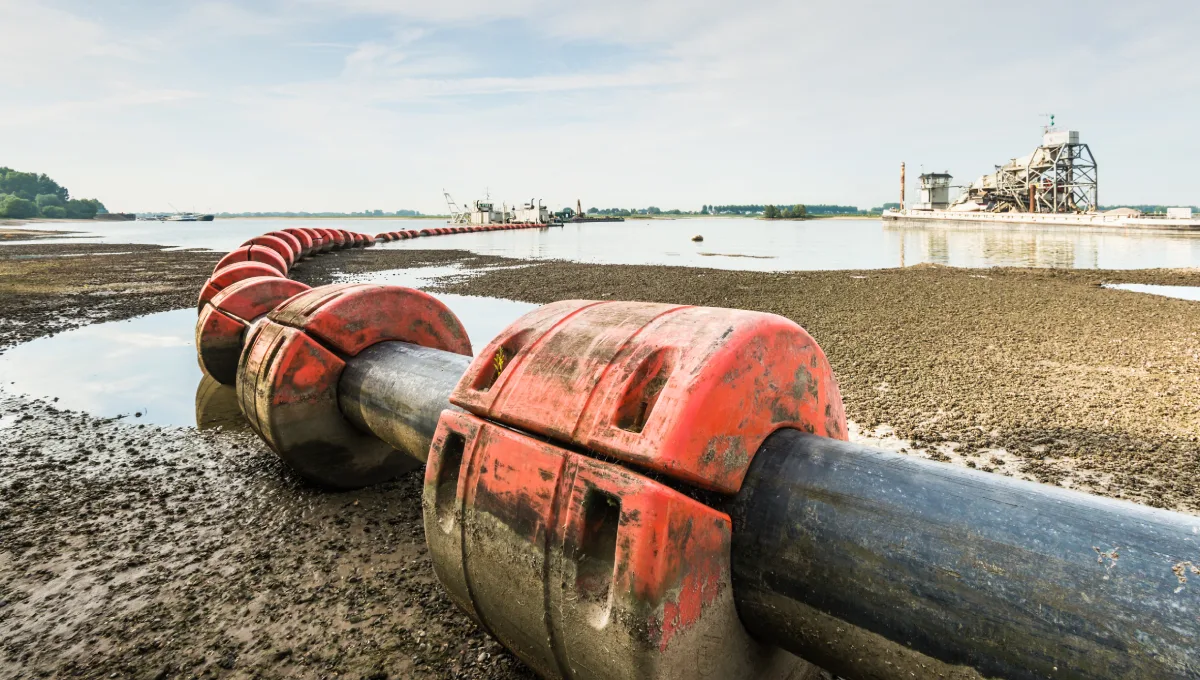
Advanced Manufacturing and Vulcanization Process for Floating Hoses at East Marine
At East Marine, a subsidiary of Jiangsu Huashen Special Rubber Products, the production of high-performance floating hoses for dredging and marine applications is driven by precision engineering, advanced rubber technology, and rigorous quality control. Our 0.68 million square meter manufacturing facility, one of the largest in the industry, houses 18 dedicated production lines equipped with state-of-the-art machinery to ensure consistent output and superior product integrity.
The manufacturing process begins with the selection of premium-grade synthetic rubber compounds, specifically formulated for resistance to abrasion, UV exposure, and seawater corrosion. These compounds are compounded in-house using automated mixing systems that ensure uniform dispersion of additives, including reinforcing fillers and antioxidants. The compounded rubber is then extruded into precise profiles that form the inner tube, cover, and intermediate layers of the floating hose.
Reinforcement is achieved through the integration of high-tenacity textile cords or steel wire braids, depending on the pressure rating and application requirements. These layers are meticulously applied using synchronized winding machines to ensure optimal adhesion and structural stability. The layered assembly is then wrapped with a protective outer casing and prepared for vulcanization.
Vulcanization is the critical phase where the rubber matrix undergoes a chemical cross-linking reaction under controlled heat and pressure. At East Marine, this process is executed in horizontal autoclaves and pressurized curing chambers, where temperature and steam pressure are precisely regulated. This ensures complete and uniform curing throughout the hose structure, enhancing elasticity, tensile strength, and long-term durability. Each floating hose undergoes a minimum vulcanization cycle of 4 to 8 hours, depending on diameter and wall thickness, to achieve optimal physical properties.
Quality control is embedded at every stage of production. As an ISO 9001-certified manufacturer and active member of WEDA and CEDA, East Marine adheres to international standards for design, testing, and documentation. Each hose batch is subjected to hydrostatic pressure testing, dimensional verification, and visual inspection. Non-destructive testing methods, including ultrasonic scanning, are employed to detect internal defects.
Our integrated production ecosystem, supported by 18 synchronized lines and a vast manufacturing footprint, enables scalable output without compromising on precision. This combination of advanced vulcanization technology, material science, and systematic quality assurance ensures that every floating hose leaving our facility meets the demanding requirements of global dredging and offshore operations.
| Parameter | Specification |
|---|---|
| Factory Size | 0.68 million sqm |
| Production Lines | 18 |
| Vulcanization Method | Autoclave and pressurized chamber curing |
| Plage de température | 140–180°C |
| Curing Pressure | 10–16 bar |
| Quality Standard | ISO 9001:2015 |
| Testing | Hydrostatic, dimensional, ultrasonic |
Critical Applications
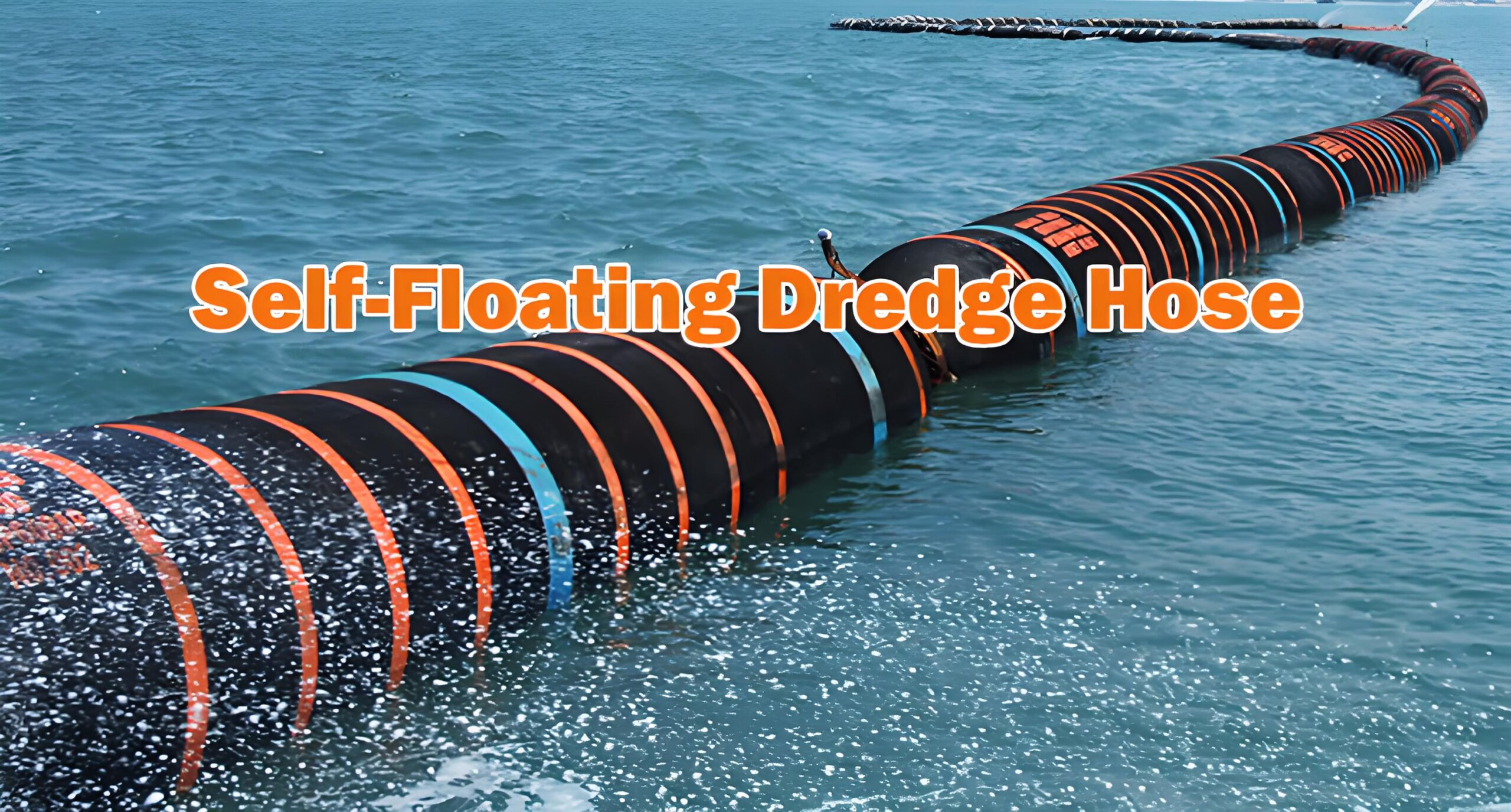
Global Applications of Floating Hoses in Critical Marine Infrastructure Projects
East Marine, a subsidiary of Jiangsu Huashen Special Rubber Products and a proud member of both CEDA (Central Dredging Association) and WEDA (Western Dredging Association), leverages its 0.68 million square meter manufacturing facility and 17 years of specialized expertise to deliver robust floating hose solutions for demanding global marine operations. Our ISO 9001 certified systems are engineered to perform reliably in the most challenging offshore and near-shore environments, forming the critical lifeline for fluid transfer across diverse large-scale projects worldwide. Understanding where these systems are deployed is essential for project planners and engineers seeking resilient infrastructure.
Dredging operations represent a primary application domain for East Marine floating hoses. These systems are indispensable for transporting high-density, abrasive slurries over significant distances during capital, maintenance, and coastal protection dredging projects. Whether deepening navigation channels in major ports like Rotterdam or Singapore, reclaiming land for new urban developments, or maintaining vital river systems, our hoses withstand extreme slurry velocities and continuous submersion. Our CEDA and WEDA membership underscores our deep integration with industry best practices and standards, ensuring our products meet the rigorous demands of modern dredging contractors focused on efficiency and environmental compliance.
Beyond dredging, floating hoses are critical infrastructure in offshore oil and gas fields. They facilitate the transfer of crude oil, refined products, and produced water between Floating Production Storage and Offloading (FPSO) vessels, fixed platforms, and onshore terminals. East Marine hoses are specifically formulated with advanced rubber compounds to resist hydrocarbon degradation, seawater exposure, and the mechanical stresses induced by wave action and vessel movement. This reliability is paramount for maintaining continuous production and safe operations in remote and harsh marine environments, minimizing costly downtime and environmental risks.
Land reclamation projects, particularly large-scale coastal developments and island creation initiatives prevalent across Southeast Asia and the Middle East, heavily rely on floating hose systems. These projects require the massive displacement of sand and sediment, often sourced from distant borrow areas. East Marine floating hoses provide the flexible, high-capacity conduit necessary to pump millions of cubic meters of material, enabling the creation of new land for airports, commercial hubs, and residential zones. The ability to rapidly deploy, reconfigure, and maintain these systems in dynamic shallow-water environments is a key factor in project success and schedule adherence.
The performance parameters of East Marine floating hoses are meticulously engineered to exceed the requirements of these demanding applications. Key specifications ensure operational integrity under extreme conditions.
| Diameter Range (ID) | Pression de service | Plage de température | Minimum Bend Radius |
|---|---|---|---|
| 200 mm – 1200 mm | 6 bar – 25 bar | -30°C to +80°C | 8 x Hose Diameter |
East Marine floating hoses deliver proven performance across dredging, offshore energy, and land reclamation sectors. Our technical expertise, global project experience, and commitment to CEDA/WEDA standards ensure clients receive not just a product, but a mission-critical solution engineered for longevity and operational safety in the world’s most challenging marine construction and resource extraction endeavors. Partner with us for infrastructure that moves forward, reliably.
Technical Data & Specs
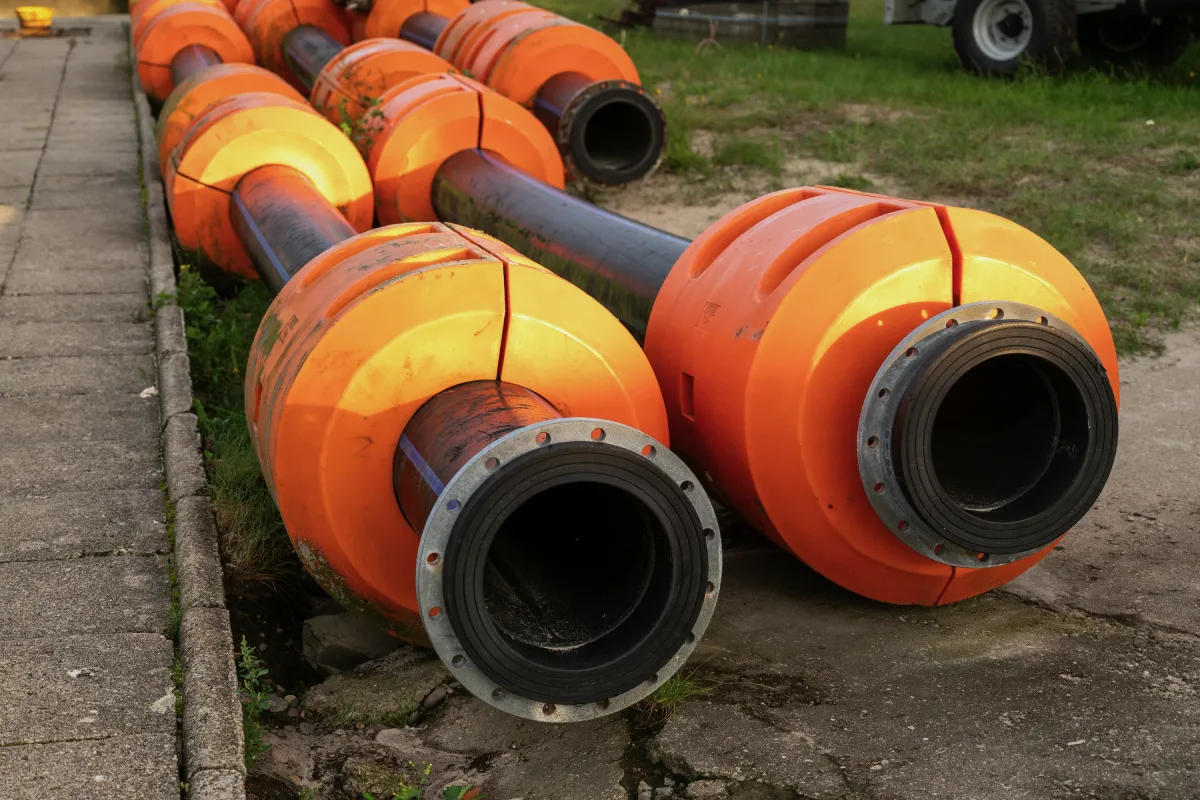
Technical Comparison: Dredging Pipe Floats and HDPE Pipes – East Marine vs. Industry Competitors
In the highly specialized domain of dredging operations, the performance and reliability of floating pipeline systems are critical to project efficiency, safety, and cost-effectiveness. East Marine, a subsidiary of Jiangsu Huashen Special Rubber Products, delivers engineered solutions that meet and exceed international standards for dredging pipe floats and HDPE (High-Density Polyethylene) pipelines. With over 15 years of industry experience, ISO9001 certification, and membership in WEDA and CEDA, East Marine combines advanced material science with rigorous testing protocols to ensure superior product performance.
The core technical parameters that define the operational capability of floating pipeline systems include inner diameter, working pressure, burst pressure, and minimum bending radius. These specifications directly influence flow capacity, structural integrity under load, resistance to surge pressures, and flexibility during installation in dynamic marine environments. East Marine’s HDPE pipes and integrated floatation systems are designed to operate under extreme conditions, offering extended service life and reduced downtime.
When compared to typical industry competitors, East Marine’s products demonstrate clear advantages in pressure handling and structural resilience. Our HDPE pipes are manufactured using high-grade PE100 resin, ensuring excellent slow crack growth resistance and long-term hydrostatic strength. The integrated floatation collars are precision-molded from UV-stabilized polyethylene and bonded with anti-slip rubber liners to protect the pipe and maintain buoyancy alignment.
Competitor products often utilize PE80-grade materials and generic float designs, resulting in lower burst pressure ratings and higher susceptibility to deformation under prolonged stress. Additionally, many standard floating systems exhibit larger bending radii, limiting their adaptability in confined or complex dredging layouts.
East Marine’s engineering team optimizes the interface between pipe and float to minimize stress concentration and enhance system flexibility. This integrated design approach allows for tighter bending radii without compromising structural integrity—critical for maneuvering in harbors, estuaries, or around obstacles.
The following table presents a direct technical comparison between East Marine’s standard dredging pipeline system and average specifications from key market competitors:
| Parameter | East Marine (PE100 + Custom Floats) | Industry Competitors (Typical PE80 Systems) |
|---|---|---|
| Inner Diameter | 200 mm – 1000 mm (custom up to 1200 mm) | 200 mm – 900 mm |
| Pression de service | 16 bar (232 psi) | 10 bar (145 psi) |
| Burst Pressure | ≥ 40 bar (580 psi) | 25–30 bar (363–435 psi) |
| Bending Radius | 2.5 × Pipe Diameter | 4.0 × Pipe Diameter |
This performance edge is validated through in-house hydrostatic testing, finite element analysis (FEA), and field deployment across five continents. East Marine’s commitment to innovation and quality control ensures that every floating pipeline system is built to deliver maximum uptime and operational safety in the most demanding dredging environments.
Partner with East Marine
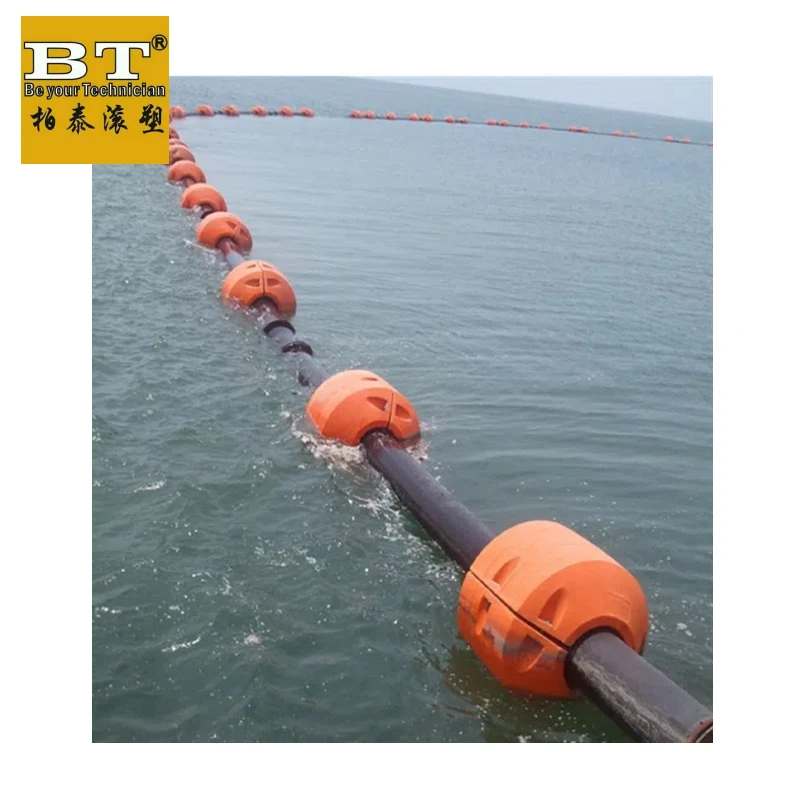
Conclusion: Engineered Excellence for Demanding Marine Operations
East Marine stands as a definitive partner for global dredging and marine infrastructure projects requiring uncompromising performance from floating hose systems. Our engineering rigor, validated through ISO 9001 certification and active WEDA/CEDA membership, ensures every hose assembly transcends standard industry expectations. With a 0.68 million square meter manufacturing ecosystem operational since 2007, we integrate advanced material science with decades of field-proven application knowledge. This enables us to deliver floating hoses that withstand extreme hydrodynamic stresses, abrasive slurries, and corrosive marine environments while maintaining structural integrity over extended operational cycles. The critical parameters defining our product superiority are not merely theoretical; they are engineered into every meter of hose produced, directly impacting project uptime, safety margins, and total cost of ownership for our clients.
Technical validation is paramount in high-stakes marine operations. The following specifications reflect the baseline performance envelope achievable with our standard floating hose configurations, engineered for dredging and transfer applications:
| Parameter | Value | Test Standard | Application Relevance |
|---|---|---|---|
| Operating Pressure | 10-25 bar (145-363 psi) | ISO 1402 | High-volume slurry transfer |
| Vacuum Resistance | Full vacuum (760 mmHg) | ISO 1748 | Prevents collapse during suction |
| Plage de température | -30°C to +85°C (-22°F to +185°F) | ASTM D2240 | Arctic to tropical deployment |
| Abrasion Resistance | >150 mm³ loss (DIN 53516) | ISO 4649 | Extended service life in abrasive media |
These figures represent our commitment to quantifiable reliability. However, East Marine’s true value lies in our capacity to tailor solutions beyond standard catalogs. Whether adapting to ultra-high-pressure requirements, integrating specialized coupling systems for rapid deployment, or formulating compound blends for aggressive chemical environments, our technical team collaborates directly with project engineers to mitigate operational risks at the design phase. This proactive engineering partnership prevents costly field failures and optimizes lifecycle performance.
Initiate Your Technical Consultation Today
Do not compromise on the critical fluid transfer infrastructure underpinning your marine project’s success. East Marine invites dredging contractors, EPC firms, and port authorities to engage our engineering team for a no-obligation technical review. Share your operational parameters, environmental challenges, and performance targets to receive a precisely scoped solution. Our Singapore branch provides localized support for Southeast Asian and Oceania projects, ensuring responsive coordination across time zones with regional logistics expertise. Contact us immediately via WhatsApp at +86-13806109365 for urgent project inquiries or direct technical discussions. Alternatively, email detailed specifications and requirements to hsdredging@eastmarine.tech for a comprehensive engineering proposal within 24 business hours. Leverage our 17 years of specialization in marine rubber systems—where factory scale meets field intelligence—to secure your next project’s fluid transfer integrity. Partner with East Marine: where engineered resilience defines marine operational continuity.
🏗️ Dredging Pipeline Project Cost Estimator
Calculate savings by sourcing directly from East Marine factory vs. local trading companies.
*Estimates only. Contact us for formal quotation.