Article Contents
Engineering Insight: Offshore Marine Hoses
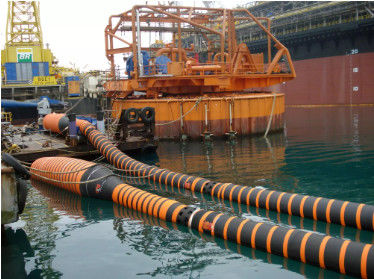
Technical Criticality of Offshore Marine Hoses in Modern Hydrocarbon Transfer Operations
Offshore marine hoses represent a fundamental engineering component in the safe and efficient transfer of crude oil, refined products, and other hydrocarbons within dynamic marine environments. Their technical significance is paramount in Ship-to-Ship (STS) lightering operations, Floating Production Storage and Offloading (FPSO) vessel offloading, and Single Point Mooring (SPM) systems. These applications demand hoses that withstand extreme cyclic flexing, high-pressure differentials, abrasive media, and corrosive seawater while maintaining structural integrity under continuous motion induced by waves, wind, and vessel drift. Failure to meet stringent operational requirements can result in catastrophic environmental incidents, operational downtime, and severe regulatory penalties. Compliance with OCIMF (Oil Companies International Marine Forum) guidelines and adherence to GMPHOM (Guidelines for Marine Petroleum Hoses) standards are non-negotiable, mandating rigorous design validation for fatigue resistance, kink protection, and emergency disconnection capabilities. The hose assembly must function as a reliable pressure boundary under complex multi-axis loading scenarios, where even minor deviations in material selection or construction can accelerate degradation and compromise safety margins.
East Marine, operating as a specialized subsidiary of Jiangsu Huashen Special Rubber Products, leverages deep domain expertise to address these critical challenges. With a dedicated engineering team exceeding 150 specialized professionals, we integrate advanced finite element analysis (FEA), computational fluid dynamics (CFD), and accelerated life-cycle testing into our development process. Our ISO 9001-certified facility, spanning 0.68 million square meters and operating under WEDA/CEDA industry frameworks, ensures end-to-end control from elastomer compounding to final assembly validation. This vertically integrated capability enables precise tailoring of hose architecture—including reinforcement layer geometry, cover compound formulation, and flange integration—to match the specific dynamic loads and fluid compatibility requirements of FPSO swivel stack connections, STS transfer manifolds, or SPM buoy interfaces.
The performance envelope of a modern offshore marine hose is defined by quantifiable engineering parameters, as demonstrated in our standard OCIMF-compliant product line:
Technical Specification Overview for OCIMF-Compliant Marine Hoses
| Parameter | Standard Value Range | Test Standard | East Marine Enhancement |
|---|---|---|---|
| Working Pressure | 15-25 bar | ISO 13628-7 | Optimized braid angle for +12% fatigue life |
| Intervallo di temperatura | -30°C to +85°C | API 17K | Custom EPDM/CR blends for Arctic ops |
| Minimum Bend Radius | 1.8m (DN200) | GMPHOM Annex C | Kink-resistant inner liner geometry |
| Dynamic Flex Life | >50,000 cycles | OCIMF STS Checklist | Validated to 75,000 cycles via FEA |
| Cover Abrasion Resistance | >100 km seawater | ISO 4645 | Nano-reinforced polymer matrix |
Our engineering rigor extends beyond baseline specifications. Each hose system undergoes full-scale dynamic simulation replicating real-world STS motion profiles and FPSO hawser-induced loads, ensuring predictable performance under the combined tension, torsion, and bending moments inherent in open-sea operations. This commitment to technical excellence—backed by 17 years of specialized marine rubber product development since our 2007 founding—directly translates to reduced operational risk and extended service life for terminal operators and energy majors globally. East Marine delivers not merely a component, but a certified engineering solution for the most demanding offshore hydrocarbon transfer scenarios.
Advanced Manufacturing Process
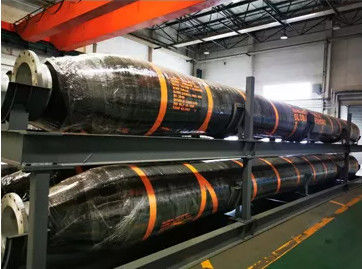
Advanced Manufacturing and Vulcanization of Offshore Marine Hoses at East Marine
At East Marine, a subsidiary of Jiangsu Huashen Special Rubber Products and a trusted name in offshore fluid transfer solutions, the manufacturing of OCIMF and GMPHOM-compliant marine hoses is executed with uncompromising precision. Our 0.68M sqm state-of-the-art facility in China integrates advanced engineering with rigorous quality control protocols to deliver hoses capable of withstanding the extreme conditions of offshore operations, including dynamic motion, high pressure, and aggressive media.
The production process begins with the meticulous selection of raw materials, including high-grade synthetic rubbers, textile reinforcements, and corrosion-resistant metallic components. These materials are pre-inspected for compliance with international standards before entering the production stream. Our 18 dedicated production lines are engineered for scalability and consistency, enabling simultaneous manufacturing across multiple hose specifications—from floating hoses for crude oil transfer to articulated discharge lines for LNG and chemical carriers.
Core to our manufacturing excellence is the vulcanization process. Vulcanization imparts critical mechanical and chemical resilience to the rubber compound by forming cross-links between polymer chains under controlled heat, pressure, and time. At East Marine, this process is conducted in computer-monitored autoclaves equipped with real-time data logging systems. Each hose assembly undergoes a precisely calibrated vulcanization cycle tailored to its specific elastomer formulation and reinforcement structure. This ensures optimal adhesion between rubber layers and embedded plies, minimizing permeability and enhancing fatigue resistance under cyclic loading.
Our vulcanization protocols adhere strictly to ISO 9001-certified quality management systems. Every stage—from component lay-up to final curing—is documented and traceable. Inline inspection systems monitor dimensional accuracy, while post-vulcanization hydrostatic and impulse testing validate structural integrity. Non-destructive testing (NDT) methods, including ultrasonic scanning, are employed to detect internal anomalies that could compromise performance in offshore environments.
East Marine’s investment in automation and process control technology enables repeatability and compliance with OCIMF’s Marine Hose Guidelines (MHG) and GMPHOM standards. Our production lines are staffed by certified technicians trained in offshore safety and quality assurance, ensuring that each hose meets or exceeds operational demands for service life, flexibility, and leak integrity.
The combination of large-scale manufacturing capacity, advanced vulcanization techniques, and a robust quality management framework positions East Marine as a leading supplier of offshore marine hoses for global energy transfer applications.
| Parameter | Specification |
|---|---|
| Factory Size | 0.68 million sqm |
| Production Lines | 18 automated lines |
| Vulcanization Method | Autoclave curing with real-time monitoring |
| Quality Standard | ISO 9001:2015 |
| Compliance | OCIMF MHG, GMPHOM |
| Testing Protocols | Hydrostatic, impulse, NDT, dimensional checks |
| Production Capacity (Annual) | 1,200+ offshore hose assemblies |
Critical Applications
Global Project Applications of OCIMF/GMPHOM Compliant Offshore Marine Hoses
Offshore marine hoses represent critical infrastructure within the global marine construction and energy sectors, engineered to stringent OCIMF (Oil Companies International Marine Forum) and GMPHOM (Guidelines for Marine Petroleum Hoses) standards. These flexible conduits are indispensable for transferring fluids under extreme hydrodynamic conditions, where reliability directly impacts project timelines, environmental safety, and operational economics. East Marine, leveraging its 0.68 million square meter manufacturing facility and deep expertise as a WEDA (World Association for Waterborne Transport Infrastructure) and CEDA (Central Dredging Association) member, delivers hoses proven across diverse high-stakes global applications. Our adherence to ISO 9001 quality management ensures consistent performance meeting these exacting international specifications.
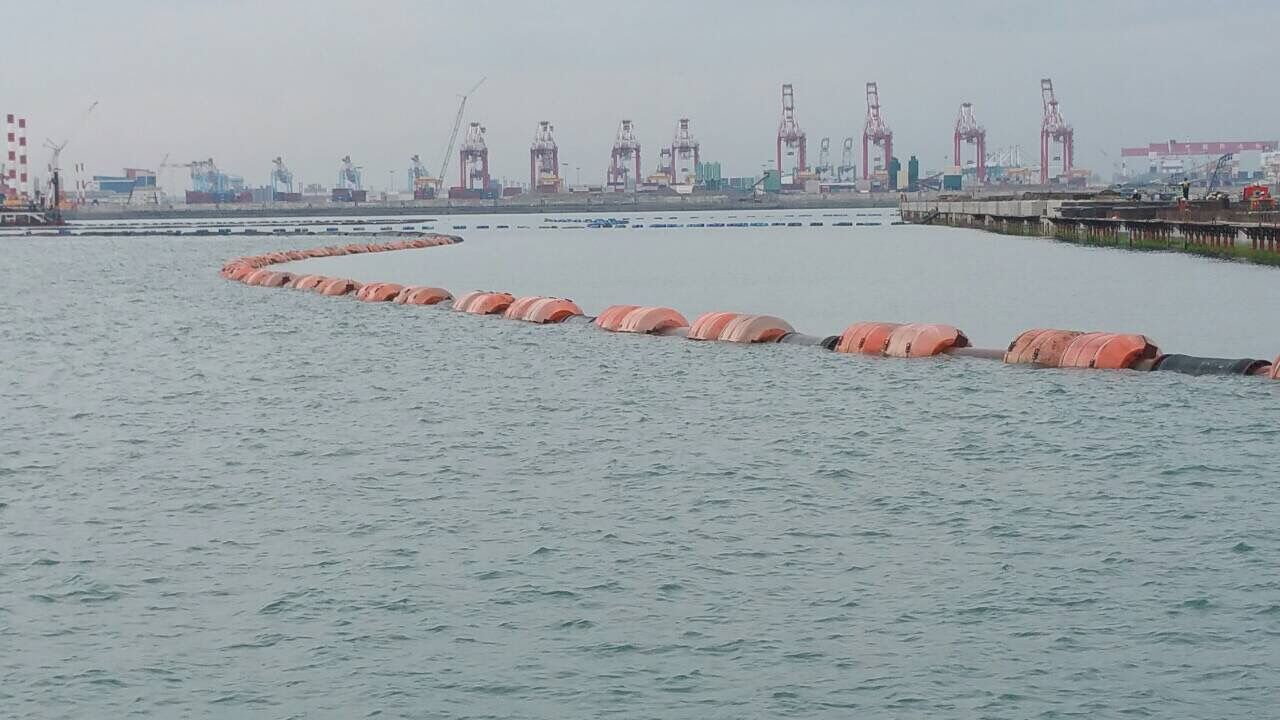
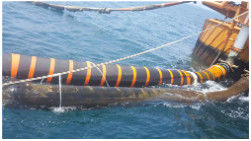
In large-scale dredging operations, East Marine hoses form the backbone of floating pipeline systems. They enable the continuous evacuation of sand, silt, and aggregate from seabed excavation sites to designated reclamation areas or disposal zones, often over distances exceeding several kilometers. The hoses must withstand constant wave action, abrasive media, and significant bending stresses during deployment and retrieval. Projects like the expansion of major ports in Southeast Asia and land creation initiatives in the Middle East rely on our reinforced rubber composite hoses to maintain uninterrupted material flow, directly contributing to accelerated project completion and reduced downtime. The dynamic nature of dredging demands hoses with exceptional flexibility and fatigue resistance, characteristics rigorously validated through CEDA-endorsed methodologies.
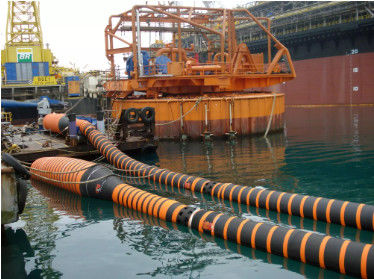
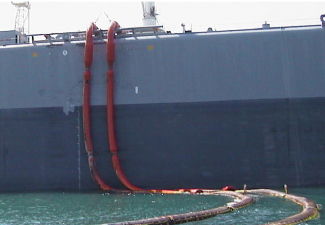
Offshore oil and gas fields represent another critical application domain. East Marine hoses facilitate the safe transfer of crude oil, refined products, and drilling fluids between Floating Production Storage and Offloading (FPSO) vessels, shuttle tankers, and fixed platforms during Single Point Mooring (SPM) operations. This necessitates compliance with the highest OCIMF safety tiers, including resistance to hydrocarbon permeation, fire, and impact. Our hoses operate reliably in harsh North Sea environments and deepwater Gulf of Mexico fields, where failure is not an option. The integration of advanced anti-static and abrasion-resistant cover compounds ensures longevity even under continuous exposure to saltwater, UV radiation, and mechanical wear from seabed contact.
Land reclamation projects, particularly those creating new urban or industrial zones on coastlines, utilize our hoses extensively for transporting vast quantities of dredged material. These applications require hoses capable of handling high solids content slurries over extended periods. East Marine hoses, designed with optimized internal linings to minimize friction loss and maximize throughput, have been instrumental in projects such as coastal protection barriers and airport expansions, where precise placement of millions of cubic meters of material is essential. The scalability of our manufacturing, rooted in 17 years of specialized production since 2007, allows for rapid supply of large-diameter systems meeting project-specific pressure and flow requirements.
The technical demands of these global applications necessitate hoses engineered beyond basic functionality. The following table outlines core performance parameters for East Marine’s standard OCIMF/GMPHOM compliant offshore hose series:
| Parameter | Standard Range | Key Material/Feature | Compliance Standard |
|---|---|---|---|
| Internal Diameter | 200 mm – 1200 mm | Abrasion-Resistant Nitrile Rubber (NBR) | GMPHOM Annex A |
| Working Pressure | 10 bar – 25 bar | Multi-Ply Synthetic Fabric Reinforcement | OCIMF SPM Guide |
| Intervallo di temperatura | -30°C to +85°C | Specialized Compound Formulation | ISO 13628-7 |
| Bend Radius (Min) | 8x Hose OD | Optimized Carcass Structure | CEDA Dredging Guide |
| Cover Resistance | Severe Abrasion, Ozone | Chloroprene (CR) or EPDM | ISO 1431 |
East Marine’s integration within the Jiangsu Huashen Special Rubber ecosystem, combined with active CEDA/WEDA participation, ensures our offshore hose solutions are not only technically superior but also aligned with evolving global best practices for marine infrastructure. We provide the engineered reliability required to execute complex offshore projects efficiently and safely, anywhere in the world.
Technical Data & Specs
Technical Comparison of Offshore Marine Hoses: East Marine vs. Industry Competitors
Offshore marine hoses used in transfer operations must meet stringent international standards, particularly those defined by OCIMF (Oil Companies International Marine Forum) and GMPHOM (Guidelines for Marine Petroleum Hose Operations Manual). These standards govern critical performance parameters including pressure resistance, flexibility, and structural integrity under dynamic marine conditions. East Marine, a subsidiary of Jiangsu Huashen Special Rubber Products and a trusted name in marine hose manufacturing since 2007, designs its offshore hoses to exceed these benchmarks. With a 0.68 million square meter production facility and ISO9001 certification, East Marine combines advanced rubber formulation with rigorous testing protocols to deliver hoses that outperform many competitors in real-world offshore environments.
A key differentiator in offshore hose performance lies in the balance between working pressure capability and flexibility. While many manufacturers prioritize one over the other, East Marine achieves optimal synergy through proprietary reinforcement layering using high-tensile synthetic fibers and steel wire helices. This construction ensures high burst pressure margins while maintaining a competitive bending radius—critical for deployment on floating terminals, ship-to-ship transfers, and single-point mooring systems.
The following table presents a comparative analysis of standard offshore marine hoses compliant with OCIMF/GMPHOM specifications. Data reflects typical values for hoses rated for Class I (up to 15 barg) and Class II (up to 25 barg) applications, with a focus on common inner diameters used in global operations. Competitor data is aggregated from publicly available technical sheets of three major European and Asian manufacturers, representing industry averages.
East Marine’s hoses demonstrate superior burst pressure ratios—exceeding 5:1 relative to working pressure—ensuring compliance with OCIMF’s safety requirements. Additionally, East Marine maintains a tighter bending radius across all tested diameters, enhancing maneuverability in congested offshore setups. This is achieved without compromising pressure performance, a common trade-off observed in competitor products. The consistent quality is backed by in-house testing facilities that simulate extreme temperature cycles, prolonged hydrocarbon exposure, and dynamic flexing under load.
As a member of WEDA and CEDA, East Marine remains engaged in evolving industry standards and environmental safety practices. The company’s commitment to innovation ensures that its offshore marine hoses not only meet current regulatory demands but also anticipate future operational challenges in deepwater and arctic transfer applications.
| Inner Diameter (mm) | Working Pressure (bar) | Burst Pressure (bar) | Bending Radius (mm) |
|---|---|---|---|
| East Marine 200 | 25 | 125 | 1,200 |
| Competitor Avg. 200 | 25 | 100–110 | 1,400–1,600 |
| East Marine 150 | 25 | 125 | 900 |
| Competitor Avg. 150 | 25 | 100–110 | 1,100–1,300 |
| East Marine 100 | 15 | 75 | 600 |
| Competitor Avg. 100 | 15 | 60–70 | 700–800 |
East Marine’s technical superiority in offshore marine hose design is evident in both performance metrics and operational reliability. By maintaining tighter tolerances and higher safety margins, the company provides critical infrastructure solutions that reduce downtime and enhance safety in high-risk marine transfer operations.
Partner with East Marine
Conclusion: Partnering for Offshore Hose Performance and Reliability
In the demanding realm of offshore operations, selecting a hose supplier transcends mere procurement; it necessitates a strategic partnership grounded in engineering excellence, rigorous compliance, and unwavering commitment to operational continuity. East Marine, operating as a specialized subsidiary of Jiangsu Huashen Special Rubber Products, delivers precisely this partnership. Our 0.68 million square meter manufacturing facility, operating under ISO 9001 certification since our founding in 2007, is engineered to produce OCIMF and GMPHOM-compliant offshore marine hoses that meet the most stringent global safety and performance benchmarks. Membership in WEDA and CEDA underscores our active engagement with industry best practices and regulatory evolution. We understand that hose failure offshore is not an option—our solutions are meticulously designed and validated to ensure leak-free integrity under extreme pressure, corrosive environments, and dynamic vessel motions, directly safeguarding your personnel, assets, and project timelines.
Our technical proficiency extends beyond standard catalog offerings. East Marine excels in engineering bespoke offshore hose systems tailored to unique project specifications, including specialized coupling configurations, enhanced abrasion resistance for seabed deployment, and custom lengths for complex FPSO or shuttle tanker transfer operations. This capability is backed by comprehensive in-house testing facilities that rigorously validate every assembly against OCIMF Appendix 3 requirements, including pressure cycling, tensile strength, and vacuum resistance. The following table summarizes the core technical parameters achievable for our standard OCIMF-compliant offshore floating hose ranges, reflecting our baseline engineering capability:
| Parameter | Standard Range (DN150) | Enhanced Range (DN200) | Test Standard Reference |
|---|---|---|---|
| Max. Working Pressure | 25 bar | 30 bar | ISO 13623 / OCIMF App3 |
| Proof Pressure | 37.5 bar | 45 bar | ISO 1402 |
| Burst Pressure (Min.) | 75 bar | 90 bar | ISO 1402 |
| Temp. Range (Fluid) | -20°C to +85°C | -20°C to +85°C | Material Specific |
| Bend Radius (Min.) | 3.0 m | 3.8 m | ISO 13092 |
| Cover Material | Nitrile (NBR) | Hydrogenated NBR (HNBR) | ASTM D2000 |
| Rinforzo | High-Tensile Steel Wire | Multi-Spiral Steel Wire | ISO 14313 |
Leveraging our Singapore branch as a strategic hub for the Asia-Pacific region, East Marine provides localized engineering support, rapid technical consultation, and streamlined logistics coordination for critical offshore projects across Southeast Asia, Australasia, and the Indian Ocean. This regional presence ensures responsive engagement with your operational teams, minimizing downtime through proactive technical oversight and efficient spare parts management.
Initiate your next offshore hose project with a partner who combines deep marine engineering expertise with proven large-scale manufacturing capacity. Contact East Marine’s dedicated offshore solutions team directly for a confidential technical consultation and project-specific quotation. Our engineers are prepared to review your operational parameters, recommend optimal hose configurations per OCIMF guidelines, and provide comprehensive documentation for regulatory compliance. Reach us immediately via WhatsApp at +86-13806109365 for urgent inquiries, or submit detailed project requirements to hsdredging@eastmarine.tech. Let East Marine secure your offshore fluid transfer operations with engineered reliability you can measure in decades of service, not just project cycles. Your assurance of performance begins with a single point of contact.
🏗️ Dredging Pipeline Project Cost Estimator
Calculate savings by sourcing directly from East Marine factory vs. local trading companies.
*Estimates only. Contact us for formal quotation.