Article Contents
Engineering Insight: Offshore Transfers Hoses
Technical Imperatives of Offshore Transfer Hoses in Marine Operations
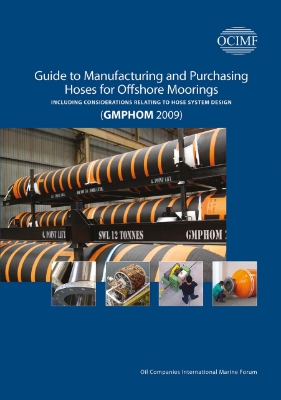
Offshore transfer hoses represent critical lifelines within complex maritime energy logistics, directly impacting safety, environmental integrity, and operational continuity during Ship-to-Ship (STS) transfers, Floating Production Storage and Offloading (FPSO) operations, and Single Point Mooring (SPM) systems. These specialized flexible conduits must withstand extreme dynamic stresses inherent in open-water environments, including vessel motion-induced flexing, significant pressure surges during pumping cycles, abrasive seabed contact, and prolonged exposure to aggressive hydrocarbons, seawater, and wide temperature fluctuations. Failure is not an option; a single hose rupture can trigger catastrophic pollution events, endanger personnel, halt multi-million dollar operations for days, and incur severe regulatory penalties. Consequently, adherence to stringent international standards like OCIMF guidelines and GMPHOM specifications is non-negotiable, demanding hoses engineered for maximum reliability, fatigue resistance, and fluid compatibility under the most demanding conditions.
The technical complexity escalates significantly beyond standard industrial hose applications. STS transfers require hoses capable of maintaining integrity while accommodating relative movement between two dynamically positioned vessels, often in challenging sea states. FPSO offloading operations demand hoses resistant to constant flexing at the turret mooring point and exposure to both crude oil and ballast water. SPM systems impose additional challenges with deep-water deployment, requiring hoses with optimized buoyancy characteristics and resistance to collapse under external hydrostatic pressure. Material science is paramount; elastomer compounds must exhibit exceptional resistance to permeation by volatile components, maintain flexibility at low temperatures, and resist degradation from aromatic hydrocarbons over extended service life. Reinforcement architecture, typically multi-spiral high-tensile steel wire, must precisely balance flexibility for handling with the strength to contain internal pressure and resist vacuum collapse.
East Marine leverages its 150+ strong engineering and technical workforce, operating within a 0.68 million square meter ISO 9001 certified manufacturing facility, to address these exacting demands. Our dedicated R&D center focuses on advanced material formulation and structural optimization, ensuring hoses exceed OCIMF performance criteria for minimum bend radius, tensile strength, and cyclic fatigue life. As active WEDA and CEDA members, we maintain deep industry engagement to anticipate evolving operational challenges and regulatory landscapes. This engineering rigor translates directly into hoses that minimize operational risk and maximize uptime for our clients in the offshore energy sector.
The following table outlines key technical parameters defining East Marine’s OCIMF-compliant offshore transfer hose capabilities:
| Parameter | Standard Range | Compliance Standard |
|---|---|---|
| Nominal Bore Diameter | 4″ to 24″ (100mm to 600mm) | API 17K, OCIMF |
| Working Pressure | 15 bar to 25 bar (217 psi to 363 psi) | API 17K, GMPHOM |
| Test Pressure | 1.5 x Working Pressure | API 17K, ISO 13623 |
| Temperatuurbereik | -30°C to +85°C (-22°F to +185°F) | Client Specific Fluids |
| Bend Radius (Min) | 8 x DN to 10 x DN | OCIMF STS Guidelines |
| Cover Material | Abrasion/Weather Resistant SBR | ISO 1307, API 17K |
| Versterking | Multi-Spiral High Tensile Steel | API 17K, ISO 14727 |
East Marine’s commitment to engineering excellence ensures our offshore transfer hoses provide the robust, dependable performance essential for safeguarding personnel, protecting the marine environment, and enabling the efficient, uninterrupted transfer of critical resources across the global offshore energy infrastructure. Our technical team stands ready to collaborate on bespoke solutions for the most challenging marine transfer scenarios.
Advanced Manufacturing Process
Advanced Manufacturing and Vulcanization of Offshore Transfer Hoses at East Marine
At East Marine, a trusted subsidiary of Jiangsu Huashen Special Rubber Products, the production of offshore transfer hoses adheres to the most stringent international standards, including OCIMF and GMPHOM guidelines. With a state-of-the-art 0.68 million square meter manufacturing facility and 18 dedicated production lines, our operations are engineered for precision, scalability, and uncompromised quality in every hose assembly.
The manufacturing process begins with meticulous material selection, where high-grade synthetic rubbers, reinforced textiles, and corrosion-resistant metallic components are sourced and verified for compliance. Each hose is built using a multi-layer construction method, integrating inner liners resistant to hydrocarbons, steam, and seawater, followed by high-tensile braided or spiral reinforcement layers, and a durable, weather-resistant outer cover.
Central to the integrity of offshore transfer hoses is the vulcanization process—a critical thermal treatment that cross-links rubber polymers to enhance mechanical strength, elasticity, and resistance to environmental degradation. At East Marine, vulcanization is performed in computer-monitored autoclaves under precisely controlled temperature, pressure, and time parameters. This ensures uniform curing throughout the hose structure, eliminating weak points and guaranteeing long-term performance in dynamic offshore conditions.
Our 18 fully integrated production lines are optimized for both high-volume output and custom configurations, supporting a wide range of diameters (from 4″ to 24″) and pressure ratings. Each stage—from component extrusion and layer winding to final assembly—is synchronized with real-time monitoring systems to maintain dimensional accuracy and material consistency.
Quality control is embedded throughout the manufacturing workflow. As an ISO 9001-certified manufacturer, East Marine implements a comprehensive quality management system that includes raw material testing, in-process inspections, and 100% post-production hydrostatic and pneumatic testing. Every hose undergoes rigorous evaluation for burst pressure, flexing endurance, ozone resistance, and adhesion strength between layers before being approved for shipment.
The combination of advanced automation, skilled engineering oversight, and adherence to global marine standards ensures that East Marine delivers offshore transfer hoses capable of withstanding the most demanding operational environments—from FPSO offloading operations to ship-to-ship transfers in open seas.
| Parameter | Specificatie |
|---|---|
| Factory Size | 0.68 million sqm |
| Production Lines | 18 |
| Standards Compliance | OCIMF, GMPHOM, ISO 9001 |
| Vulcanization Method | Autoclave, computer-controlled |
| Hose Diameter Range | 4″ to 24″ |
| Test Pressure | Up to 2.5x MOP (Maximum Operating Pressure) |
| Quality Testing | Hydrostatic, pneumatic, adhesion, flex fatigue |
Critical Applications
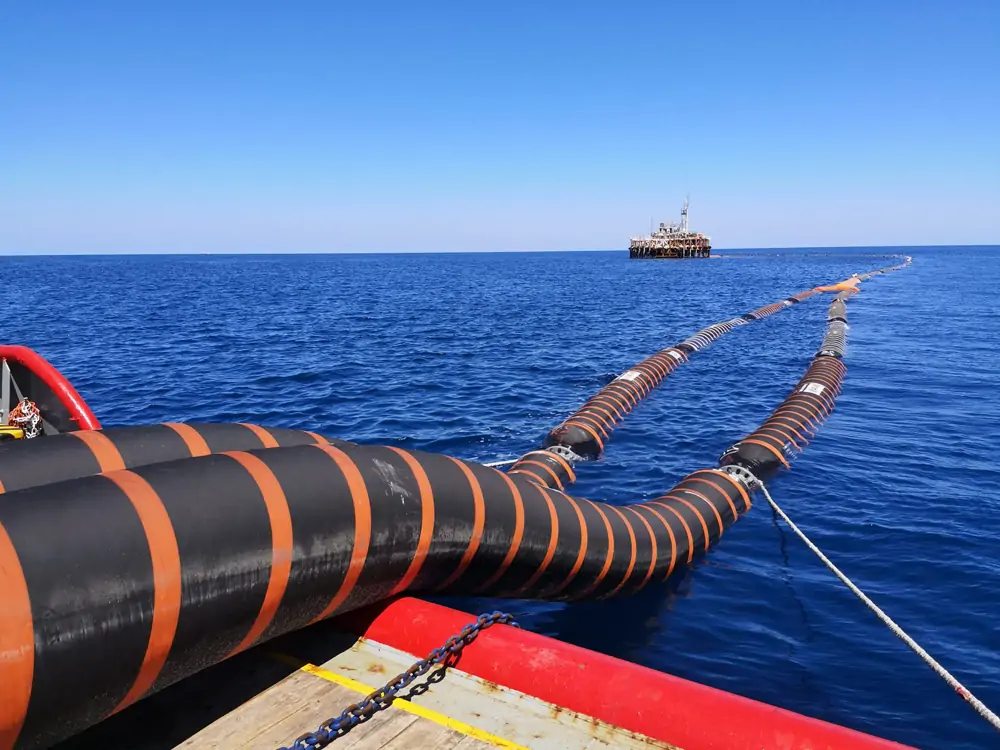
Global Project Applications of Offshore Transfer Hoses
Offshore transfer hoses represent critical infrastructure in marine operations demanding uncompromising reliability under extreme hydrodynamic and environmental stress. At East Marine, a subsidiary of Jiangsu Huashen Special Rubber Products and active member of CEDA (Central Dredging Association) and WEDA (Western Dredging Association), our engineered solutions serve as the backbone for complex fluid transfer across diverse global projects. These hoses must consistently meet OCIMF (Oil Companies International Marine Forum) and GMPHOM (Guidelines for Marine Petroleum Hose Operations Manual) standards, ensuring operational safety and environmental compliance in high-stakes maritime environments.
Dredging Project Applications
In international dredging operations, East Marine’s floating hoses facilitate the continuous transfer of high-density slurries over extended distances. Our reinforced rubber composite hoses withstand abrasive sediment loads, dynamic wave action, and rapid pressure fluctuations inherent in capital and maintenance dredging. Projects such as port deepening in Rotterdam and coastal restoration along the Gulf of Mexico rely on our hoses’ fatigue-resistant construction to maintain uninterrupted sediment flow, directly supporting CEDA-endorsed best practices for sustainable marine infrastructure development. The hoses’ integrated buoyancy systems and flexible couplings ensure hydrodynamic stability even in challenging sea states, minimizing downtime during critical project phases.
Offshore Oil and Gas Transfer
For offshore oil field operations, our hoses enable safe crude oil, refined product, and ballast water transfer between FPSOs (Floating Production Storage and Offloading units), tankers, and fixed platforms. Engineered with conductive layers to mitigate electrostatic discharge risks and multi-ply fabric reinforcements for burst pressure resilience, these hoses operate reliably in dynamic positioning scenarios. Applications span single-point mooring (SPM) systems in West Africa’s deepwater fields to shuttle tanker loading operations in the North Sea, where resistance to hydrocarbon permeation and extreme cold (-30°C) is non-negotiable. Compliance with OCIMF inspection protocols ensures seamless integration into stringent offshore safety management systems.
Land Reclamation and Environmental Projects
Land reclamation initiatives, such as Singapore’s ongoing territorial expansion and the Palm Jumeirah development, utilize our high-volume floating hoses to transport dredged material from cutter suction dredgers to designated fill sites. The hoses’ abrasion-resistant inner liners handle sand-clay mixtures with solids concentrations up to 60% by weight, while UV-stabilized outer covers endure prolonged tropical exposure. This capability accelerates project timelines by enabling continuous 24/7 operations, directly contributing to the creation of new coastal infrastructure and ecological restoration zones.
East Marine’s technical expertise, validated through ISO 9001-certified manufacturing processes at our 680,000 sqm Jiangsu facility, ensures each hose assembly meets the exacting demands of marine transfer environments. Our CEDA/WEDA membership underscores our commitment to advancing industry standards in hydraulic engineering and sustainable dredging practices.
The following table outlines critical technical parameters for our standard offshore transfer hose series:
| Parameter | Typical Range | Material Standard |
|---|---|---|
| Internal Diameter | 200 mm – 1200 mm | EN 1474-3 / API 17K |
| Working Pressure | 10 bar – 25 bar | OCIMF Appendix G |
| Temperatuurbereik | -30°C to +85°C | ASTM D2000 |
| Bend Radius | 8x OD (min.) | GMPHOM Ch. 4 |
| Cover Abrasion Loss | ≤ 100 mm³ (DIN 53516) | ISO 4649 |
| Electrical Resistance | < 10⁶ Ω (per meter) | IEC 60093 |
These specifications reflect our adherence to global marine transfer standards while delivering the operational longevity required for multi-year offshore deployments. East Marine remains a trusted partner for EPC contractors and operators managing the world’s most demanding marine fluid transfer challenges.
Technical Data & Specs
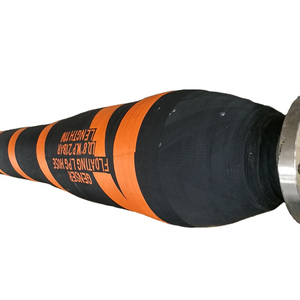
Technical Specifications of Offshore Marine Hoses: East Marine vs. Industry Competitors
Offshore marine hoses used in transfer operations must meet rigorous international standards, particularly those defined by OCIMF (Oil Companies International Marine Forum) and GMPHOM (General Marine Products Hoses Organization Manual). These standards ensure operational safety, reliability, and environmental protection during critical offshore loading and unloading activities. East Marine, a subsidiary of Jiangsu Huashen Special Rubber Products, designs and manufactures OCIMF/GMPHOM-compliant offshore transfer hoses that meet or exceed these benchmarks. With over 15 years of specialized production experience and a 0.68 million sqm manufacturing facility, East Marine leverages advanced rubber compounding, reinforcement layering, and quality assurance protocols to deliver high-performance hoses for demanding offshore environments.
A key differentiator in offshore hose performance lies in core mechanical specifications: inner diameter, working pressure, burst pressure, and minimum bending radius. These parameters directly influence flow efficiency, structural integrity under pressure, and ease of deployment on floating systems. East Marine’s hoses are engineered using multi-spiral high-tensile steel wire reinforcement and specially compounded synthetic rubber linings resistant to hydrocarbons, ozone, and seawater. This construction enables superior pressure handling and flexibility compared to standard industry offerings.
Competitor hoses, while often compliant with OCIMF guidelines, vary significantly in material quality and structural design. Many utilize fewer reinforcement layers or lower-grade elastomers, which can compromise long-term durability and safety margins. East Marine’s commitment to exceeding minimum standards is evident in its burst pressure ratios, which consistently achieve 5:1 or higher relative to working pressure—surpassing the OCIMF-recommended 4:1 safety factor.
In operational terms, a tighter bending radius enhances maneuverability on articulated loading arms and floating hose strings, reducing stress points and minimizing risk of kinking. East Marine optimizes flexibility without sacrificing pressure resistance through precise winding angle control and elastomer formulation, resulting in a competitive advantage in dynamic offshore conditions.
The following table compares typical technical specifications of East Marine’s OCIMF-compliant offshore transfer hoses against average values from selected industry competitors:
| Inner Diameter (mm) | Working Pressure (bar) – East Marine | Working Pressure (bar) – Competitors | Burst Pressure (bar) – East Marine | Burst Pressure (bar) – Competitors | Bending Radius (mm) – East Marine | Bending Radius (mm) – Competitors |
|---|---|---|---|---|---|---|
| 200 | 25 | 20 | 125 | 80 | 1,100 | 1,300 |
| 300 | 22 | 18 | 110 | 72 | 1,600 | 1,900 |
| 400 | 20 | 16 | 100 | 64 | 2,100 | 2,500 |
| 500 | 18 | 15 | 90 | 60 | 2,600 | 3,100 |
East Marine’s technical superiority is further validated through ISO9001-certified production processes and active membership in WEDA and CEDA, underscoring its commitment to engineering excellence in marine infrastructure solutions.
Partner with East Marine
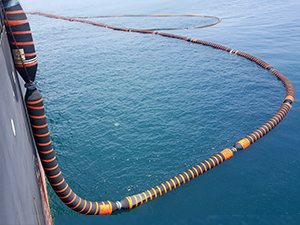
Conclusion: Engineered Reliability for Critical Offshore Transfer Operations
East Marine, operating as a specialized subsidiary of Jiangsu Huashen Special Rubber Products, stands at the forefront of engineered solutions for offshore transfer hose systems governed by stringent OCIMF and GMPHOM standards. Our decades of focused R&D, coupled with a 0.68 million square meter manufacturing ecosystem and adherence to ISO 9001 quality management, ensure that every hose assembly delivered transcends basic compliance to deliver operational resilience in the harshest marine environments. From deepwater FPSO loading arms to complex STS transfer configurations, our products are validated through rigorous in-house hydrostatic, impulse, and flex testing protocols that mirror real-world operational stresses. As active members of WEDA and CEDA, we maintain continuous alignment with evolving industry best practices, guaranteeing that our solutions not only meet today’s requirements but are engineered for tomorrow’s challenges in offshore energy and maritime logistics.
The technical specifications below underscore the foundational engineering principles embedded in our standard OCIMF-compliant offshore transfer hose range. These parameters reflect our commitment to balancing maximum operational safety with extended service life under dynamic offshore conditions.
| Parameter | Specificatie | Standard/Compliance |
|---|---|---|
| Working Pressure | 15-25 bar (217-362 psi) | EN 1474-3, ISO 13628-4 |
| Burst Pressure | ≥ 4x Working Pressure | API 17K, OCIMF Guidelines |
| Temperatuurbereik | -30°C to +85°C (-22°F to +185°F) | Material-Specific Testing |
| Cover Material | Abrasion-Resistant Nitrile Rubber | Oil/Weather Resistant |
| Versterking | Multiple High-Tensile Steel Wire | EN 14360 Certified |
| Certificeringen | DNV-GL Type Approved, CE Marked | GMPHOM Annex B Compliant |
Partnering with East Marine means engaging a supply chain partner with demonstrable global project execution capability. Our Singapore branch serves as a strategic regional hub for Asia-Pacific operations, providing localized engineering support, inventory management, and rapid response logistics coordination to minimize project downtime. This infrastructure, backed by our Jiangsu headquarters’ manufacturing scale, ensures seamless integration into your offshore project timelines without compromising on quality oversight.
For technical validation of your specific offshore transfer requirements, contact our dedicated marine engineering team directly. We initiate every engagement with a comprehensive system review to align hose specifications with your vessel dynamics, fluid properties, and environmental exposure profiles. Reach out via WhatsApp at +86-13806109365 for immediate technical consultation or urgent project coordination. For detailed engineering inquiries, project documentation, or certification requests, email hsdredging@eastmarine.tech with your operational parameters. Our Singapore office provides localized support for regional clients, ensuring time-zone responsive communication and on-ground technical assistance where required. Do not compromise on the integrity of your offshore transfer operations—leverage East Marine’s certified expertise to secure your critical fluid transfer infrastructure. Initiate your project consultation today to receive a tailored engineering proposal within 48 business hours.
🏗️ Dredging Pipeline Project Cost Estimator
Calculate savings by sourcing directly from East Marine factory vs. local trading companies.
*Estimates only. Contact us for formal quotation.