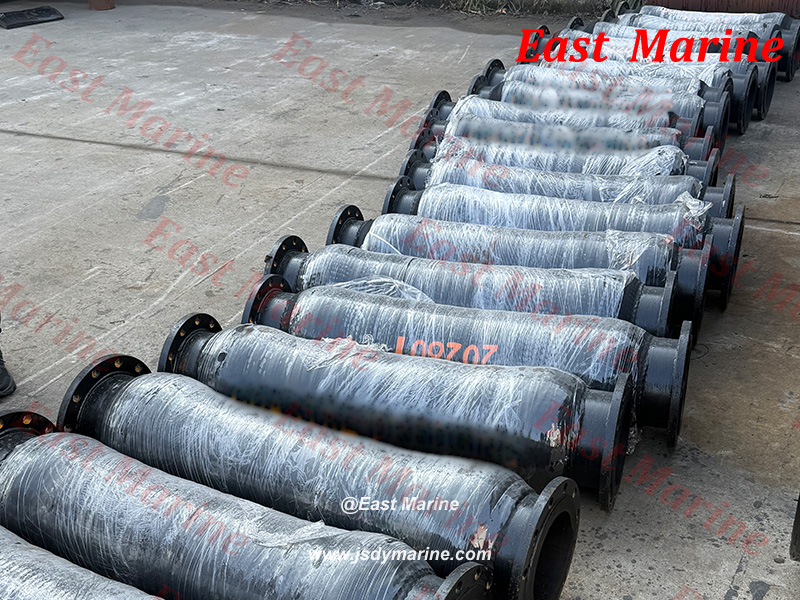
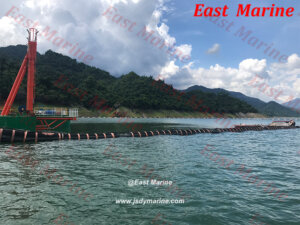
Dredging pipelines are the lifelines of every dredging operation. They transport slurry, sediment, and dredged materials from rivers, lakes to disposal sites or land reclamation projects. No matter how advanced a dredger may be, operations cannot continue without a reliable pipeline system.
From what we see on the front lines, demand is not only increasing, but also evolving. Companies that recognize these changing requirements and respond quickly will gain a competitive edge.
What’s Driving Demand Today?
1. Port Expansion and Land Reclamation
From Southeast Asia to the Middle East, billions of dollars are being invested in port modernization and coastal development. Every cubic meter of seabed material moved requires dependable dredging pipelines, with growing demand for products offering superior abrasion resistance and higher pressure ratings.
2. Environmental Dredging Projects
Governments worldwide are placing greater emphasis on restoring polluted rivers, lakes, and harbors. Dredging is often the most effective solution, but it requires pipelines capable of safely transporting contaminated sediments. As a result, higher standards for material quality, sealing performance, and environmental reliability have become essential.
3. Offshore Mining and Subsea Infrastructure
Marine sand extraction, aggregate mining, and subsea pipeline installation all rely heavily on dredging operations. These projects are often carried out in harsh and remote environments, where pipeline failure can lead to costly downtime and significant operational risks.
Which Pipeline Types Are Most in Demand?
| Pipeline Type | Typical Applications | Key Advantages |
|---|---|---|
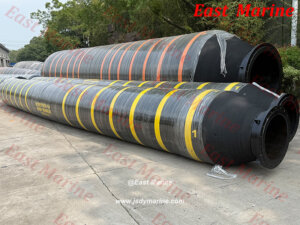
| Armored Discharge Hose | Highly abrasive materials containing rocks or coarse particles | Reinforced with an armored outer layer for exceptional wear resistance and enhanced protection against damage |
| Discharge Dredging Hose | Standard slurry transportation from dredgers to discharge areas | Steel flange connections enable secure installation and easy maintenance |
| Self-Floating Rubber Hose | Long-distance floating pipelines and projects in tidal waters | Built-in buoyancy allows the hose to float without additional floats, simplifying installation and adapting to changing water levels |
Every dredging project comes with its own unique challenges. That’s why we never believe in a one-size-fits-all solution. Instead, we match the right pipeline to the specific operating conditions, ensuring maximum efficiency and reliability.
Regional Market Snapshot: Where Is Growth Happening?
Asia-Pacific
The fastest-growing market, driven by China’s waterway restoration projects, Indonesia’s new capital development, and India’s port modernization initiatives.
North America
Steady demand supported by routine port maintenance and environmental restoration projects throughout the Great Lakes region.
Europa
Countries such as the Netherlands, Germany, and the United Kingdom continue to lead high-specification dredging projects, where strict quality standards and regulatory compliance are critical.
Our Real Challenges: From the Factory Floor to Your Job Site
Supplying dredging pipelines has become increasingly demanding.
Wear resistance remains our biggest challenge.
We continuously develop and test advanced rubber compounds to extend service life under the same operating conditions.
Cost pressure is unavoidable.
By optimizing production processes and reducing material waste, we improve efficiency without compromising product quality.
Delivery schedules matter.
We maintain strategic inventory levels and diversify our raw material supply chain to ensure reliable, on-time delivery.
More Than Just a Pipeline
We don’t simply manufacture dredging pipelines.
We deliver reliable material transportation solutions that keep your dredging operations moving.