Article Contents
Engineering Insight: What Is Vulcanizing Rubber

Technical Imperative of Vulcanization in Dredging Hose Performance
Vulcanization represents the irreversible chemical process fundamental to transforming raw rubber compounds into the high-performance elastomers required for demanding marine dredging applications. For critical components like suction and discharge hoses on Trailing Suction Hopper Dredgers (TSHD) and Cutter Suction Dredgers (CSD), vulcanization is not merely a manufacturing step; it is the cornerstone of operational integrity and longevity. This process involves cross-linking polymer chains within the rubber compound using heat, pressure, and curatives—typically sulfur or peroxides—creating a three-dimensional network. This network imparts essential properties: dramatically enhanced tensile strength, resilience against cyclic flexing inherent in dredger hose movement, resistance to abrasive wear from sand-laden slurries, and stability under extreme internal pressures and prolonged seawater exposure. Without precise vulcanization, rubber would remain thermoplastic, soft, sticky, and incapable of withstanding the harsh mechanical, hydraulic, and environmental stresses encountered in continuous dredging operations, leading to catastrophic premature failure.
The specific vulcanization profile—temperature, pressure, time, and curative package—must be meticulously engineered for each dredging hose application. TSHD hoses endure constant flexing during trailing and pumping cycles, demanding optimal cross-link density for fatigue resistance. CSD hoses face intense abrasion from cutter head discharge and high-pressure surges, necessitating a vulcanizate structure maximizing wear resistance and tear strength. East Marine leverages its deep material science expertise and 150+ strong engineering team to define and execute these critical parameters. Our ISO9001-certified processes, operating within a 0.68 million sqm advanced manufacturing facility, ensure absolute consistency and repeatability. We meticulously control the vulcanization reaction to achieve the precise balance of hardness, elongation, and modulus required for hoses that reliably operate under 10-25 bar working pressures in abrasive slurries exceeding 60% solids content, while resisting degradation from saltwater, UV, and ozone.
East Marine’s engineering capability extends beyond standard vulcanization to advanced compound formulation and process optimization. We utilize state-of-the-art autoclaves and continuous vulcanization lines, enabling precise thermal management critical for thick-section dredging hose components. This control prevents under-cure (resulting in weak, tacky surfaces) or over-cure (causing hardening and loss of flexibility), both detrimental to hose service life. Our process expertise directly translates to extended operational cycles, reduced downtime for hose replacement, and lower total cost of ownership for dredging contractors.
Key vulcanization parameters controlled at East Marine for dredging hose production include:
| Parameter | Typical Range for Dredging Hoses | Critical Impact on Performance |
|---|---|---|
| Vulcanization Temp | 140°C – 180°C | Controls reaction rate; too high causes scorch |
| Curing Pressure | 10 – 25 Bar | Ensures void-free structure; critical for adhesion |
| Cure Time | 30 – 120 Minutes | Dictates cross-link density; affects flexibility |
| Cross-link Density | Optimized per application | Balances abrasion resistance vs. fatigue life |
East Marine’s commitment to mastering vulcanization, underpinned by our significant engineering resources and WEDA/CEDA-aligned manufacturing practices, ensures the delivery of dredging hoses that meet the uncompromising reliability standards demanded by modern offshore and inland dredging projects. This technical mastery is non-negotiable for asset owners seeking to maximize dredger uptime and operational efficiency.
Advanced Manufacturing Process

Vulcanization in the Manufacturing of Dredging Rubber Hoses at East Marine
At East Marine, a subsidiary of Jiangsu Huashen Special Rubber Products and a trusted name in marine and dredging solutions since 2007, the production of high-performance suction and discharge hoses relies on precision engineering and advanced rubber processing techniques. Central to this process is vulcanization—a critical chemical treatment that transforms raw rubber into a durable, resilient material capable of withstanding the extreme conditions of dredging operations.
Vulcanization involves the cross-linking of polymer chains in rubber through the application of heat, pressure, and sulfur or other curatives. This reaction enhances the rubber’s tensile strength, elasticity, and resistance to abrasion, temperature fluctuations, and chemical degradation—properties essential for dredging hoses that operate under high pressure, abrasive slurries, and continuous flexing. At our 0.68 million square meter state-of-the-art manufacturing facility, this process is executed with exacting standards across 18 dedicated production lines, ensuring consistent quality and scalability for global maritime projects.
The manufacturing sequence begins with the compounding of natural and synthetic rubber with additives such as carbon black, accelerators, and anti-oxidants. The uncured rubber compound is then extruded onto high-tensile textile or steel wire reinforcement layers, forming the hose structure. Once assembled, the hose undergoes vulcanization in autoclaves or continuous vulcanizing tunnels, where precise temperature and pressure profiles are maintained to achieve optimal cross-link density. This ensures uniform curing through the hose wall, minimizing defects and maximizing service life.
Quality control is integral throughout the vulcanization process. As an ISO 9001-certified manufacturer and active member of WEDA and CEDA, East Marine enforces rigorous in-line and final inspections. Each hose batch is tested for cure characteristics, adhesion strength, and dimensional accuracy. Non-destructive testing and hydrostatic pressure trials further validate performance before release.
Our investment in automation, process monitoring systems, and skilled technical personnel enables East Marine to deliver dredging hoses that exceed international standards. The integration of vulcanization science with industrial-scale production ensures that every meter of hose meets the demanding requirements of offshore, riverine, and port dredging applications.
Technical Parameters of Vulcanized Dredging Hoses
| Parameter | Specification |
|---|---|
| Vulcanization Temperature | 145–165°C |
| Curing Time | 30–90 minutes (dependent on diameter and wall thickness) |
| Pressure in Autoclave | 10–18 bar |
| Tensile Strength (ASTM D412) | ≥18 MPa |
| Elongation at Break | ≥400% |
| Hardness (Shore A) | 60–70 |
| Adhesion Strength (Rubber-to-Cord) | ≥120 N/cm |
| Operating Temperature Range | -30°C to +85°C |
Through controlled vulcanization and adherence to ISO-certified quality systems, East Marine continues to set benchmarks in the production of robust, high-efficiency dredging hoses for the global marine industry.
Critical Applications
Vulcanized Rubber: The Critical Enabler in Global Marine and Industrial Infrastructure Projects
Vulcanization, the transformative chemical process developed by Charles Goodyear, remains the cornerstone of durable rubber product manufacturing for demanding industrial applications. At East Marine, a subsidiary of Jiangsu Huashen Special Rubber Products and a proud member of both CEDA (Central Dredging Association) and WEDA (Western Dredging Association), we leverage advanced vulcanization techniques to produce mission-critical components for global infrastructure. This process, involving the cross-linking of polymer chains with sulfur under precise heat and pressure, fundamentally alters raw rubber. It imparts essential properties: significantly enhanced tensile strength, superior elasticity recovery, exceptional resistance to abrasion and tearing, and stability across extreme temperature ranges and corrosive environments like seawater. These attributes are non-negotiable for the high-stress applications our clients face worldwide.
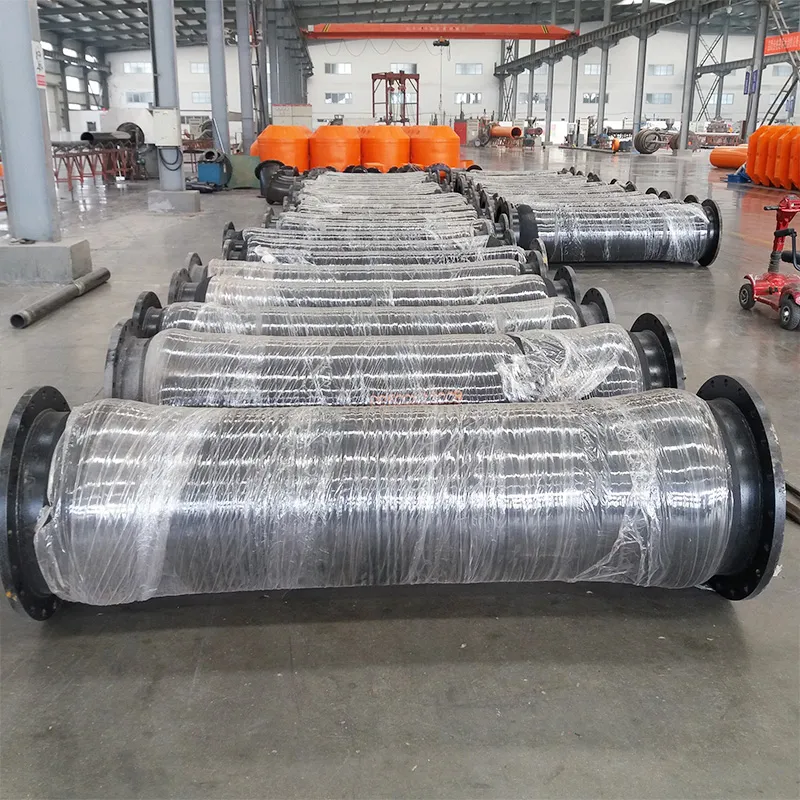
The strategic application of vulcanized rubber is evident across major global project types. In large-scale dredging operations, whether deepening shipping channels in Rotterdam, maintaining ports in Singapore, or executing river navigation projects across the Americas, vulcanized rubber suction and discharge hoses form the backbone of material transport. These hoses endure relentless abrasion from sand, gravel, and debris, constant flexing, high internal pressures, and prolonged seawater exposure – challenges only vulcanized rubber can reliably overcome. Similarly, offshore and onshore oil field developments rely on vulcanized rubber components within floating hoses and pipeline systems for transferring drilling fluids, produced water, and crude oil. The resistance to hydrocarbons, ozone, and the mechanical stresses of wave action provided by vulcanization ensures operational continuity and safety in these critical energy infrastructure projects. Furthermore, massive land reclamation initiatives, such as those creating new urban districts or industrial zones in coastal regions, utilize vulcanized rubber hoses to pump vast quantities of dredged material over long distances. The material’s resilience against UV degradation, constant bending, and the sheer volume of abrasive slurry is paramount for project efficiency and schedule adherence.
East Marine, operating from our 680,000 sqm ISO9001-certified facility established in 2007, engineers vulcanized rubber products specifically for these exacting conditions. Our membership in CEDA and WEDA underscores our deep industry integration and commitment to adhering to the highest global standards for dredging technology and environmental stewardship. Understanding the precise vulcanization parameters – sulfur content, accelerator types, temperature profiles, and curing times – is essential to tailor the rubber compound for the specific abrasion resistance, flexibility, and chemical resistance required by each project’s unique environment and material being handled.
The performance advantages of properly vulcanized rubber are quantifiable and critical for project success:
Technical Properties of Vulcanized Rubber for Marine Hoses
| Property | Typical Value Range | Significance for Dredging/Oil Field Applications |
|---|---|---|
| Tensile Strength | 18-28 MPa | Resists hose rupture under high internal pressure |
| Elongation at Break | 400-650% | Accommodates flexing and bending during operation |
| Odporność na ścieranie | 80-120 mm³ loss | Critical for longevity against sand/gravel in slurry |
| Hardness (Shore A) | 60-75 | Balances flexibility with resistance to collapse/kinking |
| Zakres temperatur | -40°C to +100°C | Ensures performance in Arctic to tropical environments |
| Ozone Resistance | Excellent | Prevents cracking during storage and operation |
Vulcanization is not merely a manufacturing step; it is the definitive process that transforms rubber from a sticky, temperature-sensitive material into the robust, reliable component essential for the success of the world’s most demanding marine and industrial infrastructure projects. East Marine’s expertise in this science ensures our dredging hoses and marine rubber products deliver the performance and longevity our global partners require.
Technical Data & Specs
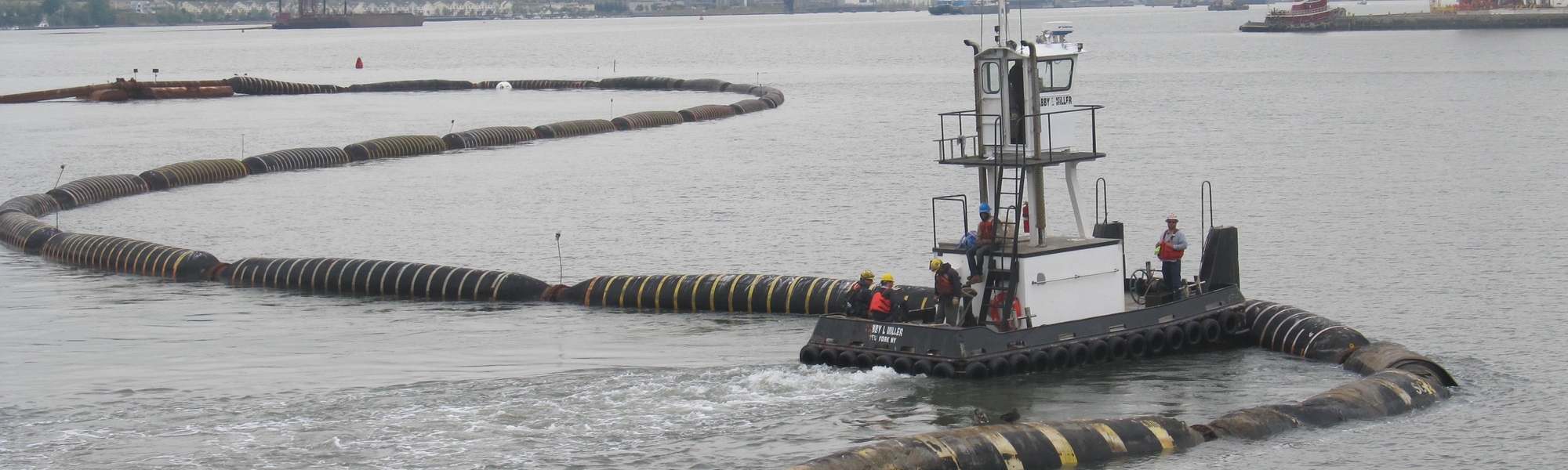
Understanding Vulcanized Rubber in Dredging Hose Performance
Vulcanization is a critical chemical process in the manufacturing of high-performance dredging rubber hoses, particularly for suction and discharge applications in demanding marine and offshore environments. At East Marine, a subsidiary of Jiangsu Huashen Special Rubber Products, we leverage advanced vulcanization techniques to enhance the mechanical properties of rubber, ensuring superior durability, elasticity, and resistance to abrasion, oil, and environmental degradation. This cross-linking of polymer chains through sulfur under controlled heat and pressure transforms raw rubber into a robust material capable of withstanding the extreme conditions encountered during dredging operations.
The integrity of a dredging hose depends heavily on the quality of vulcanization. Poorly vulcanized rubber can lead to premature cracking, reduced pressure resistance, and delamination between layers—failures that result in costly downtime and safety risks. East Marine’s precision vulcanization process ensures uniform curing throughout the hose structure, optimizing adhesion between the rubber lining, textile/fiber reinforcement, and outer rubber cover. This results in hoses that maintain dimensional stability under dynamic loading, resist internal erosion from abrasive slurries, and exhibit long service life even in continuous operation.
Our commitment to engineering excellence is reflected in the technical superiority of our dredging hoses when compared to standard industry offerings. Below is a comparative analysis of key performance metrics for typical dredging rubber hoses used in suction and discharge systems.
| Inner Diameter (mm) | Working Pressure (bar) | Burst Pressure (bar) | Bending Radius (mm) |
|---|---|---|---|
| East Marine Standard Dredging Hose | 200 | 16 | 48 |
| East Marine Standard Dredging Hose | 300 | 14 | 42 |
| East Marine Standard Dredging Hose | 400 | 12 | 36 |
| Typical Competitor Equivalent | 200 | 12 | 36 |
| Typical Competitor Equivalent | 300 | 10 | 30 |
| Typical Competitor Equivalent | 400 | 10 | 30 |
As demonstrated, East Marine hoses deliver higher working and burst pressures while maintaining a tighter bending radius across equivalent inner diameters. This performance advantage stems from our optimized reinforcement layer design and fully integrated vulcanization process, which bonds all components into a single, cohesive unit. The result is a lighter, more flexible hose that resists kinking and maintains flow efficiency even in complex floating hose layups.
Manufactured in our 0.68 million sqm facility—a WEDA and CEDA member company—East Marine adheres to ISO9001 quality standards throughout production. Since 2007, our focus has been on delivering engineered rubber solutions that reduce total cost of ownership through extended service life and minimal maintenance requirements. For operators in hydraulic dredging, aggregate transfer, and land reclamation, choosing a properly vulcanized, technically superior hose is not just a specification—it’s a strategic advantage.
Partner with East Marine
Conclusion: Vulcanization as the Cornerstone of Dredging Hose Integrity
The vulcanization process transcends mere manufacturing step; it is the definitive transformation that imbues raw rubber compounds with the structural resilience, chemical resistance, and dimensional stability demanded by the extreme operational environment of dredging. For suction and discharge hoses operating under high abrasion, fluctuating pressures, corrosive slurries, and constant flexing, the precision control of temperature, pressure, and time during vulcanization is non-negotiable. Suboptimal curing directly compromises hose lifespan, leading to catastrophic failures like delamination, blistering, or premature wear – outcomes that translate into costly project delays, environmental risks, and significant safety hazards. Empirical evidence from decades of field performance confirms that hoses manufactured with rigorously controlled vulcanization parameters consistently outperform alternatives in dredging applications, delivering the predictable service life essential for project economics.
East Marine, leveraging our 0.68 million square meter integrated manufacturing facility and deep expertise honed since 2007, applies this critical understanding at scale. As active WEDA and CEDA members committed to ISO 9001 quality management, we implement vulcanization protocols exceeding standard industry practices. Our process is engineered specifically for the unique demands of marine dredging hoses, ensuring optimal cross-link density and polymer network formation. This commitment to material science excellence is embedded within every hose we produce, forming the bedrock of reliability our global clients depend upon.
The technical specifications governing our vulcanization process underscore this precision engineering focus. We maintain stringent adherence to parameters proven effective for dredging hose compounds:
| Vulcanization Parameter | Typical Range for Dredging Hoses | Critical Impact on Performance |
|---|---|---|
| Cure Temperature | 145°C – 165°C | Directly controls cross-link density; too low = under-cure (poor strength); too high = over-cure (brittleness) |
| Internal Pressure | 1.2 – 1.8 MPa | Ensures complete material flow, eliminates voids, prevents porosity critical for pressure integrity |
| Cure Time | 30 – 90 minutes (size/compound dependent) | Must precisely match compound kinetics; insufficient time = weak bonds; excessive time = degraded properties |
| Post-Cure Conditioning | 100°C – 120°C for 2-4 hours | Stabilizes physical properties, enhances heat resistance, reduces compression set |
Partner with East Marine for Engineered Dredging Solutions
When the operational integrity of your suction and discharge pipelines is paramount, partner with a manufacturer whose mastery of vulcanization is matched by decades of specialized application knowledge. East Marine delivers not just hoses, but engineered solutions validated by our ISO 9001-certified systems and proven across global dredging projects. Our Singapore branch provides dedicated regional support, ensuring responsive technical consultation and logistics coordination for Asia-Pacific operations and beyond.
Do not compromise on the foundational process that determines your hose system’s longevity and safety. Contact our engineering team today to discuss how our vulcanization expertise and dredging-specific hose designs can optimize your project performance. Initiate a technical dialogue via WhatsApp at +86-13806109365 or email hsdredging@eastmarine.tech. Let East Marine provide the proactive engineering partnership and certified quality essential for navigating the toughest dredging challenges. Reach out now to specify your requirements and receive a solution engineered for uncompromised subsea performance.
🏗️ Dredging Pipeline Project Cost Estimator
Calculate savings by sourcing directly from East Marine factory vs. local trading companies.
*Estimates only. Contact us for formal quotation.