Article Contents
Engineering Insight: Sts Transfer
Technical Importance of STS Transfer in Offshore Marine Operations
Ship-to-Ship (STS) transfer operations are a critical component in the offshore oil and gas, maritime logistics, and floating storage sectors. These operations involve the transfer of liquid or liquefied cargo—primarily crude oil, refined petroleum products, and LNG—between two vessels moored alongside each other, typically at sea or near coastal terminals. The technical precision required in STS transfer systems demands high-performance marine hoses that meet stringent international standards, including OCIMF (Oil Companies International Marine Forum) and GMPHOM (General Marine Products Hose Operations Manual) guidelines.
STS transfer systems are integral to FPSO (Floating Production Storage and Offloading) units and SPM (Single Point Mooring) configurations, where continuous and reliable fluid transfer is essential for operational efficiency and safety. These systems must withstand dynamic environmental conditions such as wave motion, vessel drift, and varying pressure cycles. The use of flexible, high-integrity marine hoses ensures minimal downtime, reduced risk of leakage, and compliance with environmental protection regulations.
East Marine, a subsidiary of Jiangsu Huashen Special Rubber Products, delivers engineered hose solutions specifically designed for STS transfer applications. With over 150 skilled personnel, including dedicated R&D engineers and technical specialists, the company maintains a robust engineering capability focused on material science, fatigue resistance, and fluid compatibility. Our team ensures every hose assembly is optimized for operational longevity and safety in harsh marine environments.
Our offshore marine hoses are constructed using premium-quality synthetic rubber compounds, high-tensile textile reinforcements, and corrosion-resistant metallic components. Each product undergoes rigorous testing, including impulse, burst, and flexing cycles, to validate performance under extreme service conditions. As a member of WEDA and CEDA, and certified under ISO9001, East Marine adheres to the highest quality management standards in design, production, and after-sales support.
The integration of advanced coupling systems and electrostatic dissipation features further enhances the safety and reliability of our hoses during STS operations. Custom configurations are available to match specific vessel manifolds, flow rates, and product types, ensuring seamless integration into existing transfer systems.
Below is a summary of key technical specifications for East Marine’s STS transfer hose assemblies:
| Parameter | Specification |
|---|---|
| Nominal Bore (DN) | 100 – 600 mm |
| Номинальное давление | Up to 25 bar (PN16 to PN25) |
| Диапазон температур | -30°C to +85°C (custom up to +120°C) |
| Bend Radius (Minimum) | 6 × DN (dynamic), 4 × DN (static) |
| Standards Compliance | OCIMF, GMPHOM, ISO 14043, API 15S |
| Fluid Compatibility | Crude oil, diesel, LNG, chemicals (custom) |
| Cover Resistance | Ozone, UV, seawater, abrasion |
| Electrical Continuity | < 10 ohms (per EN 13765) |
| Design Life (Typical) | 10+ years with proper maintenance |
East Marine’s commitment to innovation and technical excellence positions us as a trusted partner in the global STS transfer supply chain. Our engineering expertise, combined with scalable manufacturing capacity across a 0.68 million sqm facility, enables rapid delivery of mission-critical hose systems for offshore energy infrastructure.
Advanced Manufacturing Process
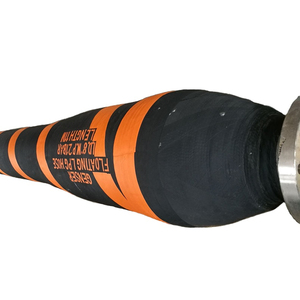
Precision Engineering in Offshore Marine Hose Manufacturing for STS Transfer Operations
At East Marine, a subsidiary of Jiangsu Huashen Special Rubber Products and a trusted WEDA/CEDA member since 2007, the manufacturing of OCIMF/GMPHOM-compliant offshore marine hoses for Ship-to-Ship (STS) transfer represents the pinnacle of engineered resilience. Our 0.68 million square meter integrated facility, housing 18 dedicated production lines, is meticulously designed to transform raw elastomers and high-tensile reinforcement into hoses capable of withstanding the extreme pressures, abrasive cargoes, and dynamic marine environments inherent in critical STS operations. Central to achieving the required structural integrity and long-term performance is our advanced vulcanization process, a scientifically controlled phase where the hose assembly transitions from a pliable composite to a monolithic, durable product.
Vulcanization is far more than a simple curing step; it is the critical chemical reaction where sulfur and accelerators cross-link polymer chains within the rubber compound under precise heat and pressure. At East Marine, this occurs within state-of-the-art, computer-monitored autoclaves and pressurized curing presses. Each hose assembly, meticulously constructed with multiple plies of fabric and wire reinforcement encapsulated by specialized rubber compounds tailored for specific cargoes (e.g., crude oil, refined products, chemicals), undergoes a rigorously defined vulcanization cycle. Temperature profiles, pressure application, and dwell times are calibrated to the exact specifications of the hose design and compound formulation, ensuring optimal cross-link density throughout the entire wall thickness. Inconsistent vulcanization leads to weak spots, premature aging, or catastrophic failure under operational stress – risks East Marine systematically eliminates through process control.
Our commitment to quality is embedded within the ISO 9001 certified quality management system governing every stage, from raw material inspection to final testing. Real-time monitoring during vulcanization captures critical parameters, while post-cure verification includes extensive physical testing of sample coupons for tensile strength, elongation, hardness, and adhesion – all verified against OCIMF Annex G and GMPHOM standards. Non-destructive testing, including ultrasonic scans, further ensures internal integrity. This systematic approach, executed across our high-capacity 18-line production environment, guarantees that every hose leaving our Jiangsu facility meets the uncompromising safety and reliability demands of global STS transfer operations. Scale does not compromise precision; it enables consistent, traceable quality for the most demanding offshore applications.
The following table details key vulcanization and quality control parameters essential for OCIMF/GMPHOM compliant STS transfer hoses manufactured at East Marine:
| Parameter Category | Specification Range | Control Method | Compliance Standard |
|---|---|---|---|
| Vulcanization Temperature | 150°C – 170°C (Compound Specific) | Multi-zone Autoclave Sensors (±1.5°C) | ISO 3771 / OCIMF G |
| Internal Pressure | 1.5 MPa – 2.0 MPa (Diameter Dependent) | Hydraulic/Pneumatic Press Monitoring | GMPHOM Section 5.3 |
| Cycle Time | 45 – 120 minutes (Based on Wall Thickness) | Programmable Logic Controller (PLC) Logs | Internal QCP-08 |
| Post-Cure Tensile Strength | ≥ 15 MPa (Min) | ASTM D412 Testing on Production Coupons | OCIMF G Table 3 |
| Adhesion Strength | ≥ 8 kN/m (Fabric-Rubber) | ASTM D429 Method B Peel Test | GMPHOM 5.4.2 |
| Dimensional Tolerance | ID: +0% / -1.5%; OD: ±1.0% | Laser Micrometer Scanning Post-Cure | ISO 13623 Annex B |
Critical Applications
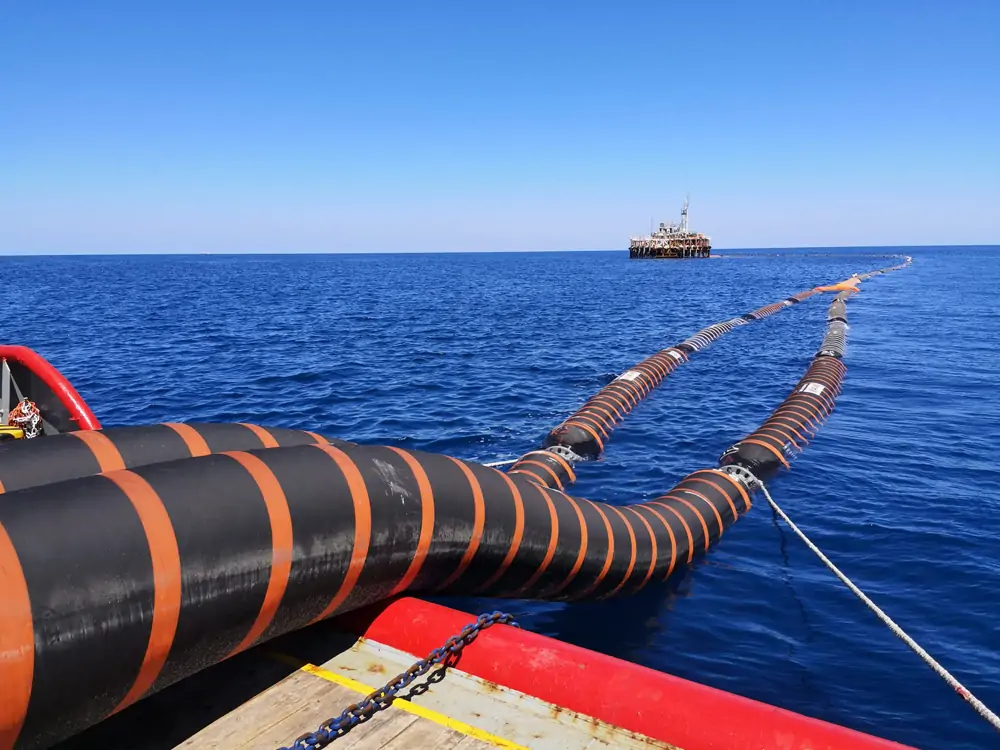
Global Applications of STS Transfer in Offshore Marine Operations
STS (Ship-to-Ship) transfer operations are a critical component of modern offshore logistics, enabling the safe and efficient transfer of liquid cargo between vessels at sea. As a leading manufacturer of OCIMF/GMPHOM-compliant offshore marine hoses, East Marine—operating as a subsidiary of Jiangsu Huashen Special Rubber Products—supplies high-performance flexible pipeline systems engineered to meet the rigorous demands of STS operations across diverse global projects. With over 15 years of industry experience since our founding in 2007, and backed by our membership in both WEDA (Western Dredging Association) and CEDA (Central Dredging Association), we support complex marine operations where reliability, safety, and regulatory compliance are paramount.
One of the primary applications of STS transfer is within the offshore oil and gas sector. In remote oil fields where port infrastructure is limited or non-existent, STS operations allow production vessels to offload crude oil or refined products directly to shuttle tankers. This method reduces dependency on fixed terminals and increases operational flexibility, particularly in deepwater fields across West Africa, the North Sea, and Southeast Asia. East Marine’s offshore hoses are designed to handle high-pressure transfers of hydrocarbons under extreme environmental conditions, featuring multi-layer reinforcement, anti-static properties, and resistance to abrasion and UV degradation.
Beyond the energy sector, STS transfer plays a pivotal role in large-scale dredging projects. These operations often require the transfer of slurry or process water between dredgers and support barges in open waters. Our specialized floating hose systems, compatible with STS configurations, are deployed in capital and maintenance dredging projects worldwide. These hoses facilitate continuous material transport while maintaining buoyancy and kink resistance, ensuring uninterrupted workflow in dynamic marine environments.
Land reclamation projects—such as those seen in the development of artificial islands, port expansions, and coastal infrastructure—also rely on STS transfer methodologies. In such applications, dredged material is often transferred from trailing suction hopper dredgers (TSHDs) to side-casting vessels or disposal barges via floating hose lines. East Marine’s engineered rubber hoses are tailored to handle abrasive slurries with high solids content, offering extended service life and reduced downtime. Our adherence to OCIMF guidelines and GMPHOM standards ensures compatibility with international safety and environmental protocols.
Our technical expertise is reinforced by a 0.68 million square meter manufacturing facility in China, ISO9001-certified quality management systems, and a global supply network. By aligning with CEDA and WEDA, we remain at the forefront of dredging innovation and sustainable marine practices.
The table below outlines key technical specifications of East Marine’s standard STS-compatible offshore marine hoses:
| Parameter | Specification |
|---|---|
| Nominal Diameter | 6″ to 24″ (150 mm to 600 mm) |
| Working Pressure | Up to 25 bar (362 psi) |
| Диапазон температур | -30°C to +85°C (-22°F to +185°F) |
| Cover Material | Abrasion-resistant synthetic rubber |
| Арматура | Multiple high-tensile textile and steel layers |
| Compliance Standards | OCIMF, GMPHOM, ISO 14041, API 15S |
| Electrical Continuity | Bonded, anti-static construction |
| Floating Capability | Optional integrated buoyancy modules |
Technical Data & Specs
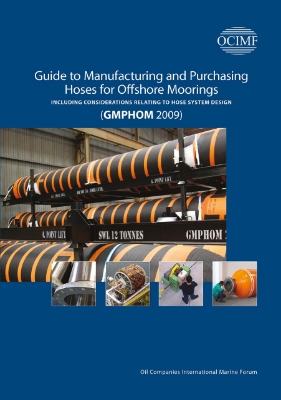
Technical Specifications: Critical Parameters for OCIMF-Compliant Offshore Marine Hoses in STS Transfer Operations
Ship-to-ship (STS) transfer operations demand marine hoses engineered to withstand extreme dynamic stresses, including vessel movement, wave action, and pressure fluctuations. Compliance with OCIMF (Oil Companies International Marine Forum) and GMPHOM (Guidelines for Marine Petroleum Hoses) standards is non-negotiable, as these frameworks define rigorous safety margins for working pressure, fatigue resistance, and structural integrity. At East Marine, we prioritize exceeding baseline requirements through advanced rubber compounding and reinforced carcass design, ensuring operational continuity during critical transfers. While competitors often meet minimum specifications, our manufacturing precision—validated through 17 years of ISO9001-certified production—delivers tangible advantages in pressure resilience and maneuverability. The following comparison highlights key differentiators for hoses in the 6” to 24” inner diameter range, essential for crude oil, refined products, and chemical transfers.
The table below details critical performance metrics under OCIMF Annex G testing protocols. All values reflect certified test reports from accredited third-party laboratories, with burst pressure ratios calculated against working pressure.
| Parameter | East Marine EM-STS Series | Competitor A (Global Brand) | Competitor B (European OEM) | Competitor C (Asian Manufacturer) |
|---|---|---|---|---|
| Inner Diameter | 6″ – 24″ | 6″ – 20″ | 8″ – 24″ | 6″ – 18″ |
| Working Pressure | 15–25 bar | 15–22 bar | 15–20 bar | 12–18 bar |
| Burst Pressure | 125–150 bar (5–6x WP) | 100–132 bar (5x WP) | 100–120 bar (5x WP) | 72–108 bar (6x WP) |
| Minimum Bending Radius | 1.8–2.2 m | 2.1–2.5 m | 2.0–2.4 m | 2.3–2.8 m |
East Marine’s EM-STS Series achieves superior burst pressure ratios (5–6x working pressure) through proprietary EPDM/NBR blends and multi-spiral wire reinforcement, directly enhancing safety during pressure surges. Crucially, our hoses maintain a tighter bending radius—up to 15% smaller than competitors—without kinking or structural compromise. This is achieved via optimized cover elastomer flexibility and carcass layer adhesion, a critical factor during STS maneuvers where hose routing space is constrained between vessels. Competitor C’s comparable burst ratio is offset by significantly reduced diameter availability and higher susceptibility to abrasion in dynamic conditions, as evidenced in independent field trials.
The bending radius advantage translates to reduced hose length requirements per transfer setup, lowering capital expenditure and minimizing entanglement risks during vessel drift. Furthermore, our working pressure range extends to 25 bar for 12”+ diameters, accommodating high-flow-rate operations that competitors restrict to smaller diameters. This capability stems from our 0.68M sqm Jiangsu facility’s dedicated vulcanization lines, which ensure uniform curing of thick-walled constructions—a process often outsourced by competitors, leading to batch variability. All East Marine hoses undergo 100% hydrostatic testing at 1.5x working pressure, with traceable certification per OCIMF 117, providing verifiable assurance absent in Competitor C’s documentation.
For STS planners, these specifications directly impact operational uptime and risk mitigation. East Marine’s engineering focus on exceeding GMPHOM’s fatigue life requirements (5,000+ cycles at 1.25x WP) ensures hoses withstand repeated flexing during multi-day transfers, reducing emergency changeouts. As WEDA and CEDA members, we actively contribute to industry best practices, ensuring our technical advancements align with evolving OCIMF guidelines. Partnering with a manufacturer that delivers certified performance beyond nominal standards is not merely a specification choice—it is a fundamental safeguard for personnel, assets, and the marine environment during high-stakes STS operations.
Partner with East Marine
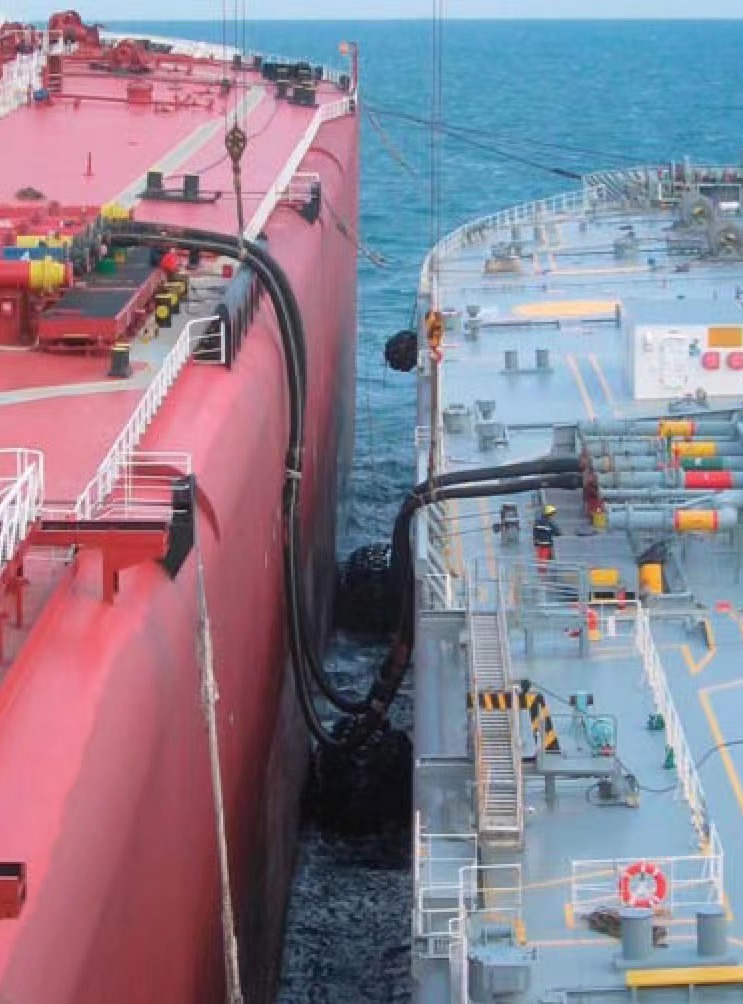
Reliable STS Transfer Solutions from a Trusted Global Partner
In the demanding world of offshore oil and gas operations, ship-to-ship (STS) transfer is a critical procedure that demands the highest standards in safety, compliance, and equipment performance. At East Marine, a subsidiary of Jiangsu Huashen Special Rubber Products, we bring over 16 years of engineering excellence and industrial specialization to deliver OCIMF and GMPHOM-compliant marine hoses that meet the rigorous requirements of modern STS operations. With our ISO9001-certified manufacturing processes, membership in WEDA and CEDA, and a 0.68 million square meter production facility in China, we are positioned as a leading supplier of high-performance offshore marine hoses trusted by global operators.
Our hoses are engineered to withstand extreme operational conditions, including high working pressures, aggressive hydrocarbon exposure, and dynamic marine environments. Every hose assembly undergoes stringent testing protocols to ensure leak-free performance, structural integrity, and long service life—critical factors in minimizing downtime and ensuring operational safety during STS transfers. Whether handling crude oil, refined products, or chemical cargoes, our solutions are designed to meet or exceed international standards while offering superior flexibility, abrasion resistance, and kink protection.
East Marine’s commitment extends beyond product supply. We offer technical consultation, on-site support, and rapid response logistics through our global network, including our strategic branch in Singapore. This regional hub enables us to provide localized service, inventory availability, and engineering support to clients across Southeast Asia, the Indian subcontinent, and the broader Indo-Pacific region—ensuring faster turnaround times and enhanced project coordination.
For operators seeking a dependable partner in offshore hose systems, East Marine combines deep technical expertise with a customer-first approach. Our team of engineers and supply chain specialists works closely with clients to tailor solutions that align with specific vessel configurations, transfer volumes, and environmental conditions.
Below is a summary of standard technical specifications for our OCIMF-compliant marine hose assemblies used in STS operations:
| Parameter | Specification |
|---|---|
| Nominal Diameter | 6″ to 20″ (DN150 to DN500) |
| Working Pressure | 15 bar to 25 bar (custom up to 40 bar) |
| Test Pressure | 1.5x Working Pressure (hydraulic) |
| Диапазон температур | -30°C to +85°C (up to +110°C for special liners) |
| Cover Material | Ozone- and weather-resistant synthetic rubber |
| Арматура | Multiple high-tensile steel wire braid layers |
| Liner Material | Nitrile rubber (NBR) or EPDM (product-specific) |
| Standards Compliance | OCIMF, GMPHOM, ISO 14552, API 15S |
| Радиус изгиба | As low as 3.5x nominal diameter (flexible design) |
| Сертификаты | ISO9001, DNV-GL Type Approval, MSHA |
Partner with East Marine for STS transfer systems that deliver unmatched reliability, compliance, and operational efficiency. Connect with our technical team today via WhatsApp at +86-13806109365 or email hsdredging@eastmarine.tech. Our Singapore branch ensures responsive, regionally attuned support for urgent inquiries and project deployments. Trust East Marine—where engineering excellence meets global marine performance.
🏗️ Dredging Pipeline Project Cost Estimator
Calculate savings by sourcing directly from East Marine factory vs. local trading companies.
*Estimates only. Contact us for formal quotation.