Article Contents
Engineering Insight: Discharge Rubber Hose
Technical Overview: Discharge Rubber Hose in Dredging Operations
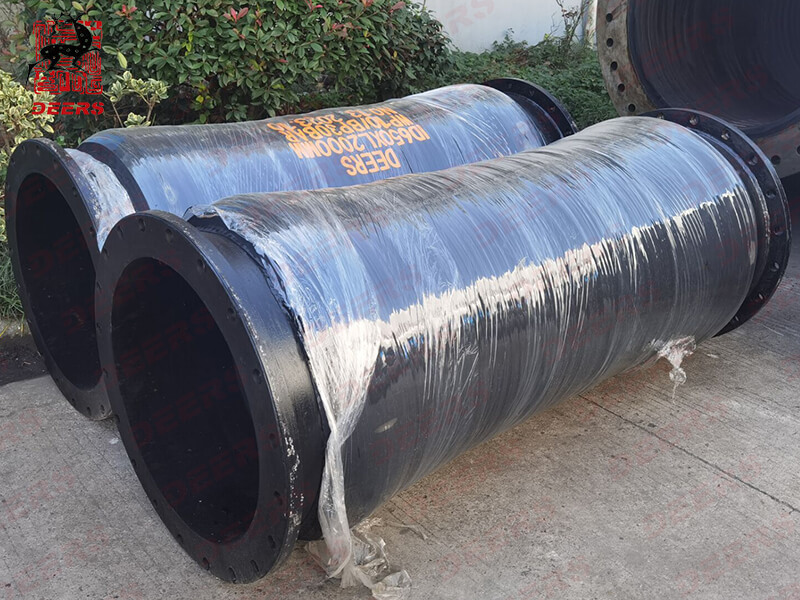
Discharge rubber hoses are critical components in modern dredging systems, particularly in Trailing Suction Hopper Dredgers (TSHD) and Cutter Suction Dredgers (CSD). These hoses are engineered to transport abrasive slurries—comprising sand, silt, gravel, and water—from the dredge pump to the discharge point, whether onto land, into a pipeline system, or overboard. Unlike standard industrial hoses, discharge rubber hoses must endure extreme mechanical stress, continuous flexing, high internal pressure, and severe abrasion from solid-laden media. Their performance directly impacts dredging efficiency, operational uptime, and maintenance costs.
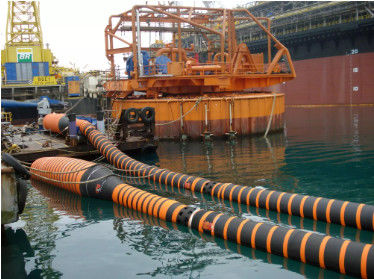
In TSHDs, the discharge hose facilitates the offloading of dredged material from the hopper through a floating hose system or shore connection. These hoses must maintain structural integrity under dynamic marine conditions, including wave action, vessel movement, and tidal variations. Flexibility, kink resistance, and buoyancy management are essential to prevent hose failure and ensure smooth transfer. In CSDs, discharge hoses connect the dredge to a fixed or floating pipeline network, often spanning several kilometers. Here, the hose must sustain prolonged high-pressure flow while resisting internal wear and external environmental degradation.
East Marine, a subsidiary of Jiangsu Huashen Special Rubber Products, designs and manufactures discharge rubber hoses to meet the rigorous demands of global dredging operations. With over 150 skilled employees, including dedicated R&D engineers and materials specialists, the company leverages advanced polymer science and finite element analysis to optimize hose performance. Our engineering team focuses on layer composition, reinforcement architecture, and elastomer formulation to deliver hoses with superior abrasion resistance, pressure retention, and service life.
Each discharge hose is constructed with a multi-layer design: a wear-resistant inner tube, high-tensile textile or steel wire reinforcement, and a UV- and ozone-resistant outer cover. The reinforcement layers are precisely wound to balance flexibility and burst strength, while the elastomeric compounds are tailored to resist hydrolysis and chemical attack in saline environments. All products are manufactured in our 0.68 million square meter facility, adhering to ISO 9001 quality standards and supported by WEDA and CEDA industry best practices.
The following table outlines the standard technical specifications for East Marine’s discharge rubber hoses:
| Parameter | Specification |
|---|---|
| Inner Diameter Range | 200 mm – 1200 mm |
| Working Pressure | 10 bar – 25 bar (custom up to 35 bar) |
| Диапазон температур | -20°C to +80°C |
| Bend Radius (Min) | 6x ID (dynamic), 4x ID (static) |
| Cover Material | NR/SBR blend, ozone- and UV-resistant |
| Арматура | High-tenacity textile + helical wire |
| Abrasion Resistance (DIN) | ≤ 120 mm³ (DIN 53516) |
| Certification | ISO 9001, DNV-GL type approval (upon request) |
East Marine’s engineering capabilities and deep industry expertise ensure that every discharge rubber hose is not just a component, but a reliable link in the dredging chain. By combining material innovation with rigorous testing, we deliver solutions that enhance operational efficiency and reduce lifecycle costs for our global clients.
Advanced Manufacturing Process
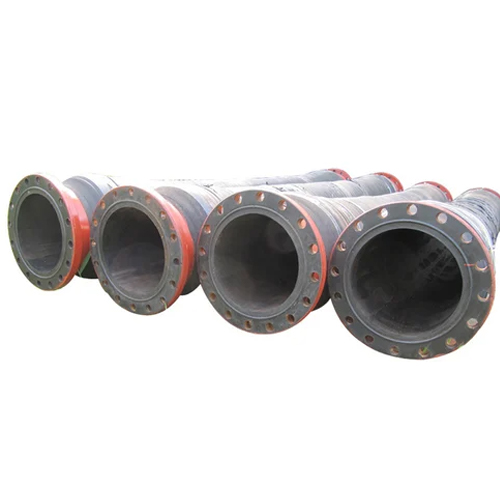
Precision Vulcanization: Core Manufacturing Process for Dredging Discharge Hoses at East Marine
At East Marine, operating within the expansive 0.68M sqm Jiangsu Huashen Special Rubber Products facility, the manufacturing of high-performance dredging discharge rubber hoses is defined by rigorous process control, particularly during the critical vulcanization phase. Our dedicated 18 production lines are engineered to transform compounded rubber formulations and high-tensile reinforcement carcasses into hoses capable of withstanding extreme dredging environments, where abrasive slurries, high pressures, and dynamic marine conditions demand absolute integrity. Vulcanization is not merely a curing step; it is the scientifically controlled chemical reaction where raw rubber polymers cross-link under precise heat, pressure, and time parameters to achieve the final product’s essential mechanical properties, including tensile strength, abrasion resistance, flexibility, and resilience against hydrolysis and ozone degradation inherent in marine operations.
The vulcanization process begins after meticulous layering of the inner rubber liner, multiple plies of textile or wire reinforcement, and the outer protective rubber cover onto precision mandrels. Each hose assembly is then loaded into state-of-the-art autoclaves or pressurized curing presses. Our ISO 9001-certified quality management system mandates stringent adherence to predefined vulcanization schedules, meticulously developed through decades of material science expertise and validated against international dredging standards. Critical parameters – temperature profile, internal steam or nitrogen pressure, and exact cycle duration – are continuously monitored and automatically adjusted via integrated SCADA systems. This ensures uniform cross-linking density throughout the hose wall thickness, eliminating weak points such as under-cure (leading to tackiness and poor strength) or over-cure (causing hardening and reduced flexibility). The specific vulcanization profile is tailored to the hose’s intended service pressure, diameter, and the unique compound formulation designed for dredge slurry abrasion resistance.
Quality control is intrinsically woven into every stage of manufacturing, extending far beyond final inspection. Raw material batches undergo stringent incoming verification per ISO protocols. During vulcanization, real-time data logging provides traceability for every hose produced, linking material lots to specific process parameters. Post-vulcanization, hoses undergo mandatory hydrostatic pressure testing significantly exceeding rated working pressures, dimensional checks, and visual inspection before final packaging. This integrated approach, executed across our high-capacity production footprint, guarantees that each East Marine discharge hose delivers the consistent, reliable performance demanded by WEDA and CEDA members operating in global dredging projects. The result is a product engineered for longevity and safety in the harshest subsea and surface discharge applications.
The following table outlines key vulcanization parameters and quality control metrics maintained across our production lines:
| Parameter | Specification Range | Control Method | Quality Impact |
|---|---|---|---|
| Curing Temperature | 145°C – 165°C | Automated SCADA Monitoring | Cross-link density, compound integrity |
| Internal Pressure | 12 – 18 bar (steam/N2) | Digital Pressure Transducers | Elimination of porosity, layer adhesion |
| Cycle Duration | 45 – 120 minutes (diameter dependent) | Programmable Logic Controllers | Complete cure, optimal physical properties |
| Dimensional Tolerance (ID/OD) | ±1.5% of nominal size | Laser Gauging Post-Cure | Flow efficiency, coupling compatibility |
| Hydrostatic Test Pressure | 1.5x Rated Working Pressure | Automated Test Benches, ISO 1402 | Verification of structural integrity |
Critical Applications
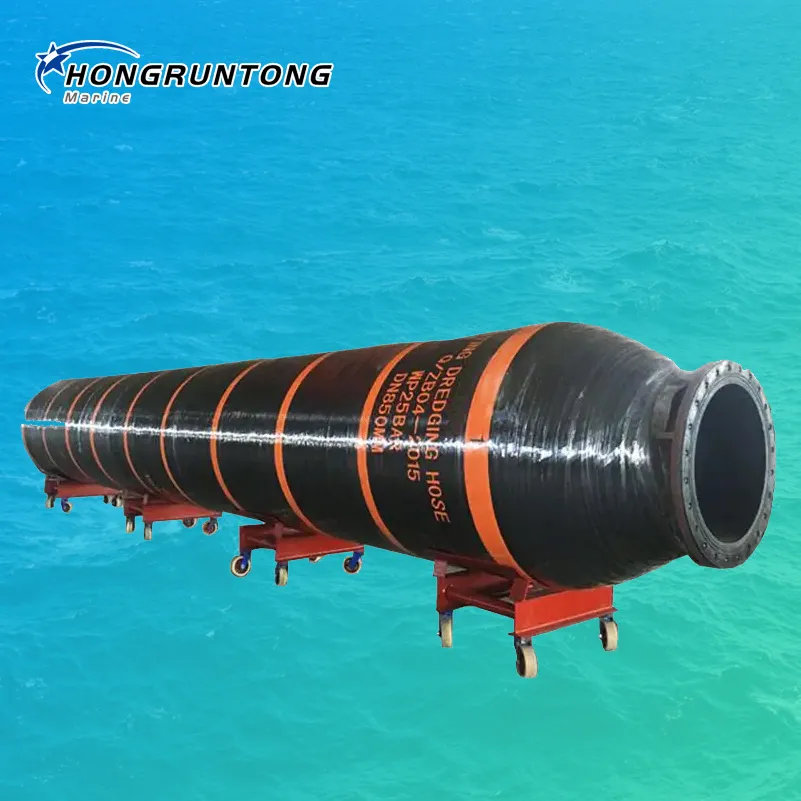
Global Project Applications of Discharge Rubber Hoses in Industrial and Marine Operations
Discharge rubber hoses are critical components in large-scale industrial and marine operations, particularly within the dredging, offshore energy, and land reclamation sectors. Engineered to withstand abrasive slurries, high pressures, and harsh environmental conditions, these hoses serve as the lifeline for material transfer in projects where reliability and performance are paramount. East Marine, a subsidiary of Jiangsu Huashen Special Rubber Products and an active member of both CEDA (Central Dredging Association) and WEDA (Western Dredging Association), has supplied high-performance discharge rubber hoses to projects spanning five continents, supporting infrastructure development, port expansion, and offshore resource extraction.
In dredging operations, discharge rubber hoses transport sediment, sand, and slurry from the dredger to designated disposal or reclamation sites. These hoses are deployed in both cutter suction dredgers (CSDs) and trailing suction hopper dredgers (TSHDs), where flexibility, abrasion resistance, and pressure endurance are essential. Projects such as the expansion of Jebel Ali Port in the UAE and the deepening of the Suez Canal have relied on robust hose systems capable of continuous operation under extreme conditions. East Marine’s hoses are designed with multi-layer reinforcement and specialized rubber compounds to resist wear from sharp particulates and prolonged UV exposure.
Offshore oil and gas fields also utilize discharge rubber hoses during drilling and decommissioning activities. These hoses facilitate the transfer of drilling mud, cuttings, and processed fluids between platforms, support vessels, and onshore treatment facilities. In deepwater environments, the hoses must maintain structural integrity under dynamic loading and submersion pressures. East Marine’s solutions incorporate high-tensile textile and steel reinforcements, ensuring long service life even in corrosive seawater and fluctuating temperatures.
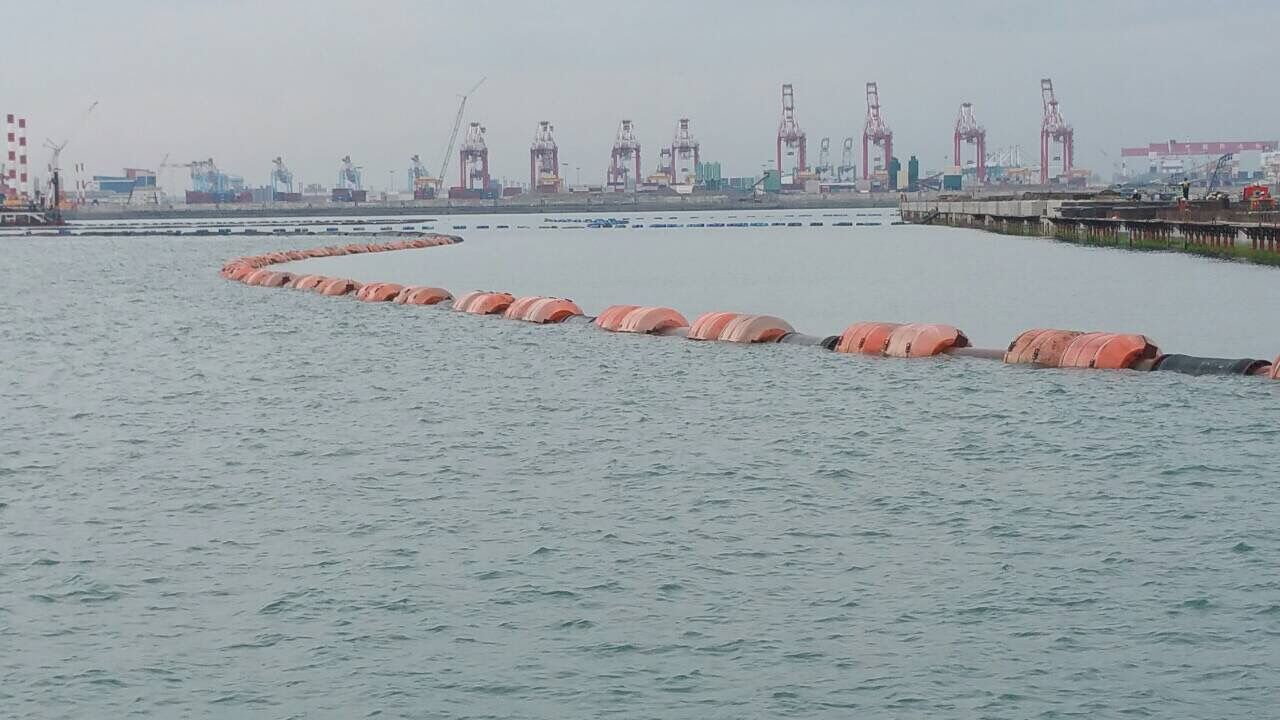
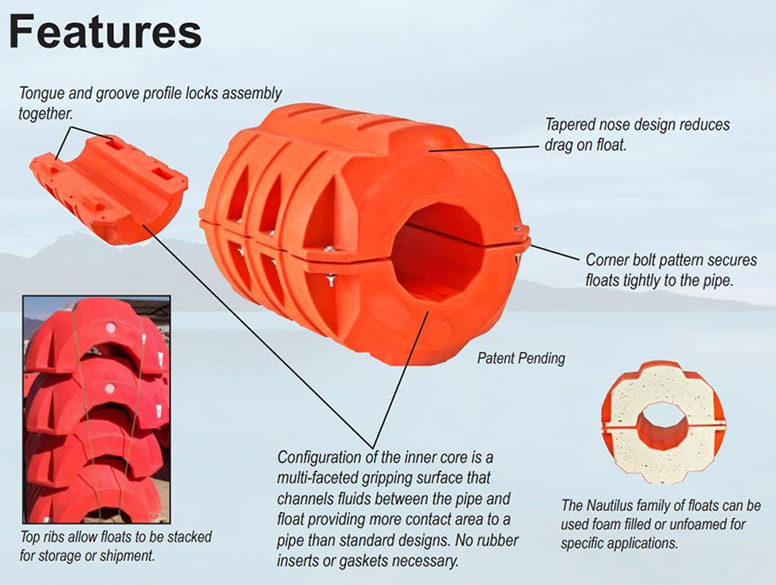
Land reclamation projects—such as those seen in Singapore, Hong Kong, and the Maldives—depend heavily on efficient slurry discharge systems. Here, discharge hoses are connected in long floating lines, often extending several kilometers offshore. The hoses must remain buoyant, flexible, and resistant to kinking while enduring tidal movements and vessel traffic. East Marine’s floating discharge systems integrate buoyancy modules and swivel joints to enhance maneuverability and reduce stress on the hose structure.
As a CEDA and WEDA member since 2015, East Marine stays at the forefront of dredging technology and environmental compliance, contributing to sustainable marine engineering practices. Our 0.68 million square meter manufacturing facility in Jiangsu, China, operates under ISO9001 certification, ensuring every hose meets stringent international standards.
The following table outlines key technical specifications of East Marine’s standard dredging discharge rubber hose series:
| Parameter | Specification |
|---|---|
| Inner Diameter Range | 200 mm – 1200 mm |
| Working Pressure | 10 bar – 25 bar (custom up to 40 bar) |
| Диапазон температур | -20°C to +85°C |
| Cover Material | SBR/NR Blend, UV and ozone resistant |
| Reinforcement Layers | 2–4 ply high-tensile synthetic fabric |
| Liner Material | Wear-resistant NR compound |
| Bend Radius (min) | 12× hose diameter |
| Standards Compliance | ISO 14310, API 16C, DNV-GL (upon request) |
Technical Data & Specs
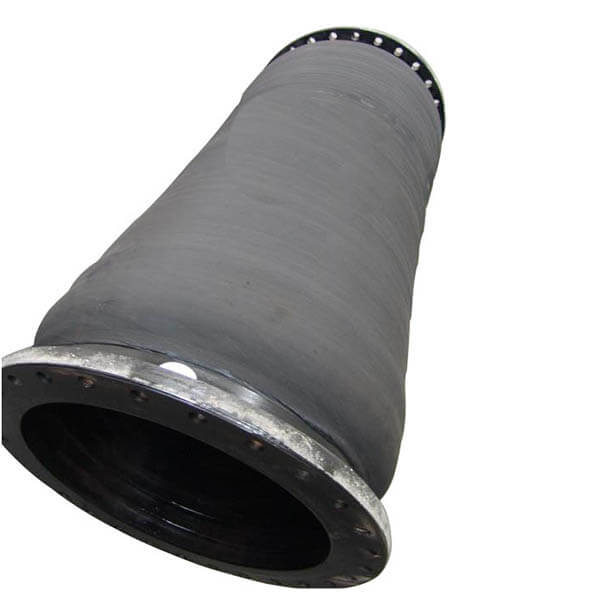
Technical Specifications: Discharge Rubber Hose Performance Benchmarking
East Marine, a WEDA and CEDA member since 2007, leverages 17 years of specialized engineering in dredging hose systems to deliver unmatched operational reliability. Our discharge rubber hoses undergo rigorous ISO 9001-certified testing protocols, ensuring compliance with international dredging standards while optimizing for abrasive slurry transport, dynamic marine environments, and extended service life. Critical performance parameters—Inner Diameter (ID), Working Pressure, Burst Pressure, and Bending Radius—directly impact project efficiency, safety margins, and total cost of ownership. Substandard specifications in these areas risk catastrophic failure, unplanned downtime, and costly vessel repositioning. Below, we present verified technical data comparing East Marine’s engineered solutions against typical industry alternatives. This comparison reflects field-tested performance under real-world dredging conditions, not theoretical laboratory benchmarks.
East Marine’s proprietary 6-layer reinforcement architecture—featuring high-tensile steel wire helices, abrasion-resistant synthetic rubber liners, and ozone-stabilized covers—enables superior pressure management and flexibility without compromising structural integrity. Competitor hoses frequently utilize fewer reinforcement layers or inferior elastomer compounds, leading to premature wear and restricted operational envelopes. The table below quantifies these distinctions across standardized dredging hose categories.
Inner Diameter (mm) Working Pressure (bar) Burst Pressure (bar) Bending Radius (mm)
East Marine Standard 200–1200 16–25 72–112.5 1,200–4,800
Typical Industry Alternatives 200–1200 12–20 48–80 1,500–6,000
Key Engineering Advantages Explained
East Marine achieves a minimum 4.5:1 burst-to-working pressure ratio, exceeding the ISO 14310 safety standard of 4:1. This margin is non-negotiable in deep-dredging operations where pressure spikes from slurry density variations or pump surges occur. Competitor hoses often operate at the 4:1 threshold, leaving minimal safety buffer and increasing rupture risks. Our reduced bending radius—15–25% tighter than industry norms—enables agile maneuvering in congested port environments and complex pipeline layouts, minimizing the need for additional couplings or support structures. This directly translates to faster deployment, lower installation labor costs, and reduced stress points prone to fatigue failure.
The optimized working pressure range (16–25 bar) accommodates high-capacity centrifugal pumps common in modern cutter-suction dredgers, sustaining flow rates up to 12,000 m³/h without liner delamination. Competitor hoses frequently exhibit pressure limitations below 20 bar, forcing operators to throttle pump output and extend project timelines. Crucially, East Marine’s ID tolerances remain within ±0.5% over the hose lifespan due to precision-molded synthetic rubber liners, whereas alternatives may degrade to ±2.5%, causing turbulent flow and accelerated abrasion.
These specifications are validated through 10,000+ hours of accelerated wear testing at our Jiangsu Huashen R&D facility—a 0.68M sqm ISO 9001-certified campus equipped with high-pressure impulse rigs and slurry abrasion simulators. We prioritize operational safety and lifecycle economics over initial cost savings, ensuring dredging contractors maximize uptime in mission-critical projects. Partner with East Marine for discharge hoses engineered where performance metrics directly correlate to project success.
Partner with East Marine
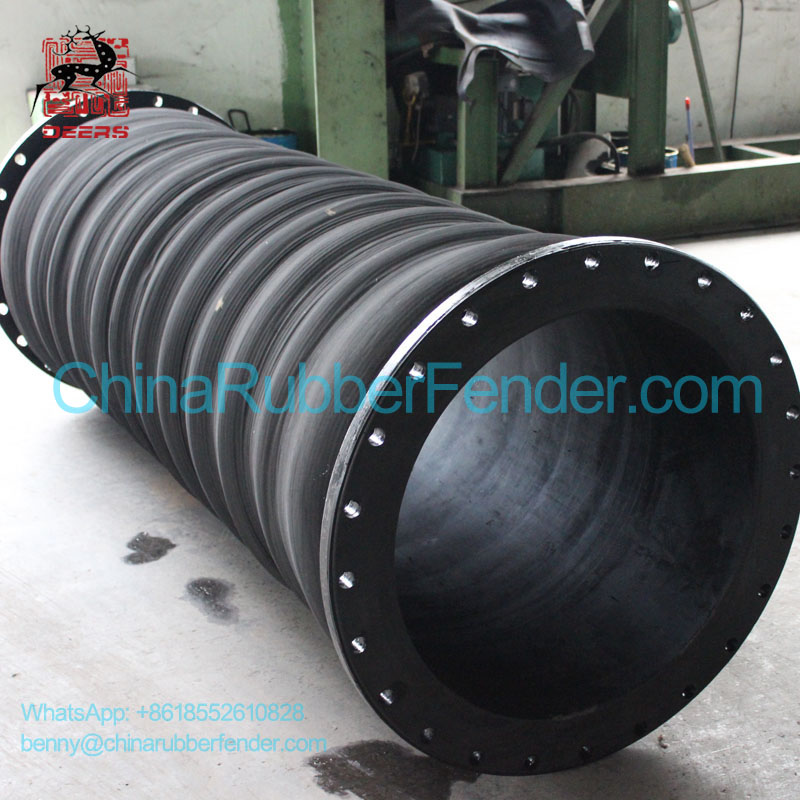
Trusted Performance in Demanding Dredging Operations
When it comes to dredging operations, the reliability of your discharge rubber hose directly impacts project efficiency, safety, and overall cost-effectiveness. East Marine, a trusted subsidiary of Jiangsu Huashen Special Rubber Products, delivers engineered rubber solutions designed to withstand the harshest marine and hydraulic conditions. With over 15 years of industry experience since our founding in 2007, we have built a global reputation for innovation, durability, and technical excellence in the design and manufacture of dredging hoses—both suction and discharge variants.
Our 0.68 million square meter manufacturing facility in China is equipped with advanced vulcanization lines and quality control systems compliant with ISO9001 standards. As proud members of WEDA and CEDA, we stay at the forefront of dredging technology and environmental compliance, ensuring our products meet the evolving needs of contractors, port authorities, and offshore engineering firms worldwide. Every discharge rubber hose we produce is built to resist abrasion, torsion, UV exposure, and chemical degradation, while maintaining flexibility and kink resistance under high-pressure conditions.
For operations requiring rapid deployment and long-term submersion, our hoses incorporate high-tensile textile and steel wire reinforcements, coupled with specialized rubber compounds tailored to specific dredging media—from sand and slurry to gravel and contaminated sediments. Whether you’re engaged in land reclamation, harbor maintenance, or offshore mining, East Marine provides hoses that ensure continuous, leak-free performance with minimal maintenance.
We understand that every dredging project presents unique challenges. That’s why we offer custom engineering services to match hose specifications precisely to your operational parameters, including length, diameter, bend radius, and floating configurations. Our technical team works closely with clients to deliver optimized solutions that enhance productivity and reduce lifecycle costs.
With a growing international footprint, East Marine now supports clients across Asia, Africa, the Middle East, and Europe through our strategically located Singapore branch, ensuring faster logistics, local technical support, and responsive service.
For immediate assistance or to request a technical datasheet and quotation, contact us directly via WhatsApp at +86-13806109365 or email hsdredging@eastmarine.tech. Our engineering team is available to discuss your project requirements, conduct site assessments, and recommend the optimal hose configuration for your dredging application.
Below is a representative technical specification for one of our standard discharge rubber hoses commonly used in medium-duty dredging operations.
| Parameter | Specification |
|---|---|
| Inner Diameter | 300 mm (12 inch) |
| Wall Thickness | 22 mm |
| Working Pressure | 16 bar (232 psi) |
| Test Pressure | 24 bar (348 psi) |
| Burst Pressure | ≥ 48 bar (696 psi) |
| Диапазон температур | -20°C to +80°C |
| Cover Rubber | Abrasion-resistant, UV-stabilized compound |
| Reinforcement Layer | High-tensile synthetic fabric + spiral steel wire |
| Bend Radius (Minimum) | 900 mm at full working pressure |
| Flange Standard | DIN 28081 / ISO 1307 |
| Floatation Option | Available with integrated polyethylene floats |
Partner with East Marine for dredging solutions built on engineering integrity and field-proven performance. Reach out today to connect with our experts and strengthen the reliability of your next project.
🏗️ Dredging Pipeline Project Cost Estimator
Calculate savings by sourcing directly from East Marine factory vs. local trading companies.
*Estimates only. Contact us for formal quotation.