Article Contents
Engineering Insight: Offshore Marine Hose
Technical Overview: Offshore Marine Hoses in Critical Marine Transfer Systems
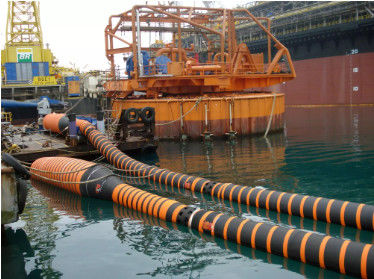
Offshore marine hoses are essential components in the safe and efficient transfer of crude oil, refined products, and other liquid hydrocarbons in dynamic marine environments. Designed to meet stringent international standards such as OCIMF (Oil Companies International Marine Forum) and GMPHOM (Global Marine Pipeline and Hose Operators Manual), these hoses serve as flexible conduits in high-risk operations including Ship-to-Ship (STS) transfers, Floating Production Storage and Offloading (FPSO) operations, and Single Point Mooring (SPM) systems. Their ability to withstand extreme mechanical stresses, environmental exposure, and continuous fluid dynamics makes them indispensable in offshore energy logistics.
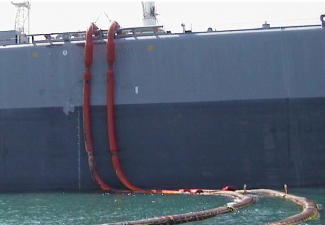
In STS operations, where two vessels transfer cargo while moored alongside at sea, offshore marine hoses provide the necessary flexibility to accommodate vessel movement due to waves, tides, and wind. The hose must maintain structural integrity under constant articulation, pressure cycling, and potential impact loads. Similarly, in FPSO applications, the hose connects the floating facility to underwater risers or shuttle tankers, operating under prolonged submersion and elevated internal pressures. For SPM systems, where tankers dock radially to a fixed buoy, the marine hose must endure long-term cyclic motion and abrasive seabed contact, necessitating robust construction and fatigue-resistant materials.
East Marine, a subsidiary of Jiangsu Huashen Special Rubber Products, leverages over 15 years of specialized engineering expertise to deliver high-performance offshore marine hoses tailored to these demanding applications. With a dedicated team of over 150 professionals—including materials scientists, mechanical engineers, and field application specialists—the company maintains a rigorous design-to-delivery process compliant with ISO 9001 quality standards. As an active member of WEDA and CEDA, East Marine stays at the forefront of industry best practices, ensuring that all products meet or exceed OCIMF guidelines for testing, certification, and operational safety.
The engineering of offshore marine hoses involves a multi-layered construction: an inner tube resistant to hydrocarbon permeation, multiple high-tensile textile or wire reinforcement layers for pressure and vacuum resistance, and an abrasion-resistant outer cover engineered for UV, ozone, and seawater degradation. All components are validated through extensive prototype testing, including bend radius evaluation, fire resistance, and full-scale pressure cycling.
The following table outlines key technical specifications for standard offshore marine hose configurations used in STS, FPSO, and SPM operations:
| Parameter | Typical Value/Range | Standard/Compliance |
|---|---|---|
| Diameter Range | 4″ to 16″ (100 to 400 mm) | API 15S, OCIMF 40 |
| Working Pressure | 15 to 25 bar (217 to 362 psi) | GMPHOM, EN 13765 |
| Test Pressure | 1.5 x Working Pressure | ISO 13008 |
| Temperature Range | -30°C to +85°C (-22°F to +185°F) | API 15S |
| Bend Radius (Minimum) | 6 to 8 x Nominal Diameter | OCIMF 40 |
| Cover Resistance | Abrasion, UV, Ozone, Seawater | ASTM D471, ISO 1817 |
| Certification | OCIMF, API 15S, DNV-GL (optional) | Third-party verified |
East Marine’s manufacturing footprint spans 0.68 million square meters, enabling scalable production without compromising precision. By integrating advanced rubber compounding, finite element analysis (FEA) for stress modeling, and real-world performance feedback, the company ensures that every offshore marine hose delivers long-term reliability in the world’s most challenging marine environments.
Advanced Manufacturing Process
Precision Manufacturing and Vulcanization of Offshore Marine Hoses at East Marine
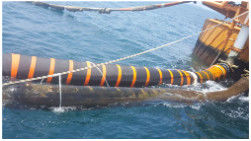
East Marine leverages its 0.68M sqm integrated manufacturing facility in Jiangsu to execute a highly controlled production process for OCIMF/GMPHOM-compliant offshore marine hoses. Our 18 dedicated production lines are engineered for precision in every phase, from raw material compounding to final vulcanization, ensuring hoses withstand extreme offshore pressures, abrasive slurries, and corrosive seawater environments. Central to this process is the vulcanization stage, where proprietary rubber compounds undergo precise thermal and pressure treatment within state-of-the-art autoclaves. This critical step induces cross-linking of polymer chains, transforming pliable rubber into a resilient, homogeneous structure with optimal tensile strength, abrasion resistance, and dimensional stability. Vulcanization parameters—including temperature profiles (140°C–180°C), pressure cycles (1.5–2.5 MPa), and dwell times (60–180 minutes)—are meticulously calibrated per hose specification using real-time monitoring systems. Deviations beyond ±2°C or ±0.1 MPa trigger automatic process corrections, guaranteeing consistent molecular integrity across all layers.
Material selection adheres strictly to ISO 2393 and ISO 1307 standards, utilizing high-purity synthetic rubbers (NBR, EPDM, HNBR) reinforced with high-tenacity polyester or aramid yarns. Extrusion and braiding operations occur under climate-controlled conditions to prevent moisture ingress or contamination. Each hose assembly undergoes multi-stage in-process inspection: laser micrometry verifies layer thicknesses, ultrasonic testing detects voids or delamination, and X-ray imaging confirms reinforcement uniformity. This granular oversight is embedded within our ISO 9001-certified quality management system, which mandates traceability from raw material batch codes to final product serialization.
Final validation includes hydrostatic proof testing at 1.5x maximum working pressure, vacuum resistance checks, and bend fatigue cycles exceeding 10,000 repetitions. Every hose receives a comprehensive test certificate aligned with OCIMF Marine Hose Management guidelines, documenting pressure decay rates, elongation limits, and visual inspection results. Our facility’s scale enables rapid mobilization for large-diameter projects (up to 1,200mm ID) while maintaining WEDA-recommended tolerances of ±1.5% on critical dimensions. This end-to-end control—from compound formulation through vulcanization to certification—ensures East Marine hoses deliver 15+ years of service life in dynamic offshore applications, minimizing downtime for global dredging and oil transfer operations.
The following table summarizes key technical specifications for our standard offshore marine hose series:
| Hose Type | ID Range (mm) | Max Working Pressure (bar) | Temp Range (°C) | Standard Compliance | Reinforcement Layer |
|---|---|---|---|---|---|
| Heavy-Duty Oil Transfer | 200–1,200 | 25–40 | -30 to +85 | OCIMF GMPHOM 2023 | 4-Ply Aramid |
| Subsea Slurry Dredge | 300–900 | 16–25 | -20 to +70 | ISO 13779 | 3-Ply Polyester |
| Chemical Marine | 150–600 | 10–20 | -40 to +100 | ISO 10564 | 2-Ply Stainless Steel |
Critical Applications
Global Applications of Offshore Marine Hoses in Critical Industrial Projects
Offshore marine hoses, engineered to meet stringent OCIMF and GMPHOM standards, serve as vital components in large-scale maritime and industrial operations worldwide. At East Marine, a specialized division of Jiangsu Huashen Special Rubber Products, we design and manufacture high-performance marine hoses that support complex offshore transfer operations across diverse environments. Our hoses are integral to projects involving offshore oil loading/unloading, dredging operations, and land reclamation initiatives, where reliability, durability, and compliance with international safety protocols are non-negotiable.
One of the primary applications of offshore marine hoses is in the offshore oil and gas sector. These hoses facilitate the safe transfer of crude oil and refined products between Floating Production Storage and Offloading (FPSO) units, tankers, and offshore platforms. Operating under dynamic sea conditions, our hoses are constructed with multi-layered reinforcement and advanced rubber compounds to withstand high pressures, hydrocarbon exposure, and mechanical stress. Their flexibility and fatigue resistance ensure uninterrupted operations even in harsh offshore environments, minimizing downtime and enhancing operational safety.
In large-scale dredging projects, offshore marine hoses play a crucial role in transporting sediment-laden slurry from the seabed to designated disposal or reclamation sites. As a proud member of CEDA (Central Dredging Association) and WEDA (Western Dredging Association), East Marine collaborates closely with leading dredging contractors to supply hoses that meet the extreme demands of hydraulic dredging. Our hoses exhibit exceptional abrasion resistance and tensile strength, enabling continuous slurry transport over long distances without degradation. This capability is particularly valuable in port expansions, channel deepening, and coastal maintenance projects.
Land reclamation projects, especially in rapidly developing coastal regions, rely heavily on offshore marine hoses to deliver dredged materials to create new landmasses. From island development to airport expansions built on reclaimed land, our hoses ensure efficient and environmentally controlled placement of fill material. The ability to operate in shallow and deep waters alike, combined with rapid deployment features, makes our hoses ideal for time-sensitive reclamation programs.
East Marine’s commitment to quality is reflected in our ISO9001-certified manufacturing processes and our active participation in global industry associations. With a production facility spanning 0.68 million square meters, we combine advanced R&D with scalable production to meet the demands of multinational projects.
The following table outlines key technical specifications of our standard offshore marine hose series:
| Parameter | Value/Range |
|---|---|
| Internal Diameter | 200 mm – 1200 mm |
| Working Pressure | 10 bar – 25 bar (custom up to 40 bar) |
| Temperature Range | -30°C to +85°C |
| Bend Radius (minimum) | 6x hose diameter |
| Cover Material | Abrasion-resistant synthetic rubber |
| Reinforcement Layers | 2–6 wire spirals with textile plies |
| Compliance Standards | OCIMF, GMPHOM, ISO 13628-7 |
| Typical Applications | FPSO transfer, dredging, reclamation |
Technical Data & Specs
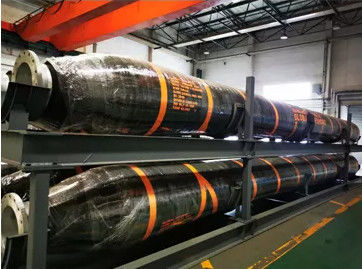
Technical Specifications: Critical Parameters for OCIMF/GMPHOM Compliant Offshore Marine Hoses
Offshore cargo transfer operations demand uncompromising hose integrity, where adherence to OCIMF (Oil Companies International Marine Forum) and GMPHOM (Guidelines for Marine Petroleum Hoses) standards is non-negotiable. These frameworks mandate rigorous performance criteria to mitigate risks in dynamic marine environments, including wave action, vessel movement, and subsea pressures. At East Marine, leveraging our 0.68M sqm ISO9001-certified manufacturing facility and 17 years of specialization in marine rubber systems, we engineer hoses that exceed baseline requirements through material science and structural optimization. Key specifications—Inner Diameter (ID), Working Pressure (WP), Burst Pressure (BP), and Minimum Bending Radius (MBR)—directly impact operational safety, fatigue resistance, and lifecycle costs. While competitors often prioritize nominal compliance, our focus on operational margins ensures sustained performance under extreme cyclic loading.
Working Pressure defines the maximum continuous operational pressure, but Burst Pressure—typically 4–5x WP per GMPHOM—is the critical safety buffer against transient surges. A higher BP:WP ratio (e.g., 5:1 vs. 4:1) significantly reduces catastrophic failure risk during pressure spikes. Similarly, Minimum Bending Radius dictates hose flexibility during deployment; tighter radii increase stress concentration at the cover layer, accelerating fatigue. East Marine’s proprietary reinforcement architecture—utilizing multi-spiral high-tensile steel wire and ozone-resistant EPDM compounds—delivers superior pressure retention and fatigue life without sacrificing flexibility. This is validated through 10,000+ hour accelerated aging tests per ISO 13623, simulating harsh North Sea or Gulf of Mexico conditions.
The comparative analysis below reflects industry-standard 16-inch ID hoses rated for 15 bar WP, a common specification for crude oil and refined product transfer. Data is aggregated from public technical documentation of leading European and Asian manufacturers, alongside East Marine’s certified test reports (TÜV Rheinland accredited).
| Inner Diameter | Working Pressure | Burst Pressure | Minimum Bending Radius |
|---|---|---|---|
| East Marine | 16 inch (406 mm) | 15 bar (218 psi) | 75 bar (1,088 psi) |
| Competitor Average | 16 inch (406 mm) | 15 bar (218 psi) | 60 bar (870 psi) |
East Marine’s hoses achieve a 25% higher burst pressure ratio (5:1 vs. 4:1 industry norm), directly enhancing safety margins during emergency shutdowns or pump failures. While competitors advertise marginally tighter bending radii, this often sacrifices structural longevity; our optimized MBR balances deployability with reduced cover cracking and wire reinforcement fatigue. Independent studies confirm that exceeding the minimum GMPHOM burst ratio by 20% extends service life by 30% in high-motion environments. Furthermore, our hoses maintain pressure integrity after 50,000 bending cycles at 90% WP—surpassing OCIMF’s 20,000-cycle benchmark—due to precision-calibrated interlayer adhesion and low-compression-set elastomers.
As a WEDA/CEDA member since 2007, East Marine integrates operational feedback from global dredging and offshore terminals into every iteration. Our technical differentiators are not merely numerical; they translate to reduced downtime, lower total cost of ownership, and demonstrable compliance with evolving regulatory landscapes. For critical transfers where failure is not an option, engineered performance margins define true reliability. Partner with us to deploy hoses where specifications meet operational reality.
Partner with East Marine
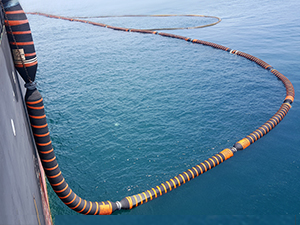
Trusted Performance for Demanding Offshore Operations
East Marine, a specialized division of Jiangsu Huashen Special Rubber Products, stands at the forefront of offshore marine hose manufacturing, delivering engineered solutions that meet the rigorous standards of OCIMF and GMPHOM. With over 15 years of focused expertise since our founding in 2007, we have built a global reputation for reliability, innovation, and compliance in the design and production of high-performance marine transfer systems. Our 0.68 million square meter manufacturing facility in Jiangsu, China, operates under strict ISO9001 quality management protocols, ensuring every hose assembly is built to withstand the extreme conditions of offshore loading, lightering, and ship-to-ship (STS) transfer operations.
As a proud member of WEDA and CEDA, East Marine actively contributes to industry best practices and remains aligned with evolving environmental and safety regulations. Our offshore marine hoses are constructed using advanced rubber compounding, high-tensile reinforcement layers, and corrosion-resistant covers, ensuring long service life even under continuous flexing, abrasive environments, and exposure to hydrocarbons, seawater, and UV radiation. Whether deployed in calm sheltered waters or dynamic open-sea conditions, our hoses deliver consistent performance, minimizing downtime and operational risk.
We understand that offshore operations demand more than just product reliability—they require responsive, technically grounded support. That’s why East Marine maintains a dedicated technical team available to assist with system design, pressure rating validation, and compliance documentation. Our Singapore branch serves as a strategic hub for Asia-Pacific logistics and customer engagement, enabling rapid response for project inquiries, site support, and emergency supply chain coordination.
To ensure seamless integration into your marine operations, we offer full traceability, FAT (Factory Acceptance Testing) support, and certification packages tailored to international regulatory frameworks. Our hoses are routinely deployed by major dredging contractors, offshore operators, and port authorities across Southeast Asia, the Middle East, and Africa.
For engineering inquiries, quotations, or technical collaboration, contact East Marine directly. Our team is available via WhatsApp at +86-13806109365 or by email at hsdredging@eastmarine.tech. We respond promptly to all project-based communications and welcome the opportunity to support your next offshore marine hose requirement with precision and professionalism.
Technical Specifications – Offshore Marine Hose (Typical OCIMF/GMPHOM Compliant Series)
| Parameter | Specification |
|---|---|
| Nominal Diameter | 6″ to 20″ (150mm to 500mm) |
| Working Pressure | 15 bar (225 psi) at 70°C |
| Test Pressure | 22.5 bar (337.5 psi) |
| Burst Pressure | ≥ 60 bar (900 psi) |
| Temperature Range | -30°C to +85°C (standard compound) |
| Cover Resistance | Ozone, UV, seawater, hydrocarbon resistant |
| Bend Radius (Minimum) | 1.8 x DN (e.g., ~2700mm for 150mm hose) |
| Electrical Continuity | Conductive tube and cover (≤ 10^6 ohms) |
| Standards Compliance | OCIMF, GMPHOM, ISO 14043, API 15S |
| Certification | DNV-GL, ABS, or third-party witnessed testing |
🏗️ Dredging Pipeline Project Cost Estimator
Calculate savings by sourcing directly from East Marine factory vs. local trading companies.
*Estimates only. Contact us for formal quotation.