Article Contents
Engineering Insight: Ship To Ship Transfer
Technical Overview: Ship-to-Ship Transfer in Offshore Marine Operations
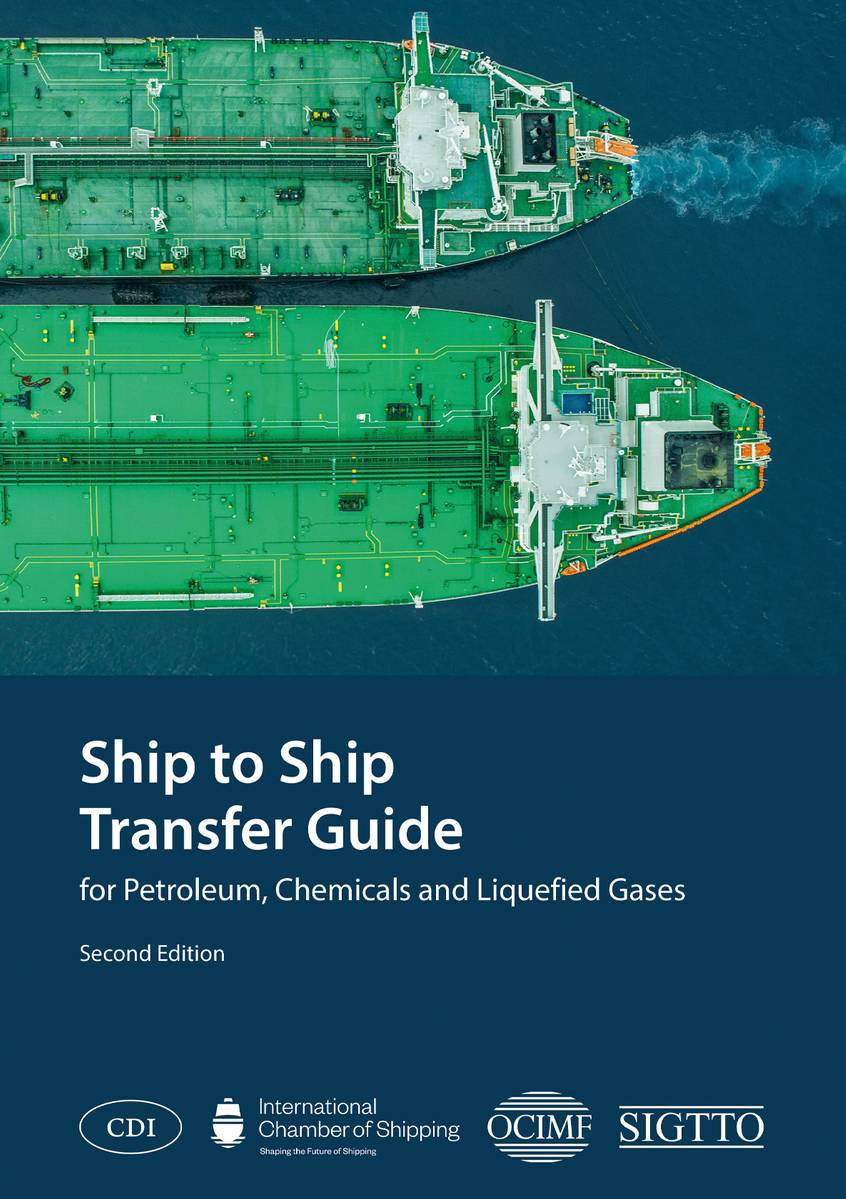
Ship-to-Ship (STS) transfer operations are a critical component in the global marine logistics and offshore energy sectors, enabling the safe and efficient transfer of liquid and gaseous cargoes between vessels at sea. These operations are commonly conducted in conjunction with Floating Production Storage and Offloading (FPSO) units, Single Point Mooring (SPM) systems, and lightering operations where port infrastructure is limited or unavailable. The technical integrity of the transfer system—particularly the marine hoses—directly impacts operational safety, environmental compliance, and overall efficiency.
STS transfers require specialized offshore marine hoses designed to meet stringent international standards, including OCIMF (Oil Companies International Marine Forum) and GMPHOM (Guidelines for Marine Petroleum Hoses). These hoses must withstand dynamic environmental conditions such as wave motion, vessel drift, and pressure fluctuations while maintaining leak-free performance. The hoses are subjected to rigorous testing for tensile strength, flexural endurance, and resistance to hydrocarbons, ultraviolet exposure, and extreme temperatures.
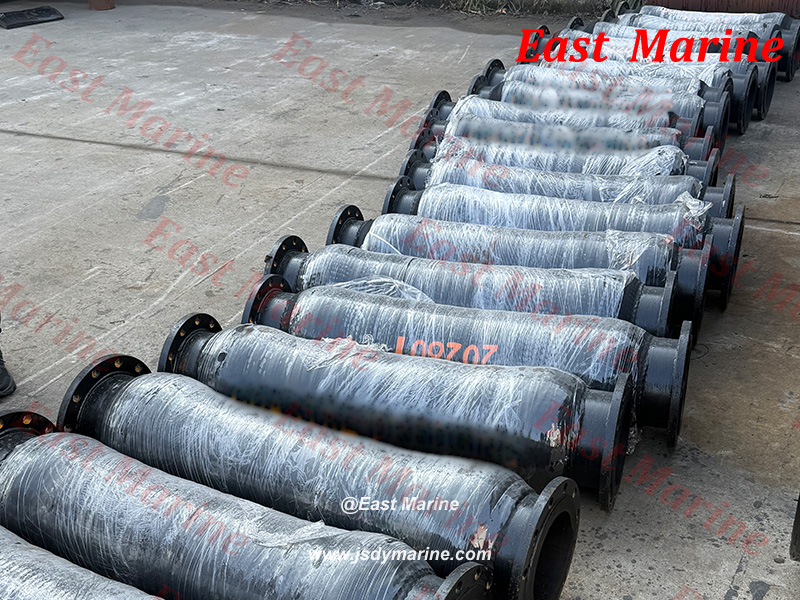
East Marine, a subsidiary of Jiangsu Huashen Special Rubber Products, delivers engineered rubber solutions tailored for STS, FPSO, and SPM applications. With over 150 skilled employees, including dedicated R&D engineers and quality assurance specialists, the company maintains a robust engineering capability focused on innovation and compliance. Our team leverages finite element analysis (FEA) and computational fluid dynamics (CFD) to optimize hose design, ensuring reliability under real-world offshore conditions.
Our manufacturing facility spans 0.68 million square meters and operates under ISO9001 quality management standards. As active members of WEDA and CEDA, we stay aligned with evolving industry best practices and environmental regulations. East Marine’s offshore marine hoses are constructed with high-tensile textile reinforcements, anti-abrasion covers, and specially compounded rubber linings resistant to a wide range of petrochemicals.
The integration of swivel joints, flange connections, and integrated buoyancy modules further enhances hose performance during STS operations, minimizing stress and ensuring smooth articulation between vessels. Real-time monitoring systems can also be incorporated to track pressure, temperature, and hose integrity during transfer.
Reliability in STS operations is non-negotiable. A single failure can lead to environmental incidents, operational downtime, and significant financial loss. East Marine’s commitment to engineering excellence and quality control ensures that our hoses meet the highest safety and performance benchmarks, supporting uninterrupted offshore logistics.
The following table outlines key technical specifications of East Marine’s standard offshore marine hose series for STS applications:
| Parameter | Specification |
|---|---|
| Size Range (DN) | 100 – 600 mm |
| Pressure Rating (Max) | 25 bar (362.6 psi) |
| Temperature Range | -30°C to +85°C (-22°F to +185°F) |
| Bend Radius (Min) | 6 x Hose Diameter |
| Cover Resistance | UV, Ozone, Abrasion, Hydrocarbon Resistant |
| Standards Compliance | OCIMF, GMPHOM, ISO 13623, API 2L |
| Reinforcement Layer | 2–4 High-Tensile Synthetic Textile Plies |
| Liner Material | Nitrile Rubber (NBR) or EPDM |
| End Fittings | Flanged (PN16/PN25), API 6A or Custom |
| Certification | DNV-GL, ABS, LR, CCS Available |
Advanced Manufacturing Process
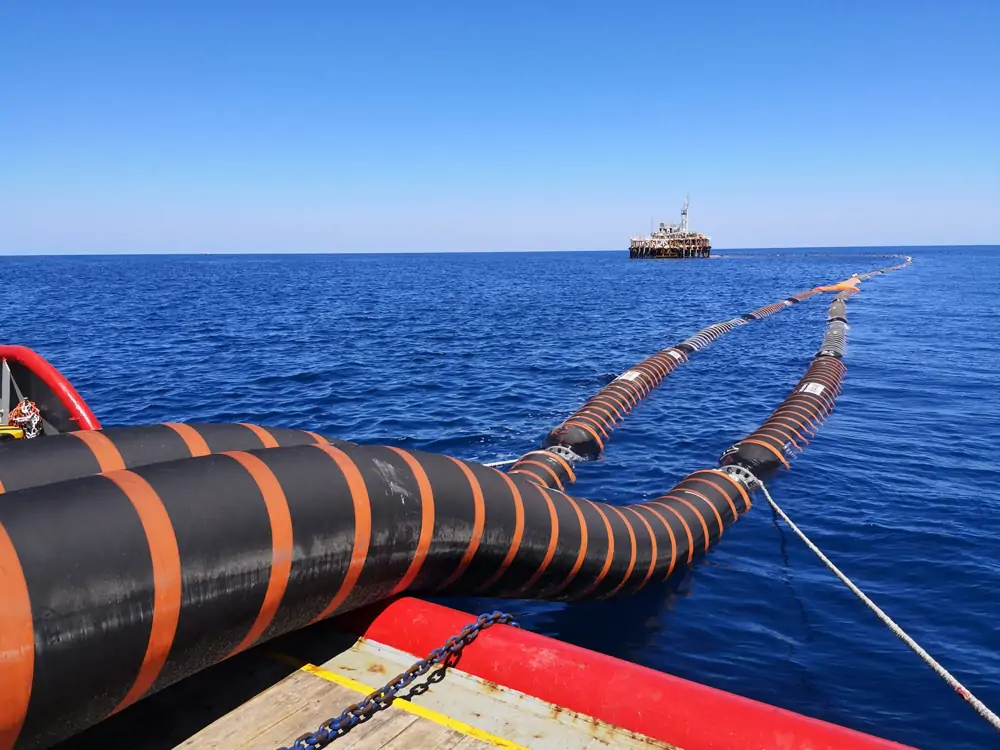
Precision Vulcanization: Engineering Reliability for Ship-to-Ship Transfer Hoses
At East Marine, a subsidiary of Jiangsu Huashen Special Rubber Products and a trusted WEDA/CEDA member since 2007, the manufacturing of OCIMF/GMPHOM-compliant offshore marine hoses for critical ship-to-ship (STS) transfer operations is executed within our state-of-the-art 0.68 million square meter facility. This scale enables dedicated control over every phase, from raw material compounding to final certification, ensuring hoses meet the extreme demands of marine hydrocarbon transfer where safety and zero leakage are non-negotiable. Central to this process is our advanced vulcanization technology, the chemical transformation that imparts the essential mechanical properties, chemical resistance, and structural integrity required for STS applications.
Vulcanization is not merely a step but the cornerstone of hose performance. Our 18 specialized production lines integrate computer-controlled autoclaves and continuous vulcanization (CV) systems, meticulously calibrated to precise time-temperature-pressure profiles specific to each hose construction and elastomer compound. This precision ensures optimal cross-linking of the rubber molecules within the hose carcass, cover, and critical sealing components. Under-vulcanization risks inadequate strength and poor fluid resistance, while over-vulcanization leads to brittleness and premature failure. East Marine’s process, governed by rigorous ISO 9001-certified procedures, utilizes real-time monitoring and data logging to guarantee every hose achieves the exact degree of cure necessary for its designated service life and operational parameters, including resistance to marine environments, hydrocarbons, and dynamic flexing during transfer.
Quality control is embedded throughout manufacturing, extending far beyond final inspection. Raw material batches undergo stringent incoming verification against OCIMF Annex G specifications. During assembly, laser-guided systems ensure precise layer alignment and dimensional accuracy. Crucially, vulcanization parameters for each hose are individually tracked and validated. Post-vulcanization, hoses undergo comprehensive pressure testing (including proof and burst tests significantly exceeding operational requirements), dimensional checks, visual inspection per GMPHOM guidelines, and electrical continuity verification where applicable. This systematic approach, underpinned by our ISO 9001 quality management system, provides documented evidence of compliance and consistent performance. The result is a hose assembly engineered not just to meet but to exceed the stringent safety and reliability standards mandated for ship-to-ship transfer operations, minimizing operational risk and ensuring environmental protection.
The following table outlines key technical capabilities inherent in our STS hose manufacturing process:
| Parameter | Specification | Relevance to STS Transfer |
|---|---|---|
| Factory Scale | 0.68 Million Square Meters | Enables dedicated lines, stringent material segregation, comprehensive testing facilities |
| Production Lines | 18 Specialized Lines | Supports high-volume output with dedicated STS hose focus |
| Vulcanization Control | Computer-Controlled Autoclaves & CV Systems | Ensures precise, repeatable cross-linking for optimal performance and longevity |
| Pressure Testing | Proof Test: 1.5x MOP; Burst Test: ≥5x MOP | Validates safety margins far exceeding operational demands per OCIMF |
| Quality Standard | ISO 9001 Certified Process | Guarantees traceability, process control, and consistent adherence to GMPHOM requirements |
Critical Applications
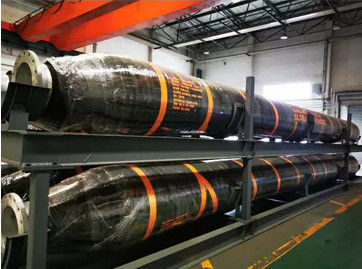
Global Applications of Ship-to-Ship Transfer in Offshore Marine Operations
Ship-to-ship (STS) transfer operations are a cornerstone of modern offshore logistics, enabling the safe and efficient transfer of liquids, slurries, and bulk materials between vessels at sea. As a trusted provider of OCIMF and GMPHOM-compliant marine hoses, East Marine—subsidiary of Jiangsu Huashen Special Rubber—delivers high-performance flexible solutions engineered for the rigorous demands of STS operations across diverse global projects. With over 15 years of industry experience and active membership in CEDA (Central Dredging Association) and WEDA (Western Dredging Association), we support critical maritime infrastructure developments through technically advanced rubber hose systems.
In dredging projects, STS transfer plays a pivotal role in the offshore handling of dredged materials. Large trailing suction hopper dredgers often transfer slurry or sediment to support vessels in open waters, minimizing port congestion and enabling continuous operations. East Marine’s dredging hoses, constructed with abrasion-resistant synthetic rubber and high-tensile reinforcement layers, ensure reliable performance under high-pressure, high-wear conditions typical in these applications. These systems are frequently deployed in coastal maintenance, harbor deepening, and offshore mining, where uninterrupted transfer efficiency is paramount.
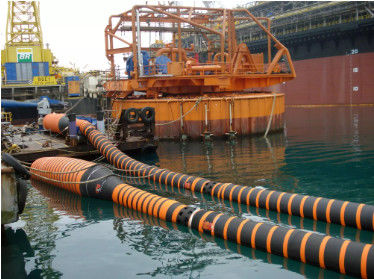
In the oil and gas sector, STS operations are essential for the transfer of crude oil, refined products, and bunkering fuels in regions with limited port infrastructure or during emergency resupply scenarios. East Marine supplies floating hose strings designed to meet OCIMF guidelines, featuring UV-stabilized covers, anti-static properties, and dynamic flex characteristics that accommodate vessel movement due to waves and tides. These hoses are routinely used in offshore loading zones near major oil fields in West Africa, the Middle East, and Southeast Asia, where operational safety and environmental compliance are non-negotiable.
Land reclamation projects also rely heavily on STS transfer systems, particularly in urban coastal expansion initiatives such as those seen in Singapore, Dubai, and the Pearl River Delta. In these applications, dredged sand and slurry are transferred between vessels before being pumped ashore to create new landmass. The ability to conduct these transfers offshore reduces shoreline impact and accelerates project timelines. East Marine’s customized floating hose assemblies, with integrated buoyancy modules and quick-connect couplings, are designed for rapid deployment and long-term durability in saline environments.
Our commitment to quality is reinforced by our ISO9001 certification and a 0.68 million sqm manufacturing facility equipped for large-scale production of marine-grade rubber products. As a CEDA and WEDA member, East Marine stays at the forefront of dredging and marine engineering advancements, ensuring our solutions align with international best practices.
| Parameter | Specification |
|---|---|
| Hose Diameter Range | 200 mm – 1200 mm |
| Maximum Working Pressure | 10 bar (custom up to 25 bar) |
| Temperature Range | -30°C to +85°C |
| Standards Compliance | OCIMF, GMPHOM, ISO 13623, API 15S |
| Cover Properties | Abrasion-resistant, UV-stabilized, ozone-protected |
| Reinforcement | High-tensile synthetic fabric & steel wire |
| Typical Floating System Length | 100 m – 500 m (modular design) |
Technical Data & Specs
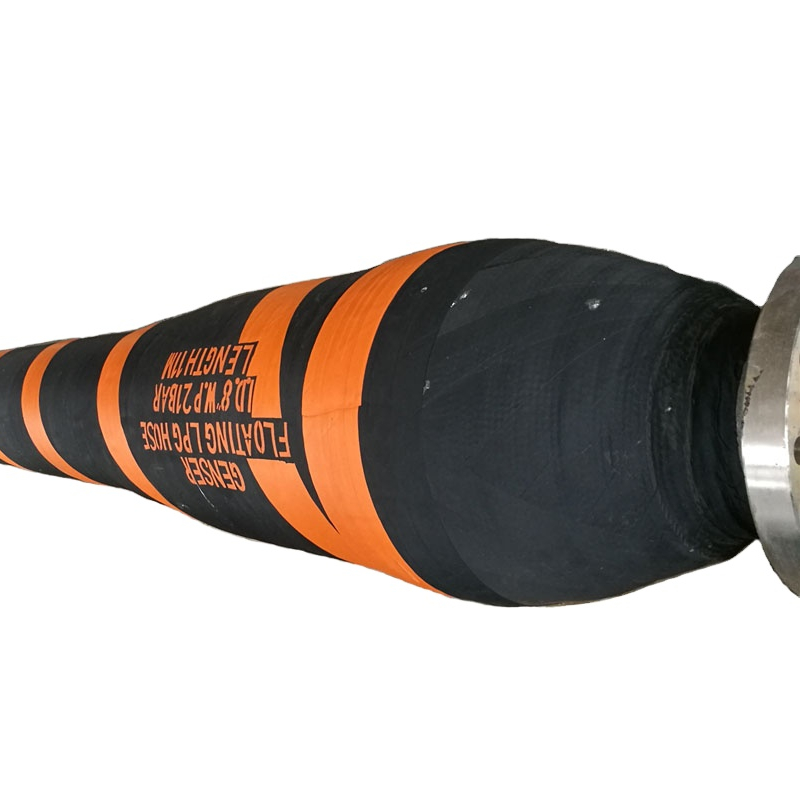
Technical Specifications: Critical Parameters for OCIMF/GMPHOM Compliant Offshore Marine Hoses in Ship-to-Ship Transfer Operations
Ship-to-Ship (STS) transfer operations demand marine hoses engineered to the most stringent international safety and performance standards, primarily governed by the Oil Companies International Marine Forum (OCIMF) and the Global Marine Products HandBook for Offshore Marine Hoses (GMPHOM). Selecting hoses with precisely calibrated technical specifications is non-negotiable for ensuring operational integrity, personnel safety, and environmental protection in dynamic offshore environments. Key parameters—Inner Diameter (ID), Working Pressure (WP), Burst Pressure (BP), and Minimum Bending Radius (MBR)—directly impact flow efficiency, structural resilience under surge conditions, fatigue life, and maneuverability during hose handling and connection. East Marine, leveraging its 0.68 million square meter manufacturing facility and deep expertise in marine rubber compounding since 2007, designs and produces OCIMF/GMPHOM compliant hoses that consistently exceed baseline industry requirements. Our rigorous adherence to ISO 9001 quality management systems and active participation in WEDA/CEDA ensure every hose undergoes comprehensive validation against these critical metrics, optimizing performance for the demanding hydrodynamic loads inherent in STS transfers.
Competitor offerings, while generally meeting minimum OCIMF guidelines, often exhibit wider tolerances or conservative design margins that can compromise operational flexibility and longevity. East Marine’s advanced rubber formulations and precision manufacturing processes enable tighter control over critical dimensions and performance characteristics. This translates into hoses that maintain consistent internal bore geometry for optimal flow rates, withstand higher cyclic pressure loads without degradation, and achieve significantly reduced bending radii without kinking or structural damage—crucial factors during the complex hose routing and tensioning sequences of STS operations. The following table provides a comparative overview of typical technical specifications for standard 16-inch ID floating hoses compliant with OCIMF/GMPHOM requirements, reflecting East Marine’s benchmark performance against common industry averages.
| Parameter | East Marine EM-FH Series | Typical Industry Competitor Average | OCIMF/GMPHOM Minimum Requirement |
|---|---|---|---|
| Inner Diameter (ID) | 406 mm (16.0 in) ± 1.5 mm | 406 mm (16.0 in) ± 3.0 mm | 406 mm (16.0 in) -0/+4.0 mm |
| Working Pressure (WP) | 25 bar (363 psi) | 21 bar (305 psi) | 15 bar (218 psi) |
| Burst Pressure (BP) | ≥ 125 bar (1813 psi) | ≥ 105 bar (1523 psi) | ≥ 75 bar (1088 psi) (5:1 WP:BP) |
| Bending Radius (MBR) | 2.8 m (9.2 ft) | 3.2 m (10.5 ft) | 3.5 m (11.5 ft) |
East Marine’s EM-FH Series achieves this superior specification profile through proprietary rubber compound technology, optimized carcass reinforcement lay-up, and stringent in-process dimensional control. The tighter ID tolerance ensures predictable flow characteristics and minimizes pressure drop, critical for maintaining transfer rates. The elevated working pressure rating of 25 bar, significantly above the 15 bar minimum, provides essential operational headroom for pressure surges common during vessel movement, reducing fatigue stress. Crucially, the burst pressure consistently exceeds 125 bar, maintaining a robust safety factor well beyond the mandated 5:1 ratio (WP:BP), offering unparalleled margin against catastrophic failure. Most notably, the reduced Minimum Bending Radius of 2.8 meters enhances operational agility during hose deployment, recovery, and stowage on vessel decks, directly improving safety and reducing handling time compared to competitors. This combination of precision engineering and material science excellence, validated through East Marine’s comprehensive in-house testing protocols aligned with OCIMF recommendations, delivers hoses engineered not just for compliance, but for peak performance and extended service life in the world’s most challenging STS operations.
Partner with East Marine
Reliable Offshore Marine Hoses for Ship-to-Ship Transfer Operations
Ship-to-Ship (STS) transfer operations demand the highest standards in hose performance, safety, and regulatory compliance. At East Marine, a trusted subsidiary of Jiangsu Huashen Special Rubber Products, we specialize in engineered offshore marine hoses that meet and exceed OCIMF (Oil Companies International Marine Forum) and GMPHOM (Good Marine Practice for the Transfer of Hydrocarbons at Sea) requirements. With over 15 years of industry experience and a 0.68 million square meter manufacturing facility in China, we deliver robust, field-tested solutions for critical hydrocarbon transfer applications across global maritime sectors.
Our offshore marine hoses are designed to withstand extreme environmental conditions, including high working pressures, aggressive media, and dynamic vessel movements during STS operations. Each hose assembly undergoes rigorous testing for flexibility, abrasion resistance, and long-term durability, ensuring uninterrupted transfer performance even in the most demanding offshore environments. As proud members of WEDA and CEDA, and with full ISO9001 certification, East Marine maintains a quality management system aligned with international best practices.
All products are manufactured under strict quality control protocols, with full traceability from raw material sourcing to final assembly. We offer a complete range of floating and submerged hose systems, including customized configurations for diameter, length, and connection types to suit specific vessel and terminal requirements. Whether supporting crude oil, refined products, or chemical transfers, our engineering team works closely with clients to deliver compliant, efficient, and safe transfer solutions.
East Marine also operates a strategic branch in Singapore, providing regional logistics support, technical consultation, and rapid response services for clients across Southeast Asia, the Indian Ocean, and the Pacific. This localized presence ensures timely project execution, on-site inspections, and after-sales support, reinforcing our commitment to operational excellence and customer satisfaction.
For new projects or replacement needs, our technical sales team is available to assist with system design, compliance verification, and product selection tailored to your STS operation.
| Parameter | Specification |
|---|---|
| Hose Type | Offshore Marine Floating Hose |
| Standards | OCIMF, GMPHOM, ISO 14034 |
| Diameter Range | 6″ to 24″ (150 mm to 600 mm) |
| Working Pressure | Up to 25 bar (varies by size) |
| Temperature Range | -30°C to +85°C |
| Cover Material | UV and ozone-resistant synthetic rubber |
| Reinforcement | High-tensile textile and steel wire helix |
| End Fittings | Flanged (ANSI, DIN, JIS), Stabbing Plates |
| Certifications | ISO9001, DNV-GL Type Approval (upon request) |
Contact East Marine today to discuss your offshore transfer requirements. Reach our technical team via WhatsApp at +86-13806109365 or email hsdredging@eastmarine.tech. Our Singapore branch ensures responsive, regional support for fast turnaround and seamless integration into your marine operations. Partner with a proven leader in marine hose technology—choose East Marine for safety, reliability, and performance in every transfer.
🏗️ Dredging Pipeline Project Cost Estimator
Calculate savings by sourcing directly from East Marine factory vs. local trading companies.
*Estimates only. Contact us for formal quotation.