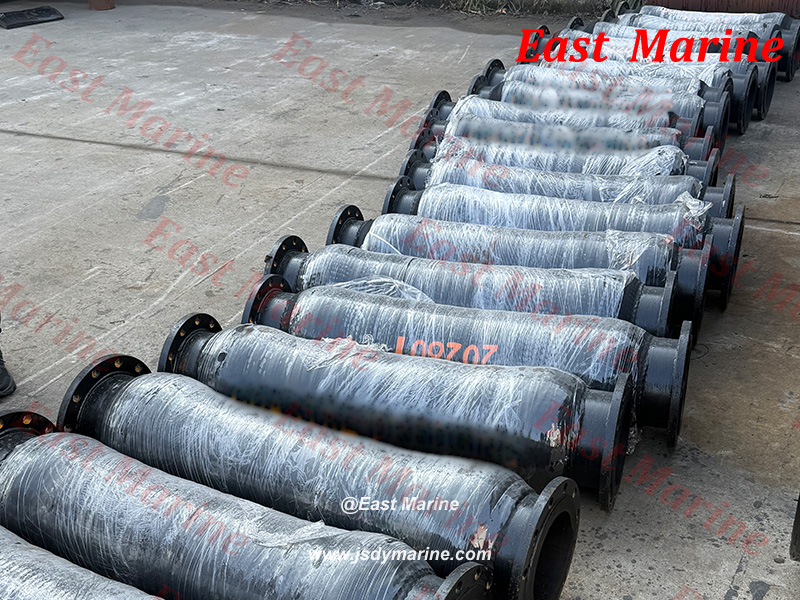
Dredging hoses are the flexible lifelines of marine engineering systems, designed to transport mixtures of water, sand, silt, and gravel under demanding conditions. Based on function, structure, and buoyancy, dredging rubber hoses can be categorized as follows:
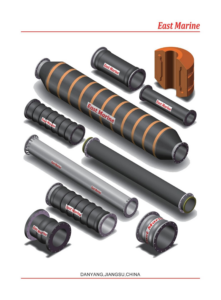
1. Classification of Dredging Hoses
| Category Basis | Type |
|---|---|
| By Function | Discharge Hose / Suction Hose / Suction & Discharge Hose |
| By Flange Type | Steel Flange / Sandwich Flange |
| By Buoyancy | Floating Hose / Non-Floating Hose |
2. Detailed Product Classification
| Hose Category | Types |
|---|---|
| Discharge Rubber Hose | Steel Flange / Sandwich Flange / Flared / Straight / Armored |
| Suction Rubber Hose | Steel Flange / Sandwich Flange / Armored |
| Suction & Discharge Hose | Steel Flange / Sandwich Flange / Transition (Slope-Climbing) |
| Floating Rubber Hose | Floating / Tapered Floating / Semi-Floating / Armored Floating / Floating Steel Pipe |
| Water Hose | Steel Flange / Sandwich Flange |
| Expansion Hose | Steel Flange / Sandwich Flange |
3. Discharge Hose Overview
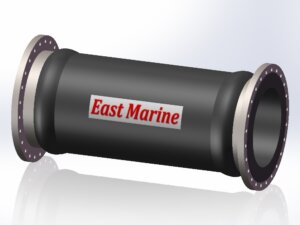
Discharge hoses are core components in dredging operations, responsible for transporting dredged materials such as slurry, silt, and sand mixtures from the excavation site to designated disposal areas.
| Item | Description |
|---|---|
| Function | Transport slurry, sand, silt, and gravel mixtures |
| Application | Ports, channels, river dredging, land reclamation |
| Key Features | Wear-resistant, flexible, bend-resistant, adaptable |
| Structure Types | Steel flange / Sandwich flange / Armored / Flared / Straight |
Pipeline Configuration
| Component | Description |
|---|---|
| Rubber Hose | Provides flexibility and vibration absorption |
| Steel / HDPE Pipe | Provides structural strength |
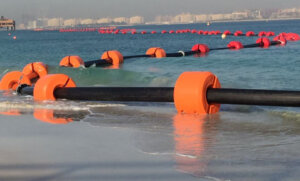
| PE Float | Keeps pipeline afloat (for floating systems) |
👉 Typical configuration:
Rubber Hose + Steel/HDPE Pipe + PE Float
4. Suction Hose Overview
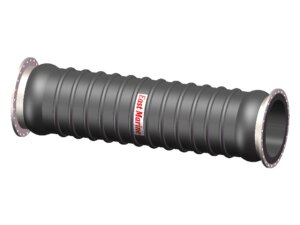
Suction hoses are critical flexible components used on dredgers to extract slurry, sand, and sediment under negative pressure conditions.
| Item | Description |
|---|---|
| Function | Suction of slurry under negative pressure |
| Application | Cutter suction dredger / Trailing suction hopper dredger |
| Key Features | Flexible, wear-resistant, suitable for underwater conditions |
| Types | Steel flange / Rubber flange / Armored |
Special Type
5. Suction & Discharge Hose
Suction & discharge hoses are designed to handle both positive pressure (discharge) and negative pressure (suction), combining dual functionality in a single product.
| Item | Description |
|---|---|
| Function | Dual-purpose: suction + discharge |
| Types | Steel flange / Sandwich flange |
| Advantages | Versatile, flexible, reliable sealing, adaptable to complex conditions |
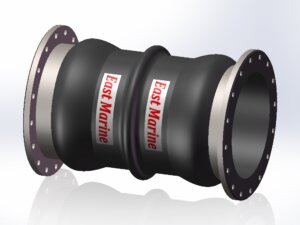
6. Expansion Joint
Expansion hoses are typically installed between the dredge pump outlet and the discharge pipeline.
| Item | Description |
|---|---|
| Function | Shock absorption, vibration reduction, displacement compensation |
| Installation Position | Between dredge pump and discharge pipeline |
| Types | Steel flange / Sandwich flange |
| Features | Customizable length, high flexibility |
7. Floating Hose Overview
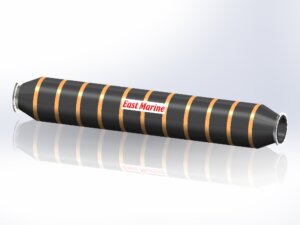
Floating hoses are specialized dredging hoses with built-in buoyancy, allowing them to float on water without additional floats.
| Item | Description |
|---|---|
| Function | Floating slurry transport without external floats |
| Structure | Built-in closed-cell foam |
| Floatation Requirement | ≥20% above water surface |
| Outer Layer | Wear-resistant, UV-resistant rubber |
| Optional | Wear indicator layer |
| Performance | Strong bending, tensile resistance, stable operation |
Types
| Type | Description |
|---|---|
| Floating Discharge Hose | Standard floating pipeline |
| Tapered Floating Hose | Diameter transition |
| Semi-Floating Hose | Partial buoyancy |
| Armored Floating Hose | For abrasive materials |
| Floating Steel Pipe Hose | Combined rigid-flex structure |
8. Floating Pipeline System
| Section | Description |
|---|---|
| Floating Pipeline | Water surface section |
| Submerged Pipeline | Underwater section |
| Onshore Pipeline | Land section |
Common Combinations
| Combination | Description |
|---|---|
| Floating Hose + HDPE Pipe | Lightweight and flexible |
| Floating Hose + Steel Pipe | High strength |
| Rubber Hose + PE Float | Traditional floating system |
Advantages of Floating Hose Systems
- No need for additional floats
- Easier installation
- Natural and stable floating behavior
- Strong resistance to waves, tension, and torsion
- High operational stability and efficiency
- Lower failure rates
- Longer service life compared to steel pipelines
Floating hose systems are widely used in:
- Channel dredging
- Port maintenance
- Land reclamation
Dredging hose systems are far more than simple pipeline components. They form a dynamic and integrated network that directly impacts the efficiency, safety, and reliability of dredging operations.
From suction to discharge, from standard rubber hoses to advanced floating systems, each type of hose is engineered to perform under specific working conditions. Understanding their classification, structure, and application is essential for selecting the right solution and optimizing overall project performance.
In practice, no single hose works alone. A well-designed dredging pipeline system often combines rubber hoses, steel or HDPE pipes, and floating elements to achieve the best balance between flexibility, strength, and durability.
As dredging projects become more complex and demanding, the role of high-performance hose systems continues to grow. Choosing the right configuration not only improves operational efficiency but also reduces maintenance costs and extends service life.